
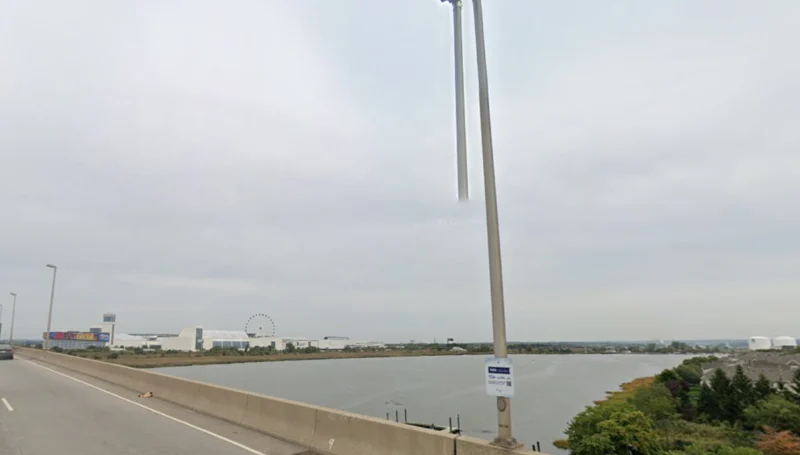
EAST RUTHERFORD, N.J. — Millions of soccer fans will descend on MetLife Stadium for the 2026 FIFA World Cup, but just beyond the bright lights of the Meadowlands sits one of the nation’s most heavily polluted waterways: the Hackensack River.
The lower stretch of the Hackensack River — which flows directly alongside the Meadowlands sports complex hosting World Cup matches — remains contaminated by decades of industrial dumping, sewage discharges, and toxic runoff severe enough for the federal government to designate part of the river a Superfund site.
Nearby, the Passaic River — another infamous New Jersey waterway with a long history of toxic contamination — flows through one of the country’s most densely populated industrial corridors before emptying into Newark Bay.
Together, the rivers tell the story of northern New Jersey’s industrial legacy: global entertainment venues and billion-dollar redevelopment projects rising beside waterways still burdened by pollution dating back generations.
Toxic Sediment Still Buried Beneath the River
Federal environmental officials say the greatest danger in the Hackensack River lies beneath the surface.
Sediment lining the riverbed remains contaminated with heavy metals including mercury, lead, arsenic, and chromium, along with carcinogenic chemicals such as PCBs, dioxins, and PAHs tied to decades of industrial activity.
The Environmental Protection Agency added a 19-mile stretch of the Lower Hackensack River to the National Priorities List as part of ongoing Superfund cleanup efforts.
While water quality has improved since the peak industrial era of the mid-20th century, environmental monitoring still shows recurring ecological problems, including low dissolved oxygen levels harmful to aquatic life.
Heavy rainstorms can also trigger combined sewer overflows that release untreated wastewater and bacteria into the river system.
Recreation Allowed — But Warnings Remain
Despite the contamination, portions of the Hackensack River remain active recreational areas for kayaking, boating, birdwatching, and eco-tourism tied to Meadowlands restoration projects.
Environmental officials generally consider boating and paddling safe if people avoid direct contact with sediment and wash thoroughly afterward.
Swimming, however, remains strongly discouraged.
New Jersey also maintains fish and crab consumption advisories due to toxic bioaccumulation linked to mercury and PCB contamination.
The warnings affect multiple species caught in the Hackensack River and nearby Newark Bay.
Key Points
• The Hackensack River flows directly beside MetLife Stadium, host site for the 2026 FIFA World Cup
• The Lower Hackensack River is a federally designated Superfund site contaminated by toxic industrial pollution
• Nearby waterways including the Passaic River also remain among New Jersey’s most polluted rivers
Meadowlands Sits Beside Environmental Contradiction
The Meadowlands itself has become one of New Jersey’s most visible examples of environmental contradiction.
Massive sports and entertainment developments — including MetLife Stadium, the American Dream complex, highways, rail infrastructure, and warehouses — operate alongside protected wetlands and heavily polluted waterways still undergoing remediation.
For decades, the Hackensack and Passaic rivers absorbed waste from factories, chemical plants, refineries, landfills, and sewage systems serving the region’s industrial economy.
The Passaic River, particularly the lower river near Newark, became nationally known for dioxin contamination tied to the former Diamond Alkali chemical plant in Newark, one of the country’s most expensive and complex environmental cleanup projects.
Both rivers remain central to ongoing federal and state restoration efforts aimed at reducing contamination while balancing development pressure across northern New Jersey.
Global Spotlight Arrives in 2026
The environmental conditions surrounding the Meadowlands are likely to receive renewed international attention as the World Cup brings global media coverage to East Rutherford.
MetLife Stadium is expected to host multiple high-profile matches, including knockout-stage games and the tournament final.
For visitors arriving from around the world, the contrast may be striking: one of the planet’s biggest sporting events unfolding beside waterways still carrying the scars of America’s industrial past.
Cleanup efforts continue across both river systems, but environmental advocates say full restoration remains decades away.
The World Cup may temporarily place the Meadowlands at the center of the sports world — but just outside the stadium complex, the long environmental history of the Hackensack and Passaic rivers remains impossible to ignore.