
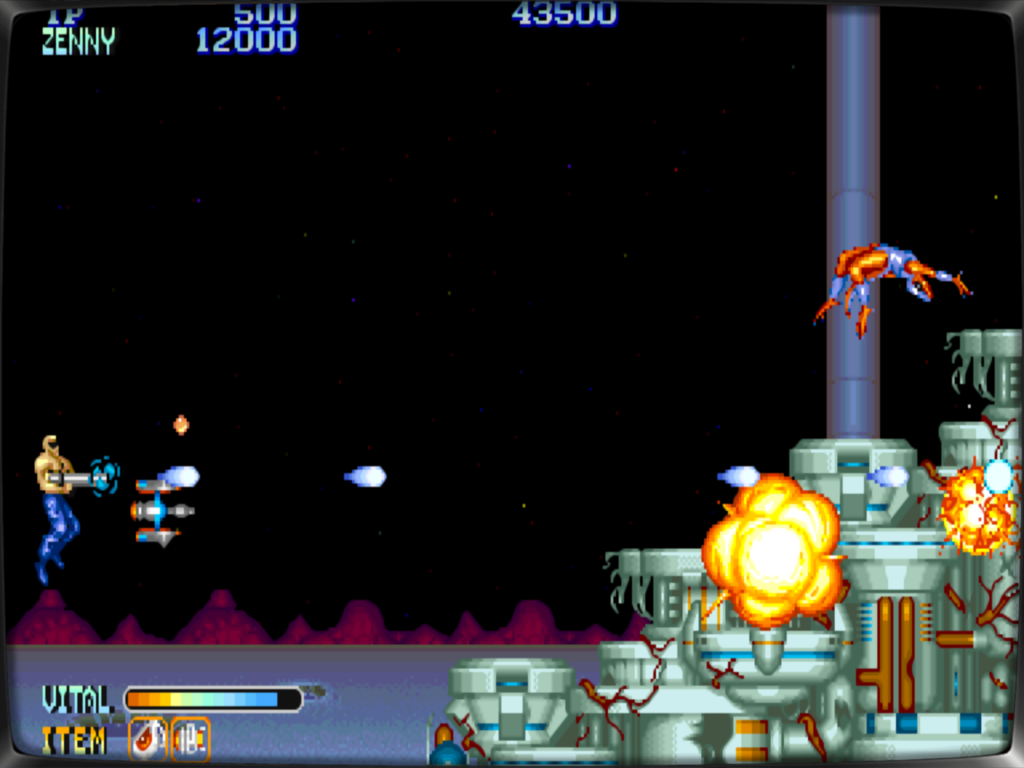
Let’s take a trip back to the golden age of arcade games, a time when you had to stockpile quarters just to keep the action going. While Street Fighter and Pac-Man often hog the spotlight, there’s one arcade gem that deserves a moment in the sun: Forgotten Worlds. Released by Capcom in 1988, this shooter-slash-platformer hybrid was equal parts mind-blowing and rage-inducing. And let’s be real, it’s long overdue for some love.
So buckle up, hit that virtual ‘start’ button, and get ready for a nostalgia-fueled deep dive into the bizarre, challenging, and criminally underappreciated world of Forgotten Worlds!
1. The First Shooter to Really Spin Your Head
Sure, we’ve all played a shooter game, but Forgotten Worlds had one thing other games didn’t: a rotating fire button! You didn’t just shoot forward—you could blast in any direction, making it feel like you had eyes (and guns) in the back of your head. This 360-degree shooting mechanic was next-level for the time and added a new layer of strategy. Plus, it made you feel like a futuristic Rambo.
2. The Co-op Dream Team You Didn’t Know You Needed
Forgotten Worlds let you team up with a buddy for double the chaos. Two players, each controlling a shirtless, buff “Nameless Soldier,” could team up to destroy hordes of enemies. The co-op mode was essential, too—trust me, tackling this game solo was borderline impossible unless you had cat-like reflexes or a cheat code. But with a friend? Pure magic. Or maybe pure chaos, depending on your teamwork skills.
3. That Glorious ’80s Sci-Fi Aesthetic
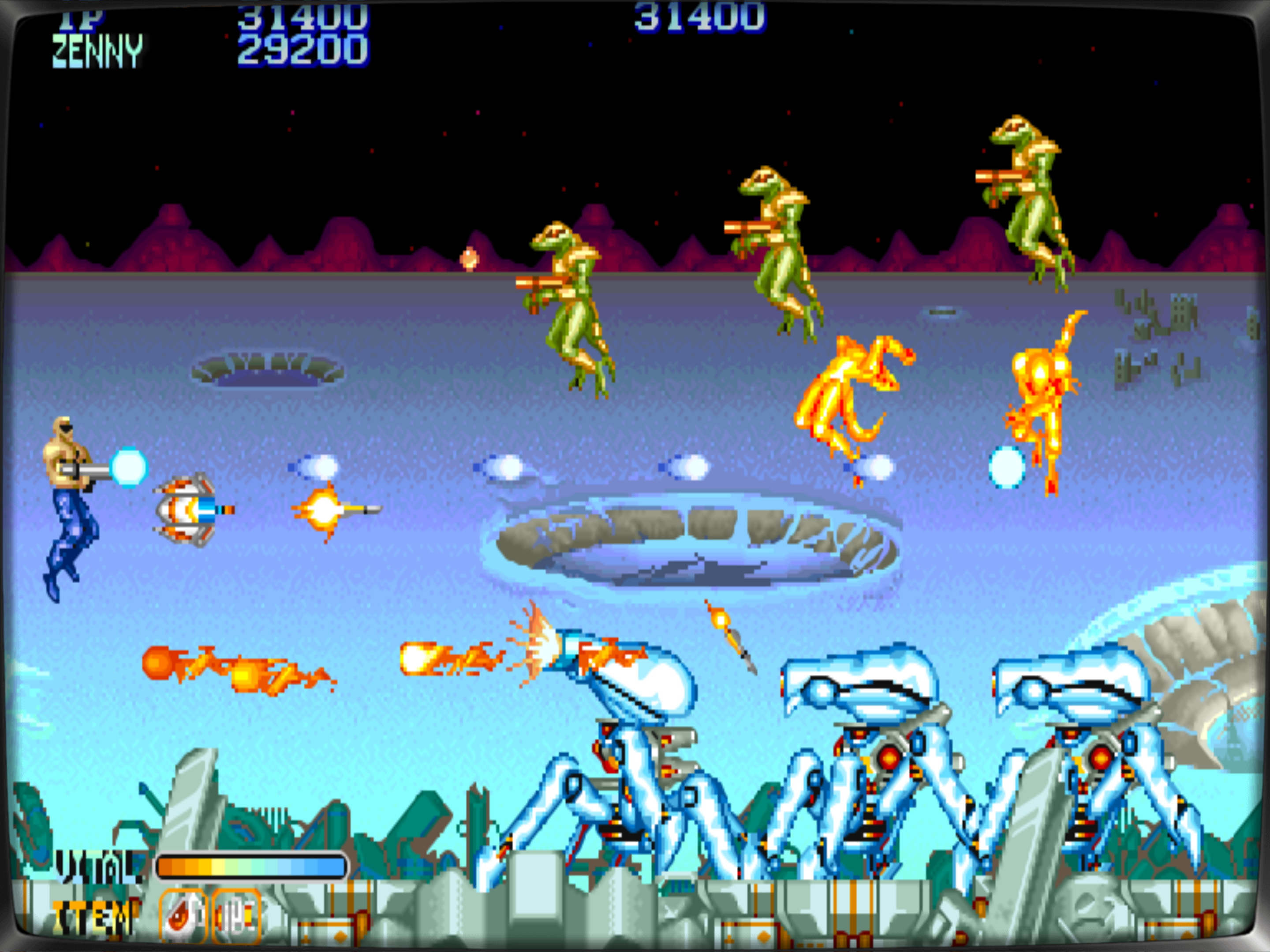
Imagine Mad Max meets Blade Runner with a sprinkle of space dystopia, and you’ve got the setting of Forgotten Worlds. The game’s environments were packed with vibrant, otherworldly backgrounds, like ruined cities and cybernetic wastelands. The bosses? Gigantic monstrosities that looked like they crawled out of some metal album cover. In short, this game oozed ‘80s sci-fi goodness. It’s basically the love child of a synthwave playlist and a VHS action movie.
4. Power-Ups Were Weird but Awesome
Forget about basic stuff like extra lives or simple weapon upgrades. Forgotten Worlds went all-in on its upgrade system. As you progressed, you earned “Zenny” (yes, the currency was called Zenny) to buy power-ups from a floating shopkeeper. You could snag everything from lasers to homing missiles, and—oh, let’s not forget—jet packs. That’s right, jet packs. Any game with jet packs automatically wins in my book.
5. The Music Slapped
You know a game is memorable when its soundtrack gets stuck in your head decades later. Forgotten Worlds had an epic soundtrack that blended upbeat, fast-paced tunes with a touch of dark, spacey atmosphere. It gave you that extra adrenaline rush you needed when the screen was swarming with enemies, and you had about two lives left. Capcom knew how to make some serious bangers back in the day.
6. You Fought Giant Egyptian Gods in Space
Why fight normal enemies when you can fight larger-than-life, mythical beings in space? One of the game’s most iconic bosses was none other than Set, the ancient Egyptian god of chaos. Picture this: you, a nameless soldier with guns, flying around in space, duking it out with a deity who’s the size of a building. Talk about epic. It’s like God of War, but with fewer plot twists and way more lasers.
7. That Unforgiving Difficulty Level
If you’ve ever played Dark Souls and thought, “Wow, this game is tough,” then Forgotten Worlds might just blow your mind. This game was the original “quarter muncher,” meaning it was brutally hard and designed to eat your coins as fast as possible. Whether it was dodging a relentless barrage of bullets or trying to take down a boss the size of a skyscraper, you had to be laser-focused. It was punishing but so rewarding when you finally got past a tricky section.
8. The Graphics Were Wild for the Time
In an era when most games were still pretty pixelated, Forgotten Worlds felt like a visual treat. It had surprisingly detailed character sprites, massive bosses, and intricate backgrounds. Capcom used their CPS-1 arcade board to its full potential, pushing the boundaries of what 2D games could look like. It was like someone cranked the dial on your standard arcade graphics up to 11.
9. It Had That “Just One More Try” Energy
There’s something about Forgotten Worlds that hooks you in, no matter how many times you die. Maybe it’s the satisfying power-ups or the thrill of dodging enemy fire, but the game had that magic formula where you couldn’t help but keep dropping coins in the machine. It’s the kind of game where “just one more try” easily turns into “okay, that’s my last quarter, I swear.”
10. It’s a Forgotten Classic, but Not Forgotten by Us
Forgotten Worlds might not have the same pop-culture clout as Super Mario Bros. or Sonic the Hedgehog, but it holds a special place in the hearts of those who played it. It was innovative, visually stunning, and tough as nails. If you were lucky enough to experience it, you know it was something special. And if you didn’t? Well, it’s never too late to rediscover this forgotten treasure.
So here’s to Forgotten Worlds—a game that, despite its name, deserves to be remembered. Now if you’ll excuse me, I need to go find an emulator and relive my shirtless, jet-pack-fueled glory days.