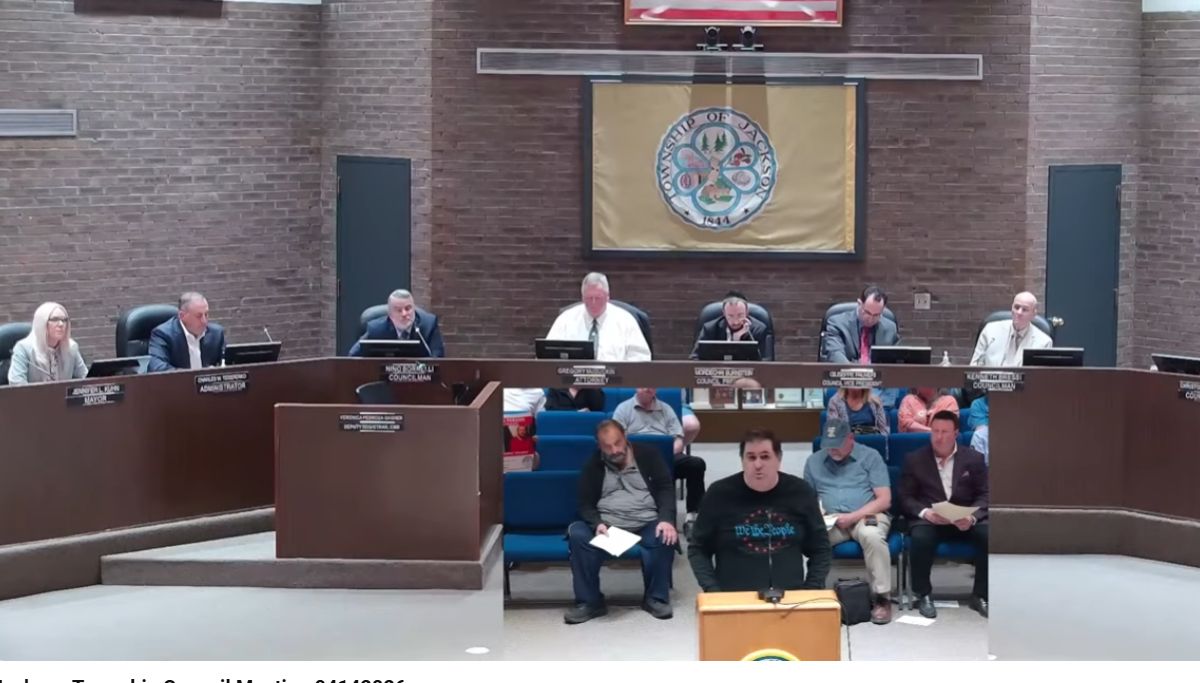
Jackson Council approves $15.8M emergency funding amid criticism over budget delays, spending surge. Measure keeps township operations running as officials face scrutiny over rising costs and stalled 2026 budget
Jackson, N.J. — A $15.8 million emergency funding measure to keep Jackson Township running drew sharp criticism Tuesday as council members raised concerns about a delayed 2026 budget, increased spending, and recent administrative turnover.
Despite a claim by Mayor Jennifer Kuhn in January, saying, “the budget is done”, the mayor has not yet introduced the budget on the final day allowed by state law to present a budget.
The Jackson Township Council approved the emergency temporary appropriations totaling $15,844,500, allowing the municipality to continue paying salaries, utilities, and operating expenses while the full budget remains unfinished, according to township officials and meeting discussion.
Budget delay forces emergency funding vote
The resolution, adopted April 14, was authorized under New Jersey statute N.J.S.A. 40A:4-20, which permits municipalities to enact emergency appropriations before a formal budget is passed. Officials confirmed during the meeting that without the measure, the township would be unable to pay employees or cover essential costs.
“You can’t make any payments or any claims until you have this appropriation voted on,” officials stated Jackson’s third business administrator in one year, Charles Tarenfenko.
Council members acknowledged the necessity of the vote but expressed frustration over the ongoing delay in introducing and adopting the full municipal budget.
Councilman Ken Bressi said he supported the measure to maintain operations but emphasized the need to move forward with a complete budget.
“I hope this is hopefully the last temporary appropriations that we have to vote on… I’d like to see the municipal budget for this year and review it and vote on it,” Bressi said during the meeting.
Spending increase draws opposition
Councilman Chris Pollak voted against the emergency appropriations, citing a significant year-over-year increase in spending and broader fiscal concerns.
Pollak compared 2025 and 2026 figures, stating that total temporary and emergency appropriations rose from approximately $22.7 million last year to more than $30 million this year — an increase of about $7.3 million, or 32.1%.
“I can’t in good conscience vote for a 32% increase in spending,” Pollak said, adding that inflation does not justify the jump.
He also pointed to instability within township financial leadership, noting the municipality has gone through multiple chief financial officers.
“We’ve been through what, three CFOs now,” Pollak said during the discussion.
Pollak further argued that government spending ultimately impacts taxpayers, stating, “Government does not have money of its own. It only has the money it takes from the people.”
Leadership and policy tensions surface
The vote comes amid broader criticism directed at township leadership, including Mayor Jennifer Kuhn and Council President Mordechai Burnstein, over fiscal management, staffing changes, and executive-level departures.
Council members Giuseppe Palmeri and Nino Borrelli were also part of the governing body involved in the discussion and vote.
While the emergency funding ensures continuity of services, it also highlights ongoing tensions within the council over budget priorities, transparency, and long-term financial planning.
Resident raises concern over delayed budget
Tonight is the final day permitted under the Local Finance Board’s 2026 budget calendar for a municipal budget to be introduced. After tonight, Jackson Township will no longer be in compliance with the state-authorized timeline. And yet, despite this being the last permissible night, the budget is still not being introduced. This is especially troubling given the mayor’s own public statement on January 27, 2026, when the administration announced the budget is done.
If the budget was completed nearly three months ago, then the responsibility for this failure to introduce it rests squarely with the mayor’s office. Residents deserve answers. So, Council President, respectfully, I’m going to ask that you allow the honorable mayor to answer the following questions.
If the budget was finished in January, why is it still not being introduced on the final night allowed by law 74 days later? Why has the mayor withheld the document from the public, preventing any meaningful review or discussion? Why has the mayor excluded the citizens budget advisory committee, a committee the mayor created and promoted as a transparency tool? And how does refusing to introduce a completed budget, even on the last possible night, align with any stated commitment to openness, accountability, or responsible fiscal management?
The Local Finance Board extended the budget calendar this year to give municipalities more time to plan, communicate, and engage residents. Instead, Jackson is ending the process with no introduction, no transparency, and no public access to the most important financial document of the year. This is not a timing issue. It is a governance issue, and it begins with the mayor.
Residents deserve a clear explanation for why a budget that was declared done in January is still being withheld tonight, even as the legal deadline expire.
-Jim, Jackson resident.
—
Key Points
• Jackson approved $15.8M in emergency appropriations to maintain operations
• Council members cited a 32% increase in year-over-year spending
• Budget delays and administrative turnover remain key concerns
—
What happens next
Township officials indicated that work on the full 2026 municipal budget is ongoing, with expectations that it could be introduced later this month.
Until then, emergency appropriations will continue to serve as a temporary funding mechanism to keep government functions operating.
The status of the budget remains unresolved as of April 15, and additional council action will be required before a final spending plan is adopted.