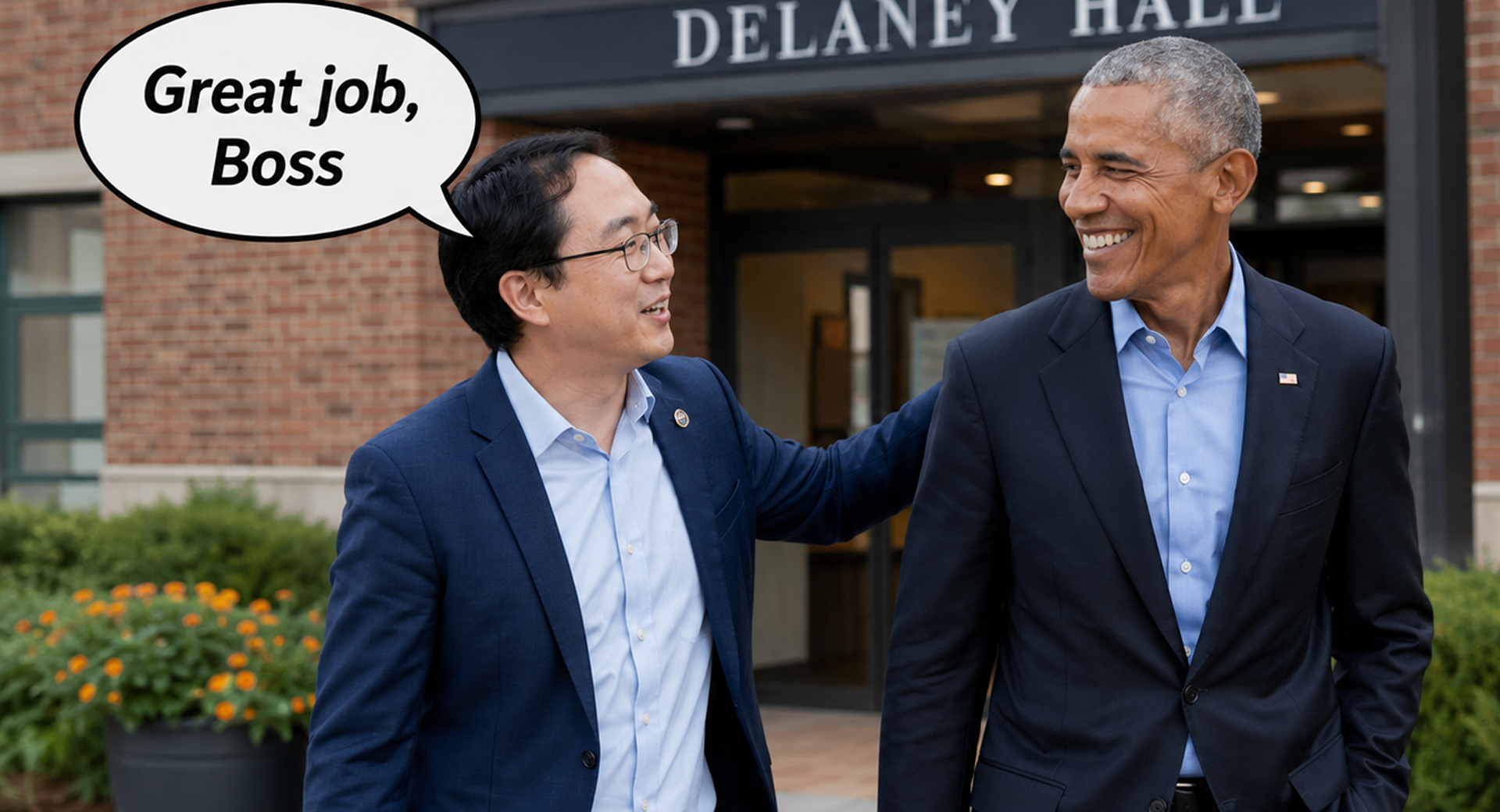
Newark, NJ — As protests and allegations about conditions inside Newark’s Delaney Hall detention facility dominate headlines in 2026, newly resurfaced federal records show complaints about food and detainee treatment at the facility stretch back more than a decade.
A U.S. Department of Homeland Security Office for Civil Rights and Civil Liberties (CRCL) investigation found that concerns over food quality, medical care, detainee grievances, and sanitation were raised as early as 2011, when Delaney Hall was operating as an immigration detention facility during the Obama administration.
The findings add historical context to current claims from detainees and activists who have criticized conditions at the facility during its latest incarnation under a Trump-era detention contract.
The only difference is that during Obama’s administration, leftists did not protest and attack Obama’s ICE agents, another indication that the recent protest is fabricated and orchestrated by far-left liberals who don’t care about the conditions, but are seizing on a political opportunity. U.S. Senator Andy Kim, who now leads the effort to shut down Delaney Hall, was an employee of the Obama State Department and did not protest at the time. He was silent.
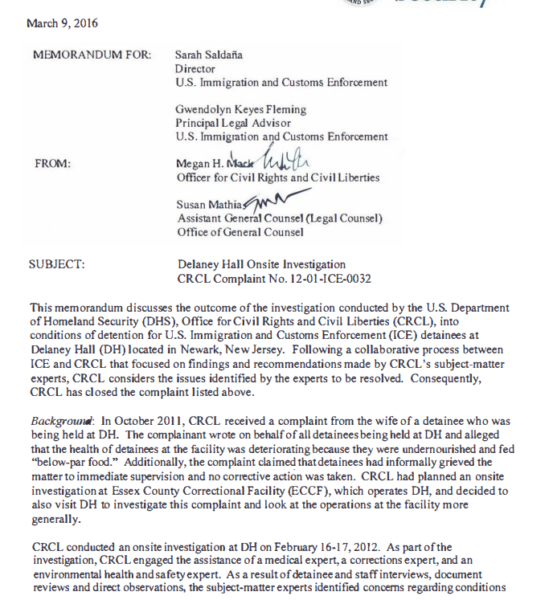
Don’t believe it? You can read the federal report here.
Complaint Alleged Detainees Were Undernourished
According to the federal report, CRCL received a complaint in October 2011 from the wife of a detainee being held at Delaney Hall.
The complaint alleged that detainees’ health was deteriorating because they were being fed “below-par food” and were undernourished. The complaint further claimed detainees had raised concerns internally but saw no corrective action.
Those allegations prompted federal investigators to conduct an onsite inspection of Delaney Hall on Feb. 16-17, 2012.
Investigators interviewed detainees and staff, reviewed documents, and conducted direct observations inside the facility. The review involved experts in medical care, corrections operations, and environmental health and safety.
Nine Recommendations Issued
The investigation resulted in nine recommendations covering several operational areas.
Federal experts identified concerns involving:
- Medical care
- Detainee grievances
- Communication between medical staff and detainees
- Correctional operations
- Environmental health and safety issues
The report does not conclude that the facility was unsafe overall, but it documents that investigators found enough issues to warrant formal recommendations and corrective actions.
Key Points
• Federal investigators examined Delaney Hall after a 2011 complaint alleged detainees were undernourished and receiving “below-par food.”
• The investigation identified concerns involving medical care, grievances, communication, operations, and sanitation.
• DHS later concluded the facility and ICE addressed all nine recommendations and formally closed the complaint.
ICE Agreed to Corrective Measures
The report shows Immigration and Customs Enforcement ultimately concurred with or partially concurred with eight of the nine recommendations. Even for the lone recommendation with which ICE technically disagreed, the agency said the facility implemented the suggested change anyway.
Among the improvements cited by DHS:
Federal officials directed improvements to the handling of medical grievances, including scanning complaints into electronic medical records and conducting trend analyses to identify recurring problems.
Investigators also recommended better communication between medical staff and detainees. ICE reported that staff completed cultural competency and diversity training and increased use of interpretation services for detainees with limited English proficiency.
The report also highlighted sanitation concerns, prompting the development of detailed housekeeping procedures and regular cleanliness inspections.
Additional changes were made to barber and grooming operations after inspectors identified deficiencies involving cleaning and disinfecting equipment.
Federal Government Closed the Complaint
Perhaps the most significant finding is that the federal government ultimately concluded the identified issues had been addressed.
After several years of review and corrective actions, the Office for Civil Rights and Civil Liberties formally closed the complaint in March 2016, stating that ICE had “adequately addressed the nine expert recommendations.”
The office praised cooperation between ICE and Delaney Hall operators and described the investigation as resolved.
Echoes of Today’s Debate
The report reveals that some of the same concerns being discussed outside Delaney Hall in 2026—including food quality, detainee grievances, and healthcare access—were being raised years ago under a different administration and facility operator.
At the same time, the document also shows that federal inspectors investigated those allegations, issued recommendations, and later concluded that corrective measures had been implemented.
That history may complicate efforts to portray the current controversy solely through a partisan lens. The facility’s challenges—and disputes over conditions inside its walls—appear to predate today’s political battles by more than a decade.
The latest allegations involving food, medical care, and living conditions remain the subject of ongoing debate, inspections, and public scrutiny. Neither current claims nor the facility’s present operations were evaluated in the 2016 report, which addressed complaints stemming from Delaney Hall’s earlier period as an immigration detention center.
Delaney Hall, ICE detention, immigration detention conditions, Newark immigration facility