
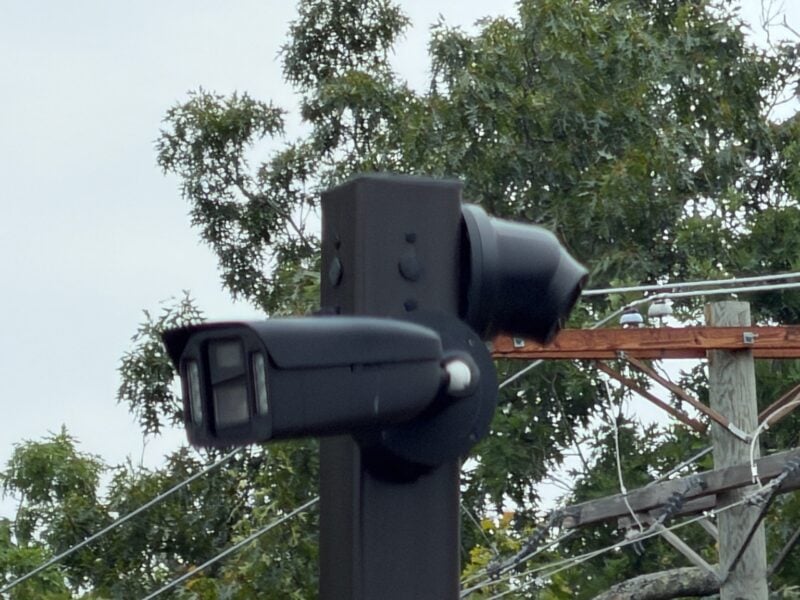
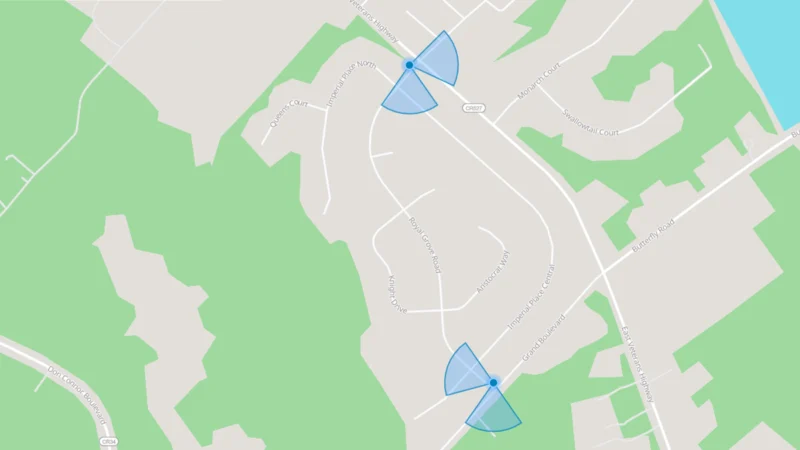
JACKSON, N.J. — Drivers entering and leaving the Royal Grove neighborhood in Jackson Township are having their license plates recorded by a pair of automated license plate reader cameras mounted on private property at the community’s entrances.
The two cameras, which appear consistent with Flock Safety’s Falcon automated license plate reader (ALPR) system, are located at the intersections of East Veterans Highway and Royal Grove Boulevard and Grand Boulevard and Royal Grove Boulevard.
Historical Google Street View imagery indicates the cameras were installed sometime within the past two years.
While the cameras are plainly visible from public roadways, it is currently unknown who owns or manages the system, whether it is connected to law enforcement, a homeowners association, private security, or another entity, or what policies govern the collection and retention of the data.
It is also unknown if the township approved the installation of the cameras or whether they are working in conjunction with the township police department at this time.
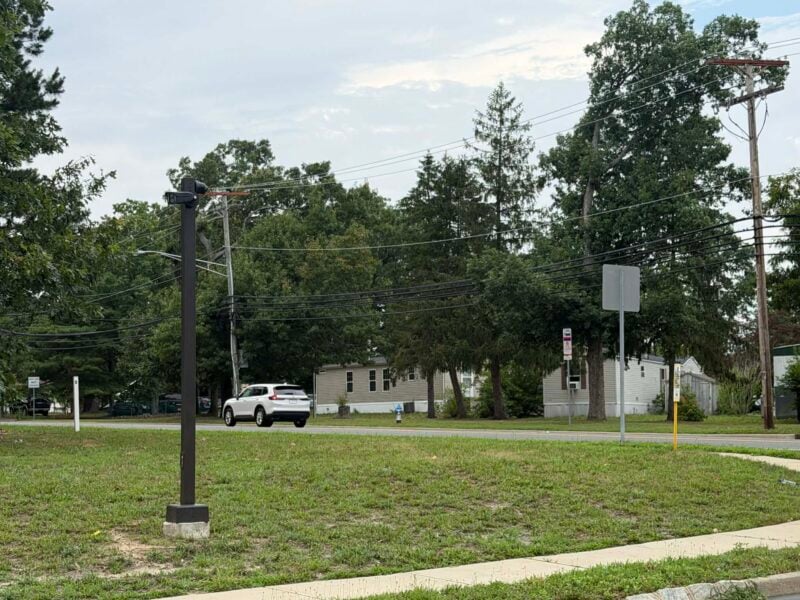
Cameras monitor every passing vehicle
Based on their design, the cameras appear to consist of two separate units mounted on a single pole.
One camera is designed to capture high-resolution images of license plates using infrared illumination, allowing it to read plates during both daytime and nighttime conditions.
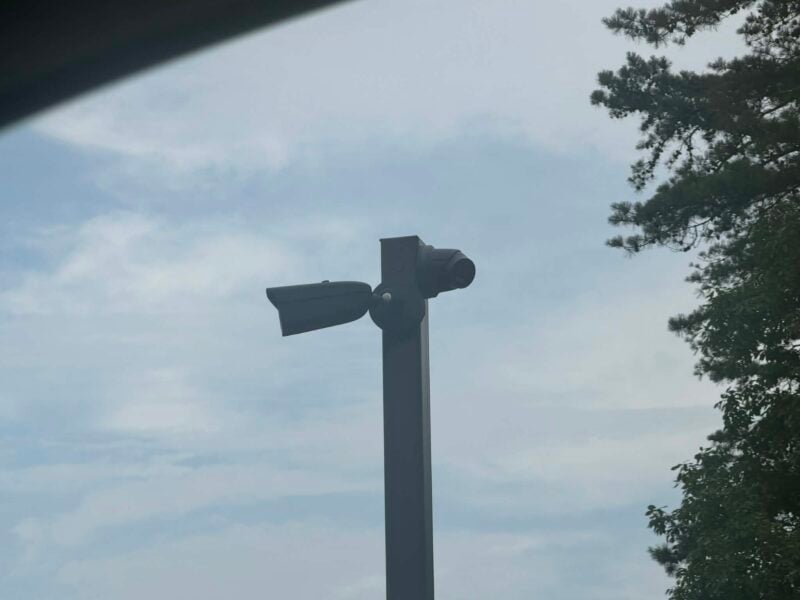
The second camera provides a wider overview image, recording the vehicle’s make, model, color, direction of travel and other visible characteristics such as roof racks, bumper stickers or body damage.
Unlike traditional traffic cameras, automated license plate readers continuously scan every vehicle that passes through their field of view rather than only documenting traffic violations.
Flock Safety states its cameras do not use facial recognition technology and are designed to identify vehicles rather than individual occupants.
Questions remain about data access
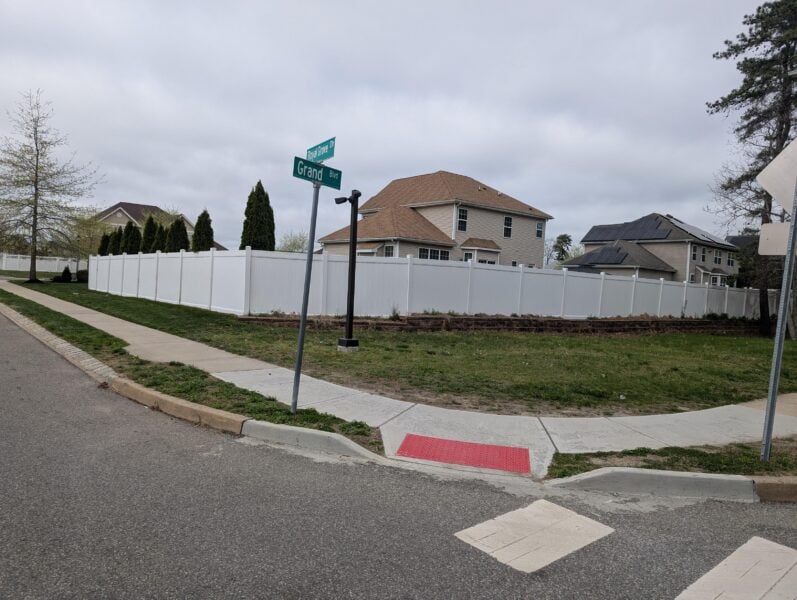
Because the Royal Grove cameras appear to be installed on private property rather than township-owned poles, questions remain about who has access to the information they collect and why they are collecting the information from public roads.
Flock Safety systems can be deployed by municipalities, police departments, homeowners’ associations, gated communities, businesses, and private property owners, however this installation is a hybrid system, apparently privately owned, but collecting data on vehicles operating on public roadways.
Depending on how a particular system is configured, data may be available only to the owner or shared with participating law enforcement agencies for criminal investigations.
At this time, there is no public information identifying who controls the Royal Grove cameras or whether the data is shared beyond the property owner.
Privacy debate continues
Automated license plate readers have become increasingly controversial across the country as their use has expanded.
Supporters argue the systems help police quickly locate stolen vehicles, identify suspects and generate investigative leads.
Privacy advocates, including the American Civil Liberties Union and the Electronic Frontier Foundation, have expressed concerns that widespread deployment creates large databases documenting the movements of law-abiding motorists.
Civil liberties groups have also pointed to documented instances in which license plate databases were improperly accessed by law enforcement officers for personal reasons, as well as concerns over cybersecurity and the potential sharing of information among agencies.
Automated license plate readers have also been the subject of litigation and legislative debate in several states over data retention, access controls and privacy protections.
The apparent Royal Grove installation differs in that it is located on private property serving a residential neighborhood, and there has been no public announcement identifying the owner or explaining how the information collected is managed.
The solar-powered cameras photograph passing vehicles and record license plate numbers along with a vehicle’s make, model, color and other identifying characteristics.
Shore News Network has reached out for information regarding the ownership and operation of the cameras and will update this story if additional details become available.