
SEASIDE HEIGHTS, N.J. — More than half a century ago, cameras rolled through Seaside Heights to sell visitors on a summer vacation at the Jersey Shore. Today, the surviving images from that 1973 tourism film offer something considerably more valuable: a remarkably vivid time capsule of what the borough looked and felt like during one of its busiest eras.
The photographs show a town already unmistakably Seaside Heights. The boardwalk is crowded. Casino Pier rises over the beach. Families pack the sand nearly to the waterline. Pizza, games and amusement stands compete for attention. On the quieter bay side of town, children and adults fish from wooden docks.
But almost everything surrounding those familiar traditions looks different.
A Beach Packed From the Boardwalk to the Atlantic
One of the most striking scenes is simply the number of people on the beach.
Hundreds of vacationers fill the sand and surf while the amusement pier stretches into the Atlantic in the background. Beach umbrellas are relatively scarce. Instead, families sit directly on blankets and towels, while groups of teenagers and children gather near the water.
The clothing immediately dates the scene. Men and boys wear the short swim trunks of the period, while women wear brightly colored one-piece swimsuits and two-piece suits characteristic of the late 1960s and early 1970s.
Near the center of the photograph is a large wooden Seaside Heights Beach Patrol boat sitting directly on the sand. Children pose alongside it while swimmers crowd the ocean behind them.
There are no cellphones in anyone’s hands and no portable speakers, beach carts or modern pop-up canopies dominating the sand.
The attraction is the beach itself.
The Boardwalk Was Already the Center of Town
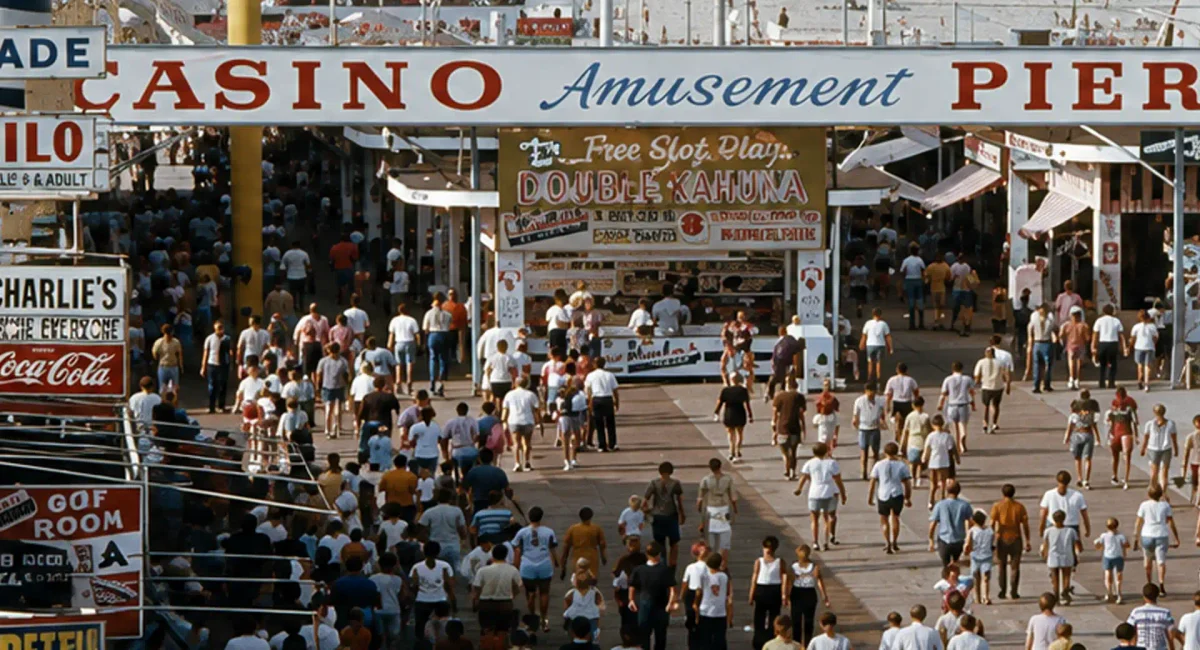
Another image looks down a crowded section of the boardwalk toward the entrance to Casino Amusement Pier.
The scene could almost be recognized by a modern visitor, but the details belong unmistakably to another era.
Large painted signs dominate the storefronts. A Coca-Cola advertisement hangs beside a food stand. Visitors walk beneath the enormous Casino Amusement Pier sign as games and concessions line both sides of the boardwalk.
The crowd itself tells part of the story.
Men walk the boards in shorts, T-shirts and collared shirts. Women wear summer dresses, shorts and blouses. Children weave between groups of adults. There are no electronic signs or digital displays. Nearly every advertisement has been painted, printed or constructed by hand.
It was commercial, colorful and crowded — the same formula that continues to define the Seaside Heights boardwalk decades later.
Lunch Along the Boardwalk
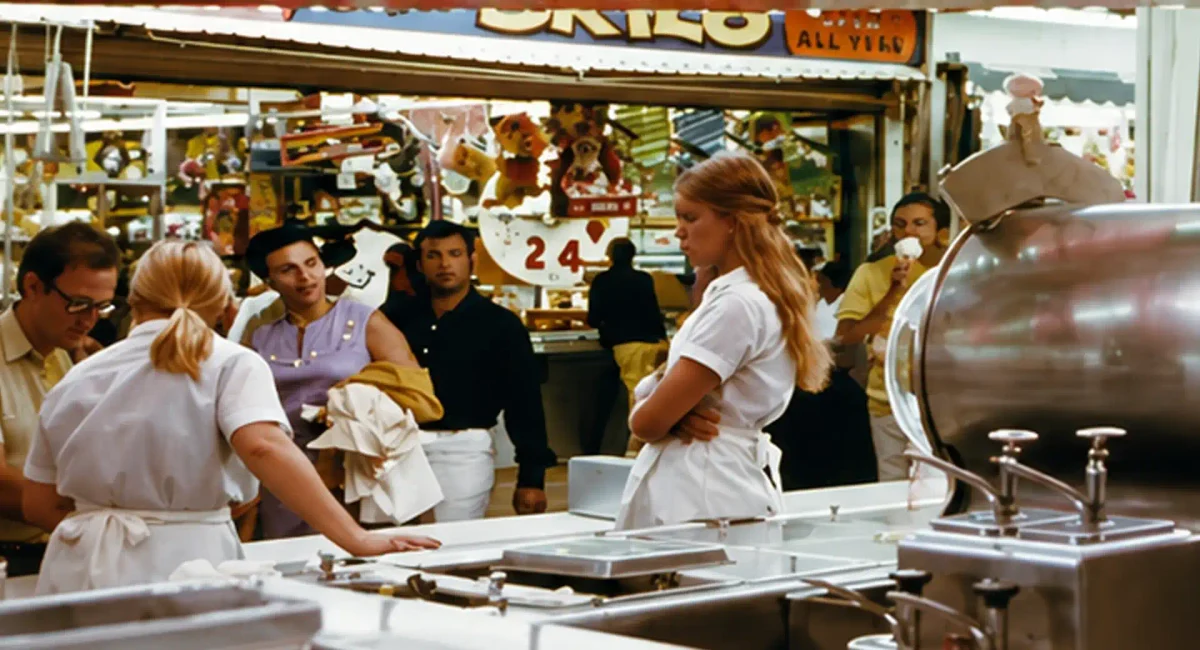
The tourism film also went behind the counter.
One photograph shows workers serving customers at a busy boardwalk food concession. Stainless-steel counters and equipment fill the foreground while employees in white uniforms work behind them.
Customers stand only a few feet away.
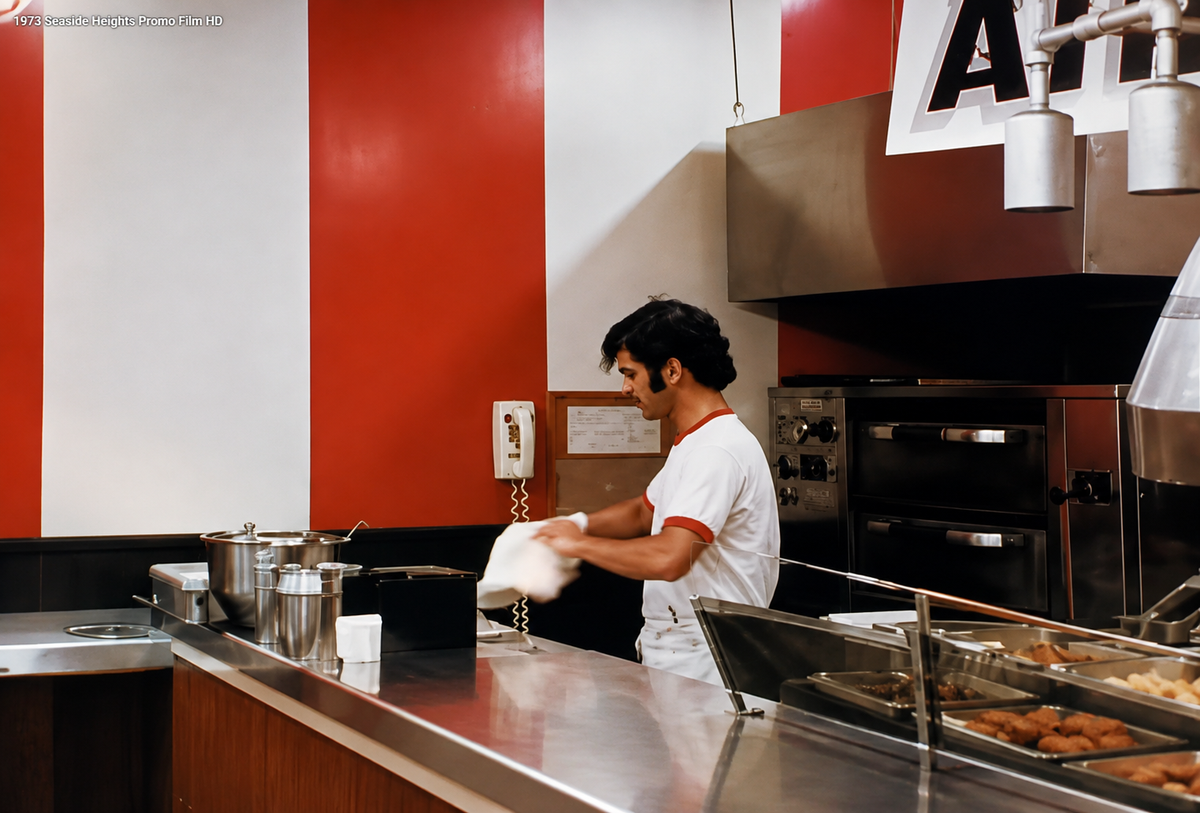
Another image captures a worker preparing food inside a red-and-white boardwalk pizza stand. Large commercial ovens, stainless-steel pans and cooking equipment surround him as he works behind the counter.
These scenes preserve an often-overlooked part of Seaside Heights history.
The boardwalk wasn’t powered only by rides and games. Thousands of summer visitors had to be fed, creating a seasonal economy of pizza shops, hamburger stands, ice cream counters, candy stores and other concessions staffed by generations of Shore workers.
For many teenagers and young adults, those counters were also where they spent their summers working.
When Bathing Beauty Contests Were Boardwalk Entertainment
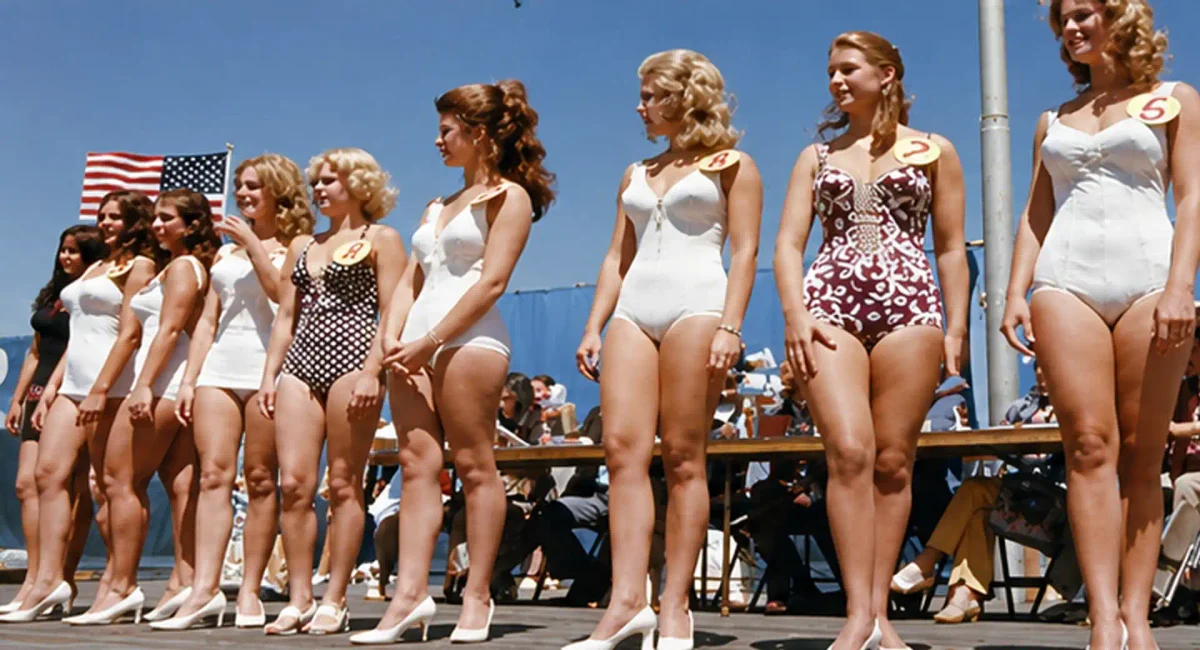
Perhaps the image most firmly rooted in its time shows a bathing beauty competition.
Contestants stand in a line outdoors beneath a cloudless summer sky wearing numbered badges and one-piece swimsuits. Judges and spectators sit behind them while an American flag flies nearby.
Beauty contests were once a familiar form of entertainment at American beaches, fairs and amusement destinations, and the 1973 film presented the event as another piece of the Seaside Heights summer experience.
The hairstyles, swimsuits and presentation make the photograph one of the clearest visual markers of the era.
Today it functions less as an advertisement and more as a cultural snapshot — a record of the kinds of public entertainment considered ordinary along the Jersey Shore in the early 1970s.
Casino Pier Before Generations of Change
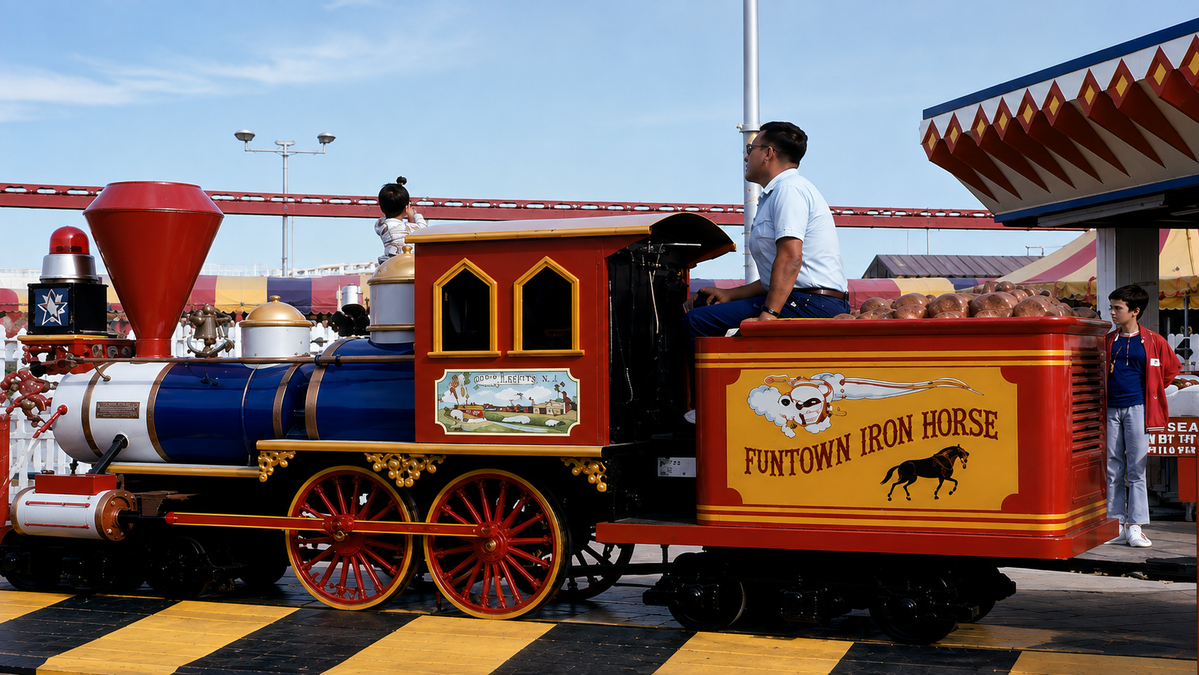
Casino Pier appears repeatedly in the film.
The amusement area seen in these photographs is dramatically different from the pier visitors know today. Rides and attractions visible in the distance represent an earlier generation of Shore amusement parks, when relatively simple mechanical rides, games and concessions were packed tightly together above the ocean.
The pier was already a visual landmark.
From the beach, its rides rise above the boardwalk and wooden pilings. From the boardwalk, visitors disappear beneath the large Casino Amusement Pier entrance into a dense collection of attractions.
Over the following five decades, storms, fires, redevelopment and changing tastes would repeatedly reshape the Seaside Heights amusement district.
The 1973 photographs preserve one particular version before much of that transformation occurred.
The Other Side of Seaside Heights
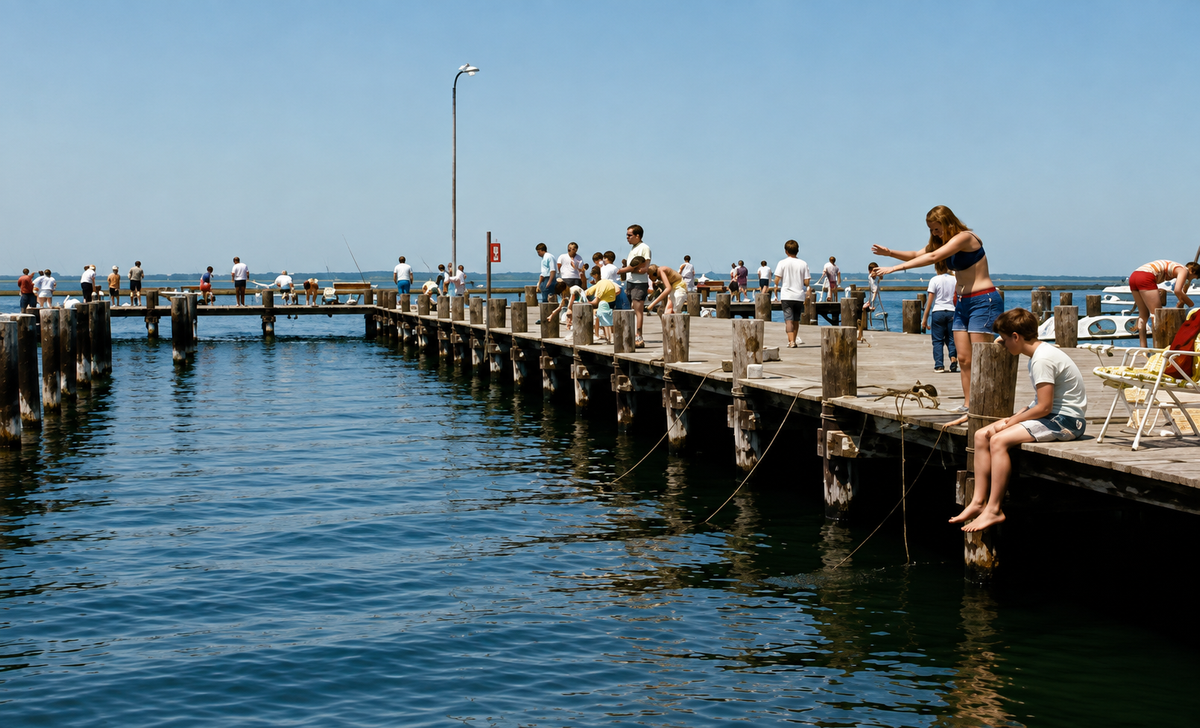
Not every summer afternoon was spent on the oceanfront.
One photograph turns the camera west toward Barnegat Bay, where a long wooden fishing pier extends over calm water.
People line the dock with fishing rods. Children peer into the water. Small boats sit nearby. A boy dangles his bare feet over the edge while others gather around the pilings.
Compared with the packed ocean beach and crowded boardwalk, the photograph feels almost quiet.
It is also a reminder that Seaside Heights has always existed between two very different waterfronts.
Only a few blocks separated the crashing Atlantic Ocean, amusement rides and boardwalk crowds from the calmer waters of Barnegat Bay, where fishing, crabbing and boating provided a different kind of Shore vacation.
A Familiar Building Along the Sand
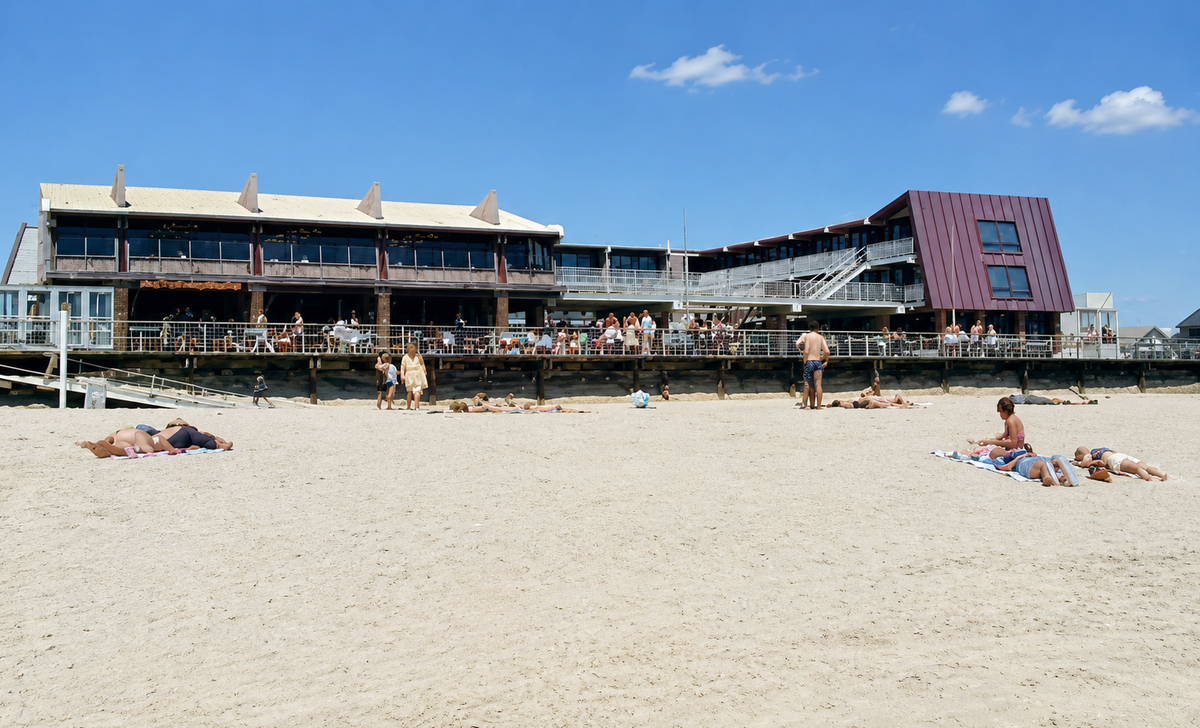
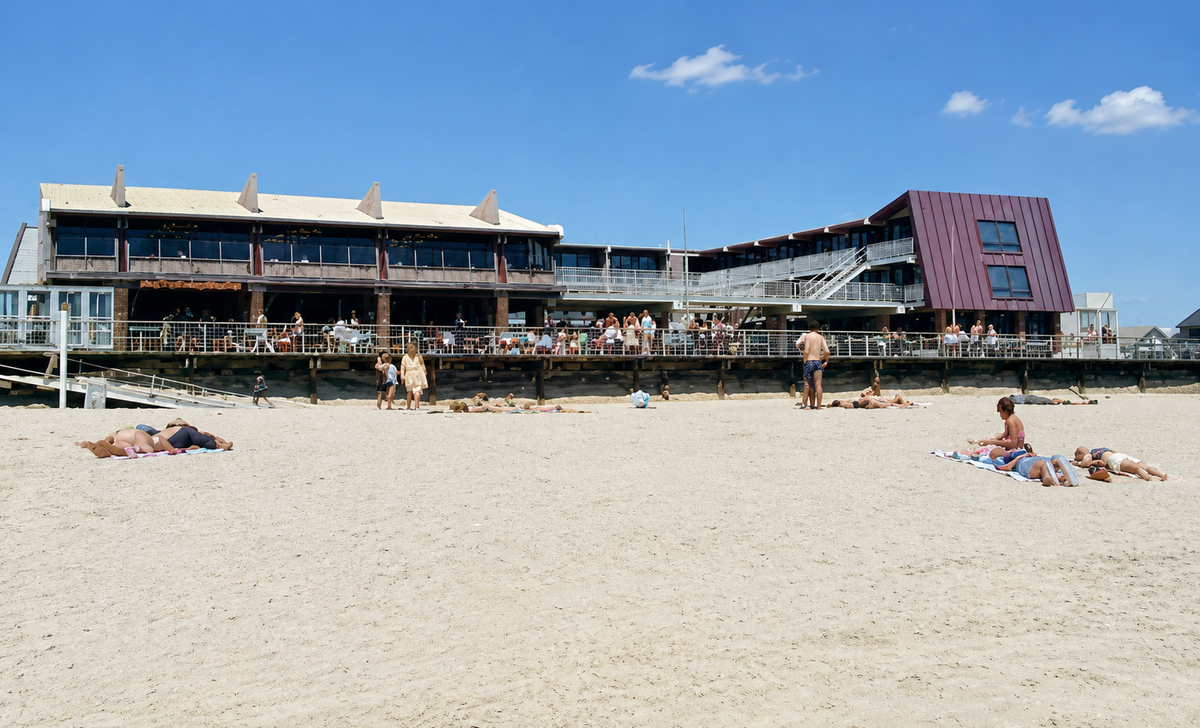
Another photograph shows a large oceanfront building stretching along the beach as sunbathers lie scattered across the foreground.
People gather along elevated decks facing the ocean while others move between the building and beach.
Unlike the densely packed beach scene near the amusement pier, this section of sand appears relatively open. The photograph provides a broader view of the architecture that once lined the Seaside Heights oceanfront — buildings designed around decks, open-air dining and direct access to the beach.
It also shows just how much the physical appearance of the borough has changed.
Buildings have disappeared or been rebuilt. Businesses have changed names. Amusement rides have come and gone. Storms have altered the beachfront. Generations of motels, restaurants and boardwalk attractions have been replaced.
Seaside Heights, Frozen in One Summer
The greatest value of the 1973 tourism film may be the ordinary things its filmmakers never intended to document.
A wooden lifeguard boat.
A crowded fishing pier.
A boardwalk employee preparing food.
Children standing barefoot beside the ocean.
Families sitting together on the sand.
Hand-painted concession signs.
Teenagers gathering with friends.
Thousands of visitors walking beneath the Casino Pier sign on a summer afternoon.
At the time, these were simply promotional images intended to convince families to spend their vacation in Seaside Heights.
More than 50 years later, they have become historical documents.
The rides have changed. The buildings have changed. The bathing suits and hairstyles certainly changed.
But look beyond those details and the basic rhythm of a Seaside Heights summer remains surprisingly recognizable: get to the beach in the morning, walk the boardwalk, grab something to eat, ride the amusements, fish or crab on the bay and do it all again the next day.
For anyone who spent childhood summers in Seaside Heights, the photographs offer something increasingly difficult to find — a clear window into the Jersey Shore of 1973.