
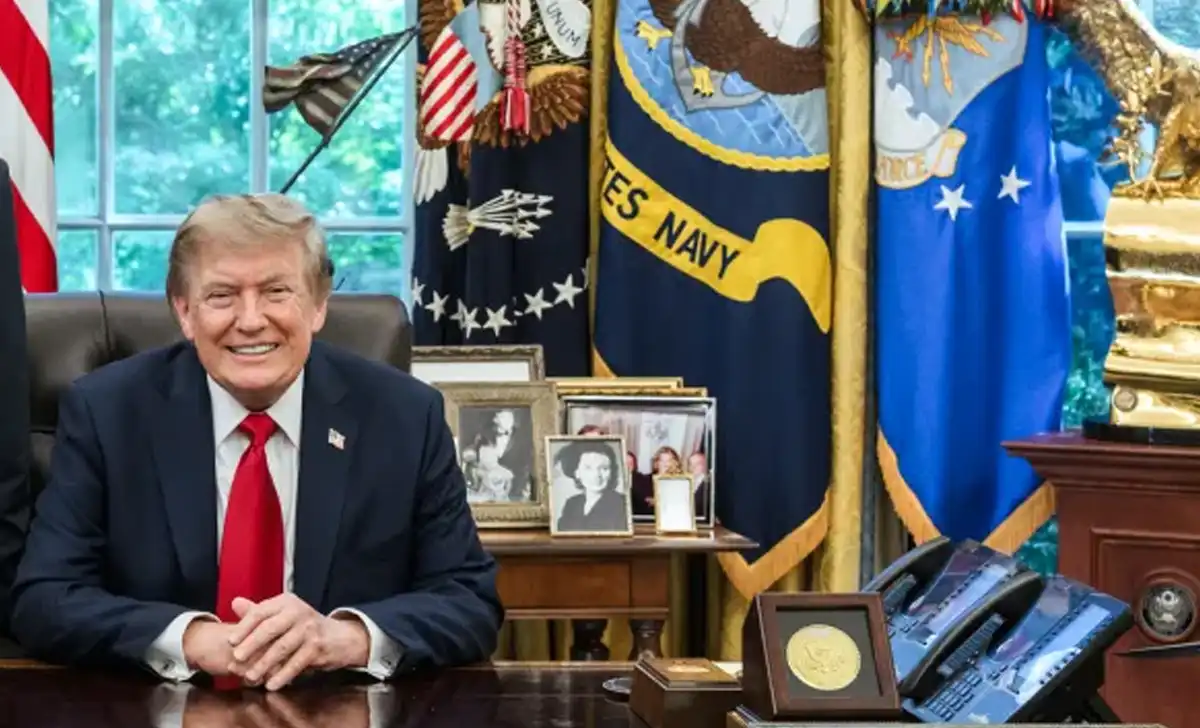
WASHINGTON – Democrats who broadly supported a Biden-era push that changed hundreds of federal geographic names are now sharply criticizing President Donald Trump’s decision to rename two major bodies of water for federal use, including Lake Ontario as “Lake America.”
The contrast emerged again after Trump signed an Aug. 27 executive order directing federal agencies to use Lake America for Lake Ontario. It followed his earlier move to rename the Gulf of Mexico the Gulf of America in federal usage, both changes promoted as expressions of American identity and national pride.
Democratic critics have called Trump’s renamings silly, embarrassing, juvenile and distracting. Yet under President Joe Biden, the federal government deliberately changed nearly 650 geographic names containing a term Interior officials deemed derogatory, while the Pentagon separately carried out congressionally mandated renamings of prominent military installations.
Those renamings under Biden went far beyond silly and embarassing and even sparked a trend in the private sector that eventually led to the renaming of the NFL’s Washington Redskins and MLB’s Cleveland Indians.
It was an embarrassing moment in American history.
- Nearly 650 geographic features received new federal names during the Biden administration after Interior moved to eliminate a term it considered derogatory. Many have been changed back.
- Nine major Army installations also received new names under a separate congressionally mandated process implemented during Biden’s presidency. All have been changed back.
- Leading Democrats have attacked Trump’s Gulf of America and Lake America changes as frivolous, divisive or distracting, though they spent much of the Biden presidency renaming hundreds of national places.
Biden Administration Made Renaming Part of Its Federal Policy
The largest Biden-era geographic renaming effort began in November 2021, when Interior Secretary Deb Haaland formally declared the word historically used as “squaw” derogatory and ordered it removed from federal geographic nomenclature.
The Department of the Interior created a Derogatory Geographic Names Task Force and an advisory committee to develop replacement names. By September 2022, the U.S. Board on Geographic Names had approved replacements for nearly 650 mountains, lakes, creeks, valleys and other geographic features across the country.
The administration said the previous terminology amounted to an ethnic, racial and sexist slur against Indigenous women. The process included thousands of public comments as well as tribal consultation.
Among the changes were Squaw Valley, California, becoming Yokuts Valley; Squaw Hill, California, becoming Loybas Hill; and Squaw Gap, North Dakota, becoming Homesteaders Gap.
The military was undergoing its own sweeping renaming effort at the same time.
Nine major Army installations received new names, including Fort Bragg becoming Fort Liberty, Fort Hood becoming Fort Cavazos, Fort Benning becoming Fort Moore and Fort Gordon becoming Fort Eisenhower.
Congress established the Naming Commission in defense legislation enacted after lawmakers overrode Trump’s veto in December 2020, and the Biden Defense Department subsequently implemented its recommendations.
The Biden-era approach embraced a broader principle: longstanding federal names could be changed when the government determined they conveyed values or historical associations officials no longer wanted to commemorate. Or, names they felt were offensive.
How many geographic features were renamed during the Biden administration?
Nearly 650 geographic features were given replacement federal names through the Interior Department process aimed at removing a term the government classified as derogatory.
Trump Turns Renaming Power Toward American National Identity
Trump took federal naming policy in a different direction after returning to office.
On Jan. 20, 2025, he moved to designate the Gulf of Mexico as the Gulf of America for federal purposes and restore Mount McKinley as the federal name for Denali.
The Gulf change quickly became a partisan flashpoint. Senate Democratic Leader Chuck Schumer characterized the proposal as “zany,” while House Democratic Leader Hakeem Jeffries later called Republican legislation concerning the name “silly” and “sycophantic.” Rep. Mary Gay Scanlon called it “embarrassing.”
Trump escalated the dispute Aug. 27 when he ordered the federal government to use Lake America in place of Lake Ontario.
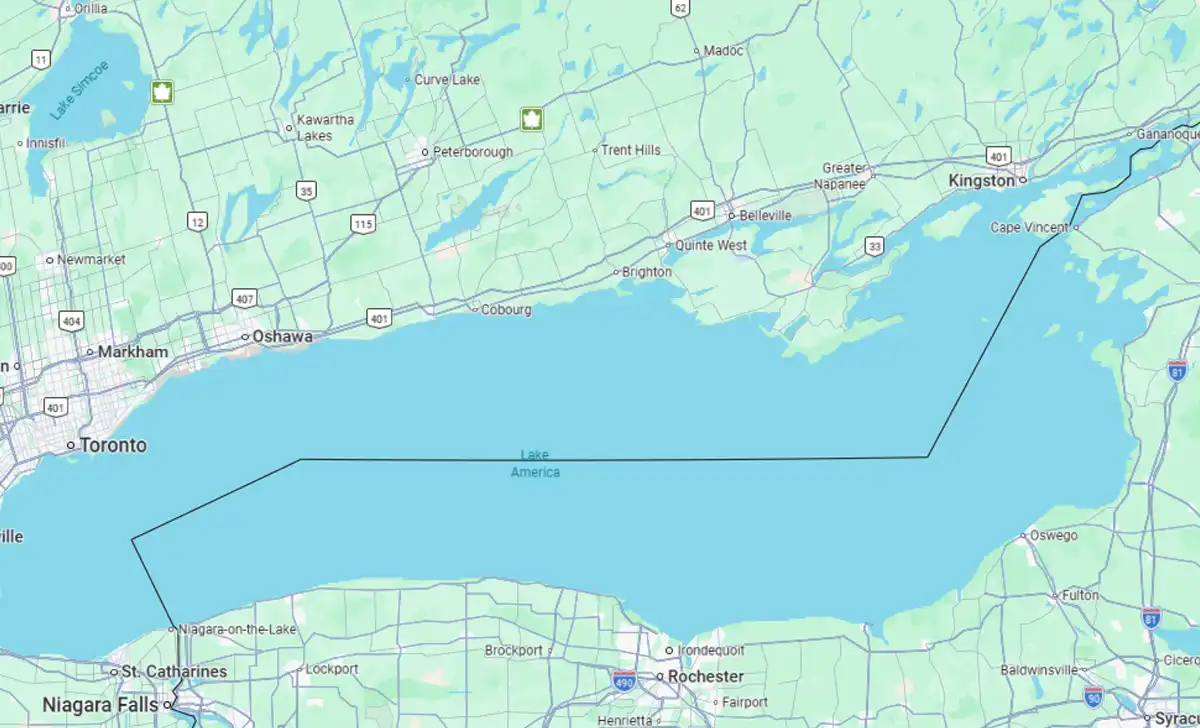
The order directs federal departments and agencies to adopt the new terminology and update the federal Geographic Names Information System. Trump’s rationale centered on American commerce, defense, investment in the Great Lakes and the lake’s place in U.S. history.
The Lake Ontario change carries an international complication that the Biden-era domestic geographic renamings generally did not: the lake is shared by the United States and Canada. Washington changing its federal terminology does not compel Canada to adopt the name.
Why is Trump calling Lake Ontario “Lake America”?
Trump’s order presents the change as recognition of the lake’s importance to American history, commerce and national defense. The designation applies to U.S. federal usage and does not require Canada to change what it calls the lake.
Democratic opposition was immediate.
New York Gov. Kathy Hochul declared, “New York won’t be calling it that.” Schumer described the order as a “juvenile effort” and “pathetic attempt at distraction,” while Michigan Rep. Debbie Dingell said Trump could issue executive orders but “it will always be Lake Ontario.”
Former Secretary of State Hillary Clinton was even more concise: “It’s Lake Ontario.”
Same Power, Very Different Arguments Over Why Names Should Change
The political contradiction is more nuanced than simply saying Democrats supported renaming under Biden and oppose all renaming under Trump.
Biden’s Interior Department argued its changes were necessary to eliminate terminology it considered offensive to Indigenous people. The military installation changes targeted Confederate commemoration and arose from legislation passed by Congress rather than a unilateral Biden order.
Trump’s Gulf and Lake changes have a fundamentally different stated purpose. Instead of removing terminology considered offensive, his administration has used federal naming authority to emphasize American nationalism, history and pride.
That difference explains much of the parties’ competing arguments, but it does not erase the political contrast.
Democrats accepted — and Biden administration officials celebrated — extensive government-directed renaming when they believed existing names represented racism, sexism or Confederate commemoration. Some of the party’s most prominent leaders now argue that Trump’s effort to use federal naming authority for patriotic symbolism is unnecessary, divisive or ridiculous.
The clearest comparison may be Schumer. As Senate Democratic leader during the Biden administration’s implementation of its renaming policies, he later personally attacked Trump’s Gulf proposal as “zany” and his Lake America order as “juvenile.”
Trump has also reversed portions of the Biden-era military renaming effort in an unusual way. His administration restored several familiar base names while attaching them legally to different American servicemembers rather than their original Confederate namesakes. Fort Liberty, for example, again became Fort Bragg, but now honors World War II Silver Star recipient Pfc. Roland L. Bragg rather than Confederate Gen. Braxton Bragg.
Democrats backed hundreds of federal name changes during the Biden era but are attacking Trump’s Gulf of America and Lake America renamings as divisive distractions.
Sources: U.S. Department of the Interior and U.S. Board on Geographic Names actions; Department of Defense Naming Commission process; Trump administration executive actions; statements from Democratic elected officials, as compiled in the supplied research.