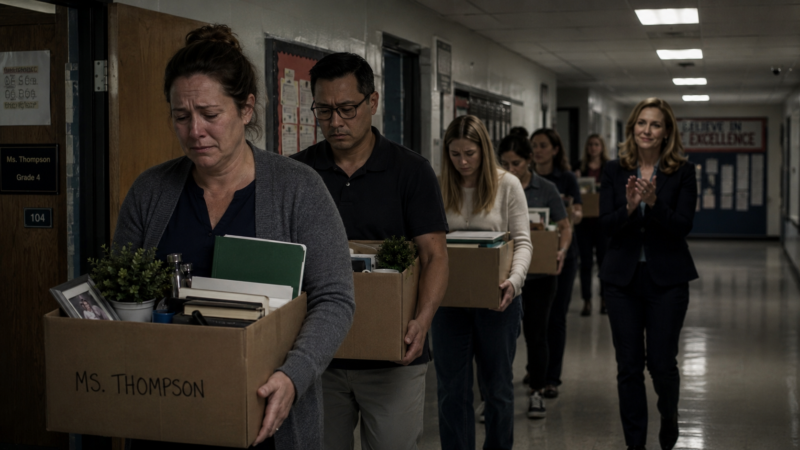
Trenton, NJ – School districts across New Jersey are cutting teachers, closing schools, eliminating student programs, and increasing class sizes as the long-running effects of the state’s S2 school funding law continue reshaping education budgets — even as Newark Public Schools prepares to receive tens of millions more in state aid.
Administrators across suburban and shore communities say they are being forced into painful reductions because of shrinking state support, rising healthcare and pension costs, and declining enrollment. Meanwhile, large urban districts including Newark continue receiving significant increases under New Jersey’s school funding formula.
The growing divide has fueled renewed criticism of the state’s controversial S2 funding adjustments, first signed into law in 2018 to redistribute aid toward districts considered historically underfunded.
Now, districts losing aid argue the formula has destabilized schools across the state.
Districts Across New Jersey Announce Layoffs, Closures, and Cuts
A growing list of districts has publicly announced major reductions heading into the 2026-27 school year:
Camden City School District
Camden issued roughly 100 layoff notices affecting central office and district staff as officials attempt to restructure operations amid enrollment declines and budget pressure.
Lakewood Township School District
Lakewood announced 164 staffing cuts, among the largest reductions reported statewide. The district has repeatedly warned of severe financial strain tied to special education costs, enrollment growth, and disputes over state funding.
Middletown Township Public Schools
Middletown approved the closure of two elementary schools and eliminated approximately 40 jobs while trying to close a $3.2 million budget deficit.
Bernards Township School District
Officials warned as many as 30 teaching positions could be cut. The district is also considering student participation fees ranging from $50 to $200 for extracurricular activities.
Robbinsville School District
Robbinsville eliminated 15 staff positions, cut its AVID college readiness program, and reduced mental health staffing after a failed referendum.
Montclair Public Schools
Montclair plans more than 30 teacher reductions despite implementing a nearly 4% tax levy increase.
Ocean Gate School District
Ocean Gate voted to permanently close its only school after residents rejected a tax increase proposal. Students will attend Berkeley Township schools instead.
Passaic Public Schools
Passaic announced 51 job cuts tied largely to reductions in state aid.
Hackensack Public Schools
District officials disclosed a projected multi-million-dollar shortfall and warned staffing reductions are expected.
Paterson Public Schools
Paterson has reported layoffs and program cuts tied to rising operational costs and aid pressures.
Clifton Public Schools
Clifton officials confirmed staffing and program reductions as budget constraints worsen.
Ridgewood Public Schools
Ridgewood announced staff and service reductions amid growing financial pressure affecting multiple Bergen County districts.
Westwood Regional School District
The district has also moved forward with staffing reductions.
Dennis Township School District
Dennis Township previously eliminated courtesy busing and after-school programs due to aid reductions and rising costs.
Toms River Regional Schools
Toms River has pursued asset sales and service reductions to stabilize finances after repeated warnings about unsustainable budget conditions.
Jackson Township Became a Symbol of the Crisis
So many school teacher cuts from the districts who get the most money, what the heck is happening? pic. /PzoJdidEXV
— New Jersey Project (@fight4newjersey) May 16, 2026
Jackson Township schools became one of the clearest examples of how deeply financial pressure has reshaped district operations in New Jersey.
In 2025, the district sold two school buildings and merged its high schools in an attempt to stabilize long-term finances after years of budget deficits and enrollment changes.
The consolidation generated significant backlash from parents and residents but underscored the increasingly drastic decisions districts are making to remain solvent.
School leaders throughout Monmouth, Ocean, Bergen, Passaic, Camden, and Essex counties now warn similar consolidations may follow if funding conditions continue deteriorating.
Key Points
• More than a dozen New Jersey districts announced layoffs, school closures, or program cuts for 2026-27
• Jackson Township sold two schools and merged high schools in 2025 amid severe financial strain
• Critics blame New Jersey’s S2 funding law as Newark and other urban districts continue receiving major aid increases
What Is S2 and Why Districts Blame It
The controversy centers around New Jersey’s S2 school funding law, enacted in 2018 under former Gov. Phil Murphy.
The law gradually reduced aid to districts considered “overfunded” while redirecting money toward districts the state determined were receiving less than their calculated adequacy targets.
Supporters argued the law corrected long-standing inequities.
But many suburban and shore districts say the reductions arrived faster than communities could absorb, especially as inflation, pension obligations, transportation costs, and employee healthcare expenses surged.
Districts losing aid also point to enrollment declines that reduced state funding even further.
The result, administrators say, has been years of recurring layoffs, referendum battles, school closures, and cuts to student services.
Mental health staffing, courtesy busing, extracurricular programs, and classroom positions have increasingly moved onto the chopping block.
Newark Continues Receiving Major State Aid Increases
While districts across much of the state cut staff and services, Newark Public Schools continues receiving substantial increases in state aid under the funding formula.
Newark has received tens of millions of additional dollars in recent state budgets as officials work to fully fund the district under the School Funding Reform Act calculations.
Supporters of the aid increases argue Newark and similar districts historically lacked equitable funding and continue serving large populations of high-needs students.
Critics, however, say the redistribution has created a widening imbalance where some districts face layoffs and closures while others expand spending.
The issue has become increasingly political as local officials from both parties demand changes to the funding formula before additional districts face deeper reductions.
Education advocates warn the growing financial divide could permanently reshape public education across New Jersey if long-term funding solutions are not reached.
As districts finalize budgets for the 2026-27 school year, many administrators continue warning that more layoffs, larger class sizes, and additional school consolidations remain possible.
You might also like












You might also like