


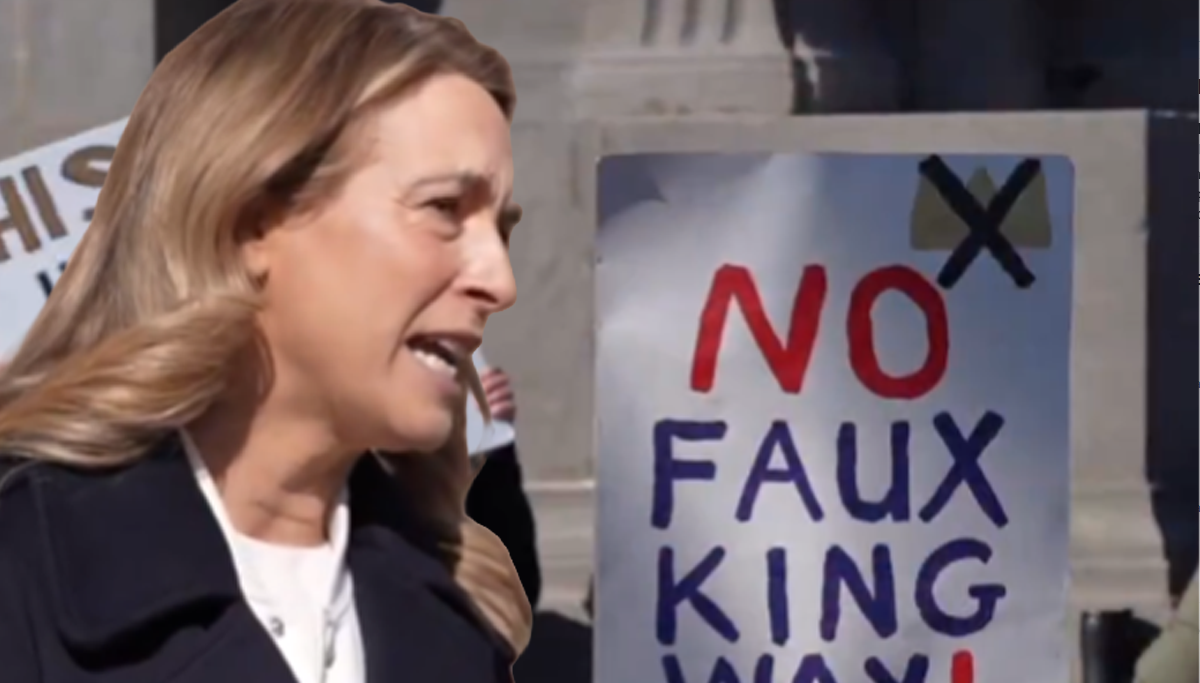
New Jersey Gov. Mikie Sherrill’s increasingly confrontational relationship with the Trump administration has moved from political rhetoric and policy resistance into a direct legal fight over New Jersey’s voter rolls.
The dispute began with an extraordinary admission the Governor: approximately 6,600 people who identified themselves as noncitizens during transactions with the New Jersey Motor Vehicle Commission were nevertheless transmitted into the voter-registration system between June 2023 and June 2024. A preliminary state review found that fewer than 400 of those individuals subsequently cast ballots.
That disclosure gave the Trump administration a powerful new argument in its nationwide push to obtain state voter files and identify potentially ineligible registrants.
It also placed Sherrill in a politically difficult position. She had to acknowledge a serious election-administration failure while simultaneously resisting a federal administration she accuses of using election integrity as a pretext for voter suppression and political intimidation.
The conflict took a sharper turn when Sherrill rejected a Department of Justice demand for extensive personal information connected to the affected registrations.
She claims her decision was not simply a refusal to investigate the underlying problem. New Jersey says it is conducting its own investigation, removing registrations it has determined were improper and reviewing uncertain cases individually. The refusal centered on whether the state must hand sensitive personal information to federal officials—and whether the DOJ has lawful authority to demand it.
The registration breakdown
According to Sherrill, the problem originated in the MVC’s automatic voter-registration process during the administration of former Gov. Phil Murphy.
The affected customers had reportedly indicated through an electronic MVC system that they were not United States citizens and had not certified that they were eligible to vote. Despite those responses, their information was transmitted for registration processing.
Sherrill blamed a serious software failure involving MVC vendor IDEMIA and announced that the state would replace the vendor and commission an independent investigation. IDEMIA has disputed the suggestion that it alone was responsible, arguing publicly that voter-eligibility decisions remained the state’s responsibility.
The administration initially described the affected group broadly as noncitizens. Its subsequent review, however, introduced an important qualification.
The Division of Elections began moving to remove more than 4,500 people registered solely through the software error. The remaining roughly 2,100 cases were sent to county election officials for further review because state officials said some of those people might now be citizens—or might otherwise be legally registered.
That distinction matters. The original pool consists of people who identified themselves as noncitizens during the relevant MVC transaction, but it does not necessarily establish that every person remained a noncitizen when registered or when voting. The state has not publicly released a complete final accounting establishing how many of the fewer than 400 ballots were cast by people who were legally ineligible at the time.
Federal prosecutors have separately brought individual cases against noncitizens accused of voting in New Jersey elections.
In January 2026, two Bergen County men were indicted on charges including illegally voting in a federal election.
Four other resident aliens were charged in separate cases announced in April, and a Toms River resident pleaded guilty in June to voting as a noncitizen.
Those prosecutions establish that illegal noncitizen voting has occurred in New Jersey, but they do not by themselves prove that the MVC error involved a coordinated or partisan voting operation.
The DOJ demand
The Justice Department’s interest in New Jersey’s records predates Sherrill’s public disclosure.
In February, the DOJ sued New Jersey and four other states for declining to produce complete voter-registration lists. The department said the Civil Rights Act of 1960 gives the attorney general broad authority to inspect election records and determine whether states are properly maintaining their voter rolls. At that point, the administration said it had sued 29 states and the District of Columbia over voter-list access.
The federal government’s legal position was reinforced internally in May by an Office of Legal Counsel opinion. That opinion concluded that the DOJ’s Civil Rights Division may seek statewide voter lists and share them with the Department of Homeland Security to identify people who may be ineligible to vote.
After Sherrill disclosed the 6,600-registration failure on July 21, the DOJ sought detailed information about the affected people. According to reports describing the request, federal officials wanted personally identifying information that could include names, dates of birth, citizenship or nationality information and other records that could be compared against federal immigration databases.
Sherrill refused.
“The request had no legal basis,” she said, arguing that federal and state privacy protections restricted the disclosure of personally identifiable information. Her administration specifically cited laws including the federal Privacy Act and the Driver’s Privacy Protection Act.
Assistant Attorney General Harmeet Dhillon, who leads the DOJ Civil Rights Division, responded that New Jersey had a legal duty to maintain accurate voter rolls and said the department would pursue the information through lawful means.
That exchange marked the clearest escalation yet. The issue was no longer limited to who was responsible for the MVC failure. It became a struggle over federal authority, state sovereignty, voter privacy and control of the political narrative surrounding election security.
Sherrill’s broader confrontation with Trump
The voter-roll dispute fits into a much wider pattern.
Sherrill has repeatedly positioned New Jersey as a state-level counterweight to Trump administration policies. On election policy, she has argued that the Constitution gives states primary responsibility for running elections and has vowed to resist federal actions she says would make voting harder.
In April, responding to Trump’s attacks on mail voting, Sherrill said New Jersey’s vote-by-mail system was secure and accused the president of creating “chaos.” She pledged to use every available action to protect voting rights.
Her administration has also taken steps to restrict federal civil immigration activity on state property. A February executive order prohibited federal immigration officers from entering or using state property for civil immigration enforcement except under specified circumstances.
Sherrill has attacked Trump’s record on election claims more broadly, accusing him of undermining public confidence in legitimate results and attempting to overturn the 2020 election. When announcing the MVC failure, she argued that her administration was demonstrating accountability by exposing and correcting a problem rather than concealing it.
The Trump administration and New Jersey Republicans see the matter differently.
They argue that the erroneous registrations validate concerns about weaknesses in automatic voter-registration systems, particularly where noncitizens may legally obtain driver’s licenses. They have demanded greater transparency, stricter citizenship verification and a fuller accounting of how the problem remained undisclosed for so long.
The White House has also used the New Jersey disclosure to promote the SAVE America Act, which would impose documentary proof-of-citizenship requirements for voter registration and nationwide voter-identification rules.
What is established—and what remains unproven
Several central facts are no longer in dispute.
A major administrative failure occurred. Thousands of people who had indicated they were noncitizens were improperly processed for voter registration. Fewer than 400 people within that group were initially found to have cast ballots. New Jersey is removing thousands of registrations and reviewing the remaining cases.
Sherrill’s critics are on solid ground when they describe the incident as a severe election-system failure deserving investigation. Claims that the episode proves widespread, coordinated or outcome-changing noncitizen voting go beyond the evidence currently available, but the door is now open.
It’s no longer a ‘right-wing conspiracy’ theory.
Sherrill, meanwhile, can credibly argue that protecting personal information and preventing eligible citizens from being wrongly removed are legitimate obligations. But her administration also faces unavoidable questions about why the failure was not identified or disclosed earlier, whether state oversight of the MVC vendor was adequate and whether New Jersey’s existing safeguards were sufficient.
It will also face the impending consenquences from the Trump administration.
The court delivers another major turn
The confrontation changed again this week when U.S. District Judge Zahid Quraishi dismissed the Justice Department’s lawsuit seeking New Jersey’s unredacted voter rolls.
Quraishi was appointed by former President Joe Biden.
The ruling sided with the state’s position that the federal government had not established a legal entitlement to the complete, unredacted database. It became the latest in a series of court decisions rejecting the Trump administration’s attempts to compel voter data from states.
That decision gives Sherrill an immediate legal victory, but it does not resolve the full controversy.
The judgment concerned the broader demand for New Jersey’s voter-registration list. The DOJ could appeal, revise its legal strategy or pursue more targeted records connected specifically to the MVC failure. Federal authorities may also continue investigating individual cases through immigration records, citizenship applications and other available evidence.
At the same time, the state’s internal review and independent investigation remain unfinished. Those findings may ultimately determine whether the episode is remembered primarily as a software and oversight failure—or as evidence of deeper structural weaknesses in New Jersey’s election system.
For Sherrill, the stakes are both governmental and political.
She is attempting to occupy two positions simultaneously: defender of voting access against the Trump administration and reformer willing to expose failures within a state government controlled by her own party. Her success will depend on whether the public believes the investigation is genuinely independent, whether the final findings are released in detail and whether responsible officials or contractors are held accountable.
For Trump and the DOJ, New Jersey offers a highly visible example supporting their argument that state voter rolls contain ineligible registrations and require federal scrutiny. But the administration must still persuade courts that existing federal law authorizes access to the specific personal information it seeks.
The emerging battle is therefore larger than the 6,600 registrations.
It raises a fundamental question that will likely be litigated far beyond New Jersey: how much authority does the federal government possess to obtain state voter information, compare it with immigration databases and pressure states to remove suspected ineligible voters?
It also exposes the tension between two legitimate election goals—preventing unlawful voting and protecting eligible voters from erroneous removal or misuse of their personal information.
Sherrill has chosen direct resistance rather than accommodation. The DOJ has signaled that it will not walk away. And the revelation that New Jersey’s own system improperly registered thousands of people has ensured that neither side can easily claim complete control of the facts or the politics.
What began as another chapter in Sherrill’s opposition to Trump has become a test of her administration’s credibility, the reach of federal election authority and the security of New Jersey’s voter-registration system.