
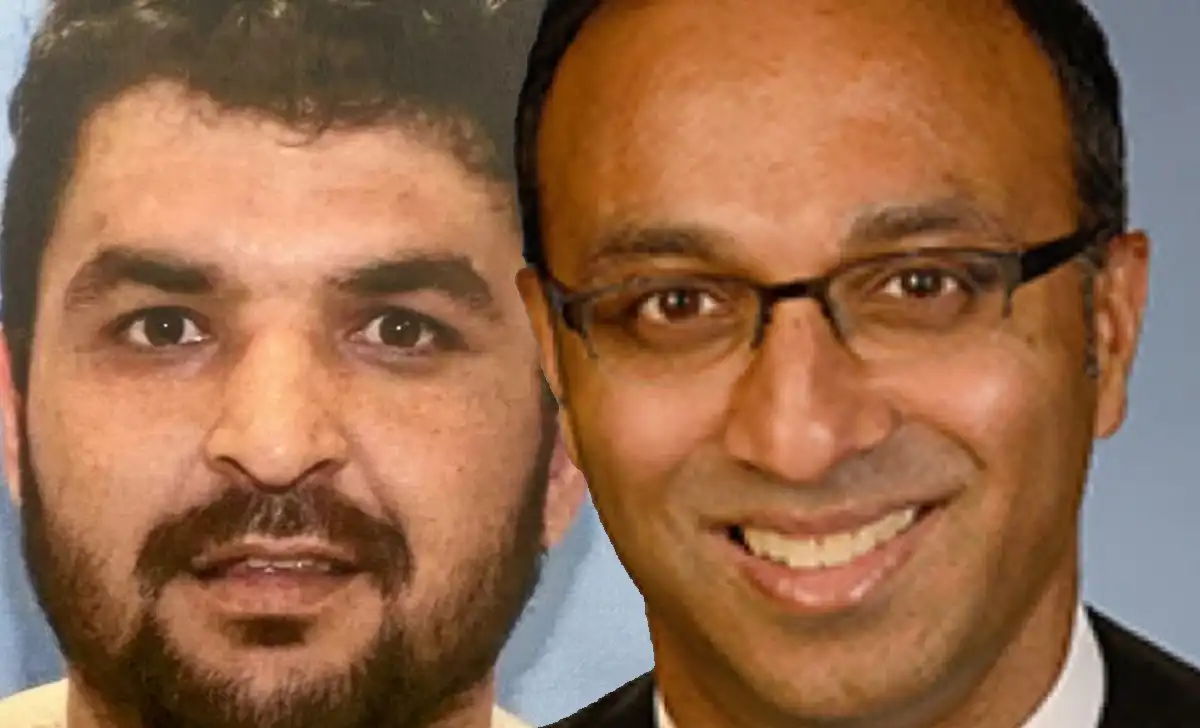
WASHINGTON – A federal judge has authorized prison medical personnel to force-feed Rahmanullah Lakanwal, the man accused of killing one West Virginia National Guard member and critically wounding another in a shooting near the White House last November.
U.S. District Judge Amit P. Mehta signed the emergency order Saturday after federal prosecutors said Lakanwal’s refusal to take adequate food and medical treatment had reached the point where his life could be threatened. The 30-year-old defendant has been refusing food since June and was transferred to a Washington hospital on an emergency basis July 9.
The order allows Bureau of Prisons medical personnel to provide nutrition and medical care without Lakanwal’s consent when necessary to preserve his life or prevent a potentially fatal deterioration. The authorization currently runs through Oct. 28 and can be extended.
Judge Allows Feeding Tubes and IV Nutrition
Mehta’s order permits medical personnel to provide nutrition through a nasogastric tube, intravenously or through an already implanted gastrostomy tube.
Doctors may maintain or replace an existing feeding tube and conduct related laboratory testing. The order does not authorize doctors to surgically implant a new gastrostomy tube without Lakanwal’s consent.
Lakanwal’s attorneys opposed the government’s request. They argued that their client has sometimes voluntarily eaten, including applesauce, and questioned whether the evidence showed that forced feeding was medically necessary at this point.
- Lakanwal began refusing food in June and was taken to a hospital July 9.
- Mehta’s order permits involuntary nutrition and medical treatment when necessary to prevent death or a potentially fatal decline.
- The order expires Oct. 28 unless the government seeks and receives an extension.
Why has Rahmanullah Lakanwal stopped eating?
That remains unclear. Publicly available court filings are heavily redacted and do not establish a reason for his refusal to eat. While the situation has been described as a hunger strike, no public political demand or other motive has been disclosed.
Prosecutors argued that Lakanwal is competent to make medical decisions but has nevertheless refused nutrition necessary to sustain his life. More recently, the government said he refused nutrition both orally and through a feeding tube and has sometimes refused water and medical treatment.
Lakanwal Accused of Killing West Virginia National Guard Soldier
The medical dispute is unfolding while Lakanwal awaits trial on a 17-count federal superseding indictment stemming from the Nov. 26 attack.
According to the U.S. Attorney’s Office for the District of Columbia, prosecutors allege Lakanwal drove a Toyota Prius from his home in Bellingham, Washington, to Washington while carrying a stolen .357 Smith & Wesson revolver.
At about 2:13 p.m., prosecutors say he opened fire without provocation at 17th and I Streets NW, near the Farragut West Metro station and several blocks from the White House.
Army Spc. Sarah Beckstrom, 20, and Staff Sgt. Andrew Wolfe were both shot in the head.
Beckstrom died on Thanksgiving Day. Wolfe, who is from Martinsburg, West Virginia, survived and has been recovering from his injuries.
Two other National Guard members subdued Lakanwal at the scene. The federal indictment also accuses him of attempting to kill those service members.
What charges does Lakanwal face?
The federal indictment contains 17 counts, including murder of a person assisting a federal officer, attempted murder counts and firearms offenses. Lakanwal has pleaded not guilty, and the charges remain allegations.
Government Could Seek Death Penalty
The case now has an unusual legal backdrop: federal prosecutors sought court authority to use involuntary medical measures to keep Lakanwal alive while the Justice Department separately considers whether to seek his execution if he is convicted.
The Justice Department said in June that charges involving Beckstrom’s death are eligible for the death penalty. A federal grand jury also returned special findings that triggered review through the department’s capital-case process.
No decision to seek capital punishment has been announced.
Those are separate legal questions. The government remains responsible for the health and custody of a pretrial detainee, while any potential death sentence would come only after a capital prosecution, conviction and separate sentencing process.
Has Lakanwal been sentenced to death?
No. The Justice Department has not announced a decision to seek the death penalty. Lakanwal has pleaded not guilty and has not been convicted of the charges.
For now, the immediate issue is his medical condition. Mehta’s order remains in effect until adequate oral intake and acceptance of medical treatment are restored and Lakanwal’s life is no longer threatened, subject to the Oct. 28 expiration date.
Sources: U.S. Attorney’s Office for the District of Columbia, federal superseding indictment announcement