
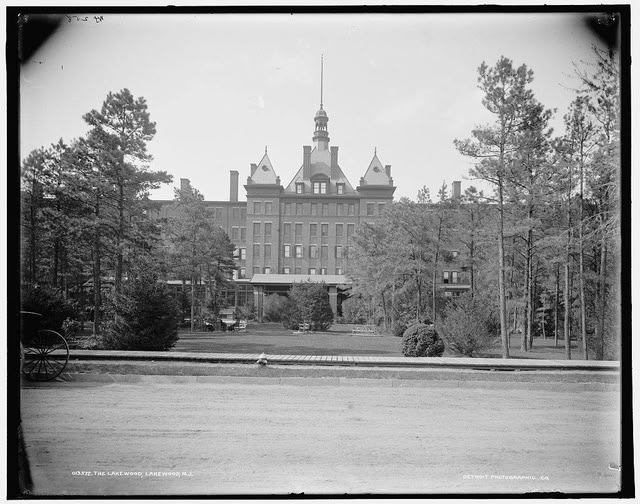
LAKEWOOD, NJ – Once known as the “Land of 100 Hotels,” Lakewood was among New Jersey’s most celebrated resort towns, drawing wealthy visitors from New York City and beyond during its late 19th and early 20th century heyday.
A feature by the Lakewood Historical Society revisits the rise and fall of this storied vacation destination, tracing its evolution from an industrial village into a thriving cultural center.
Founded in 1865 as Bricksburg, the community first gained attention for its healthy pine air and tranquil atmosphere. Early hotels like the Bricksburg House, later renamed the Laurel House, helped transform the area into a health retreat for urban travelers. In 1880, residents voted to rename the town Lakewood to reflect its natural appeal.
The arrival of the railroad in 1891 cemented Lakewood’s reputation as a premier resort. The Blue Comet train brought regular visitors until 1942, among them financiers and industrialists such as John D. Rockefeller and George Gould, who built sprawling estates that fueled the local economy.
Between 1890 and 1930, Lakewood’s hotel industry flourished with more than a hundred establishments ranging from small boarding houses to the 700-room Lakewood Hotel. The town became a winter haven for the elite, offering refined recreation, open-air sports, and elegant social gatherings.
By the 1920s, the town’s Jewish community had also become central to its identity, with many hotels offering kosher accommodations and celebrating the High Holidays. The first Orthodox synagogue, Congregation Sons of Israel, was established in 1907, marking the beginning of Lakewood’s enduring Jewish heritage.
The Great Depression and changing travel habits in the automobile age triggered the decline of Lakewood’s grand hotels. While World War II briefly revived the industry as servicemen from nearby military posts filled local inns, the postwar years saw many properties shuttered or repurposed. By the 1960s, fires and neglect had claimed most of the once-famous establishments, and by the late 1970s, the Lakewood Hotel Association had dissolved.
Today, the Lakewood Historical Museum in Pine Park preserves this legacy through exhibits and photographs, while landmarks such as the Strand Theater, Georgian Court University, and Ocean County Park—once part of Rockefeller’s estate—offer glimpses of the town’s elegant past.
Lakewood’s transformation from an ironworks village to a fashionable resort and, ultimately, a thriving modern community stands as a testament to its enduring capacity for reinvention.