
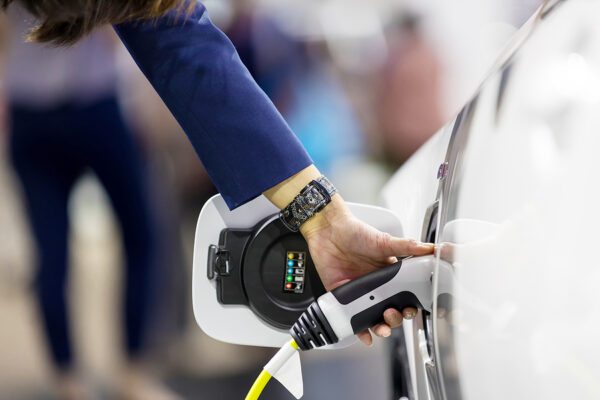
Annapolis, MD – A new proposal before Maryland lawmakers could reshape how electric vehicle (EV) charging stations display prices, measure power, and charge service fees. House Bill 969, introduced this week by Delegate Allen, establishes statewide standards for the retail sale of electricity as vehicle fuel, marking one of the state’s most detailed efforts yet to regulate the growing EV charging market.
Under the measure, every business that sells electricity to charge vehicles must clearly post contact information for a local person responsible for each charger — including their name, address, and phone number — directly on or next to the equipment. The goal, according to the bill’s supporters, is to create accountability and make it easier for consumers to report problems with faulty or inaccurate charging devices.
The bill also standardizes how electricity is measured at public charging stations, requiring all sales to be based on kilowatt-hours rather than charging time or flat rates. The move mirrors similar rules in California and several other states that are transitioning EV pricing toward the same structure used for gasoline — paying by the unit of energy consumed.
Perhaps most notably, the legislation gives the Maryland Comptroller the authority to determine the minimum price for retail electricity sold as vehicle fuel. This provision could set a statewide pricing floor to prevent undercutting or predatory pricing practices between charging operators.
New fees and standards could affect charging costs
HB 969 would also authorize charging station owners to apply additional fees for related services, such as parking or idle time, either as a flat rate or based on the duration of use. That clause aims to address a growing complaint among drivers about cars occupying charging spots long after their batteries are full.
The proposed law amends Maryland’s Agriculture Article — which governs weights and measures — effectively treating EV charging equipment like fuel pumps at gas stations. All chargers used for retail sales would be considered “weights and measures” devices subject to state inspection and compliance standards.
If enacted, the legislation would take effect July 1, 2026. It is currently assigned to the House Environment and Transportation Committee for review, where lawmakers will likely debate the balance between consumer protection and the financial realities of maintaining charging infrastructure.
Key points:
• Charging stations must display contact details for a responsible local representative.
• All EV charging must be sold in kilowatt-hours under uniform pricing rules.
• Operators may charge service fees and must comply with new state oversight starting July 2026.