
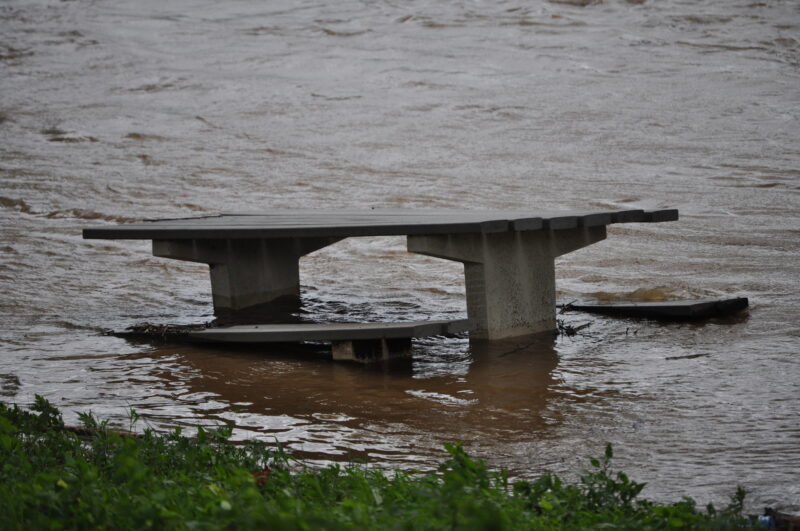
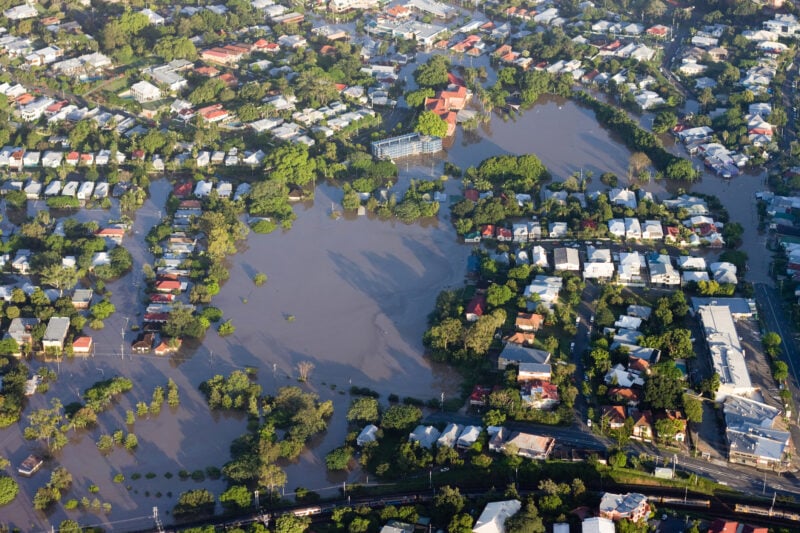
The Fourth of July weekend storms once again placed New Jersey’s flooding problem at the center of public debate once again, but once again, Democrats are blaming climate change and Republicans are blaming overdevelopment.
As torrential rain inundated roads, neighborhoods, and businesses across the state, Democratic elected officials largely attributed the damage to climate change, pointing to scientific evidence that heavier rainfall events are becoming more common throughout the Northeast. That explanation is supported by decades of climate research, but it addresses only one part of a much larger equation.
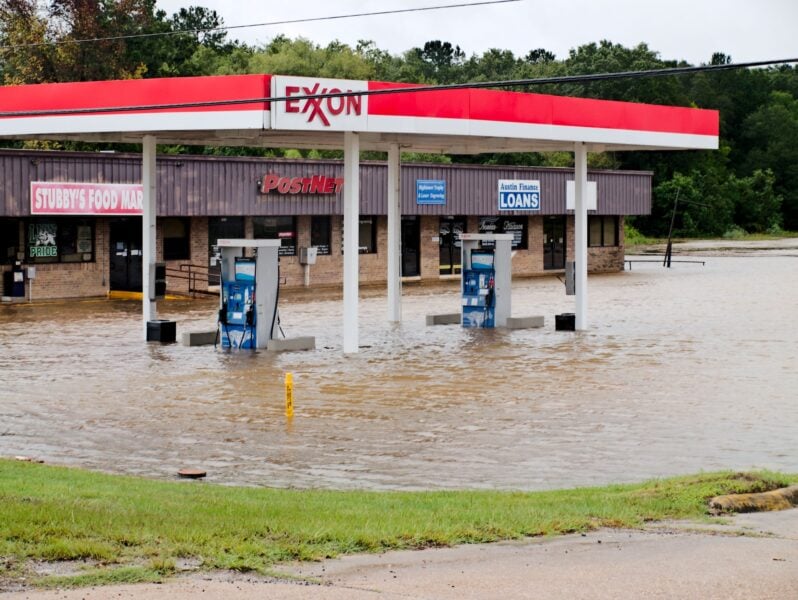
“Families have lost their cars, homes, and even their lives due to severe flooding across NJ. We can’t continue to ignore the climate crisis,” said New Jersey State Senator Andrew Zwicker, “That means more clean energy, building flood preventative infrastructure, and holding accountable the polluters causing climate change.”
Flooding is rarely caused by rainfall alone. Hydrologists generally describe flood risk as the product of several interacting factors, including the intensity of precipitation, the amount of natural land available to absorb water, and the capacity of stormwater infrastructure to move runoff safely away from developed areas. While public discussion often emphasizes changing weather patterns, far less attention is devoted to how decades of development have altered the landscape itself. That imbalance raises legitimate policy questions about whether New Jersey’s land-use decisions deserve greater examination alongside climate science.
“MASSIVE flooding across New Jersey because of a little rain,” said Republican leader Mike Crispi, head of America First, New Jersey. “For the highest taxed state in the USA, you’d think this wouldn’t be an issue. This is the consequence of BILLIONS of your tax dollars going toward Democrat SCAMS and not toward the basic costs of fixing and maintaining our own state.”
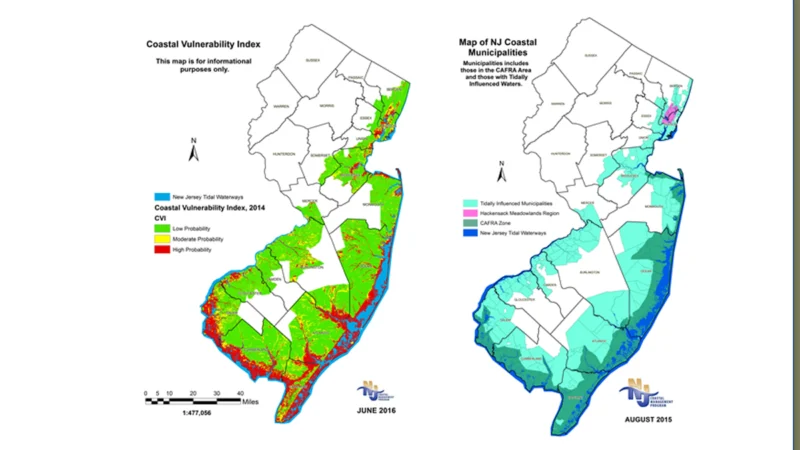
Scientists have little disagreement that the Northeast has experienced measurable increases in extreme precipitation. The Fourth National Climate Assessment, the Environmental Protection Agency, and Rutgers University’s New Jersey Climate Change Resource Center have all documented a trend toward heavier downpours as atmospheric temperatures rise.
Warmer air is capable of holding more moisture, allowing storms to produce larger amounts of rainfall over shorter periods. Those findings have influenced state environmental policy, including New Jersey’s updated flood hazard regulations and revised engineering standards.
Accepting those scientific conclusions, however, does not eliminate the need to evaluate what happens once rain reaches the ground.
Two communities receiving identical amounts of rainfall may experience dramatically different flooding depending on how their watersheds have been developed. The amount of pavement, rooftops, parking lots, forests, wetlands, and open fields surrounding a neighborhood often determines whether water gradually infiltrates the soil or rapidly overwhelms drainage systems.
Hydrologists have understood this relationship for decades. Forests, wetlands, and agricultural land naturally slow runoff by allowing rainfall to infiltrate into the ground, where vegetation and soil temporarily store water before releasing it gradually into streams and rivers.
Development changes that process by replacing permeable ground with impervious surfaces that prevent infiltration. Instead of soaking into the earth, rainwater runs directly across asphalt and concrete, reaching storm drains much more quickly than natural landscapes would allow.
The result is not necessarily that one subdivision, apartment complex, or shopping center creates flooding by itself. Rather, it is the cumulative effect of thousands of individual development decisions spread across an entire watershed. As impervious surface increases over time, streams receive larger volumes of runoff in shorter periods, producing higher peak flows and increasing the likelihood that drainage infrastructure will be overwhelmed during major storms.
This relationship between development and runoff becomes particularly relevant as New Jersey continues pursuing aggressive housing expansion policies. Governor Mikie Sherrill has identified increasing the state’s housing supply as one of her administration’s principal objectives, arguing that New Jersey cannot address affordability without substantially increasing residential construction. Early in her administration, Sherrill established a statewide Housing Task Force intended to remove barriers to development, streamline approvals, and encourage municipalities to accommodate additional housing growth.
Supporters of these initiatives argue that New Jersey’s housing shortage has driven prices beyond the reach of many working families and younger residents. Numerous economists agree that increasing supply can improve affordability over time, particularly in regions where restrictive zoning has constrained construction. From that perspective, expanding housing is viewed not simply as an economic policy but as a necessity for retaining residents and sustaining long-term economic growth.
Critics generally do not dispute that housing affordability represents a significant challenge.
Instead, they question whether the state’s current approach adequately considers the environmental consequences of continued development in one of the nation’s most densely populated states. Their concern is not that affordable housing itself causes flooding, but that cumulative residential growth—combined with commercial expansion, warehouse construction, and transportation improvements—gradually reduces the natural landscapes that historically absorbed rainfall.
That debate has intensified since New Jersey replaced the long-dormant Council on Affordable Housing with a new statutory framework adopted in 2024.
Although COAH itself no longer administers municipal housing obligations, the constitutional requirements established through the Mount Laurel decisions remain intact. Municipalities are still expected to identify opportunities for significant residential development, often through rezoning or negotiated settlements that substantially increase housing density.
Across New Jersey, many municipalities have challenged those obligations, arguing that they extend beyond questions of housing policy and into broader concerns about infrastructure, environmental preservation, and community planning. Communities including Jackson Township, Holmdel, Mahwah, Readington Township, Parsippany-Troy Hills, and Montvale have all publicly questioned various affordable housing requirements or the scale of development associated with compliance. In many cases, those disputes have resulted in lengthy litigation, negotiated settlements, or substantial legal expenditures funded by local taxpayers.