
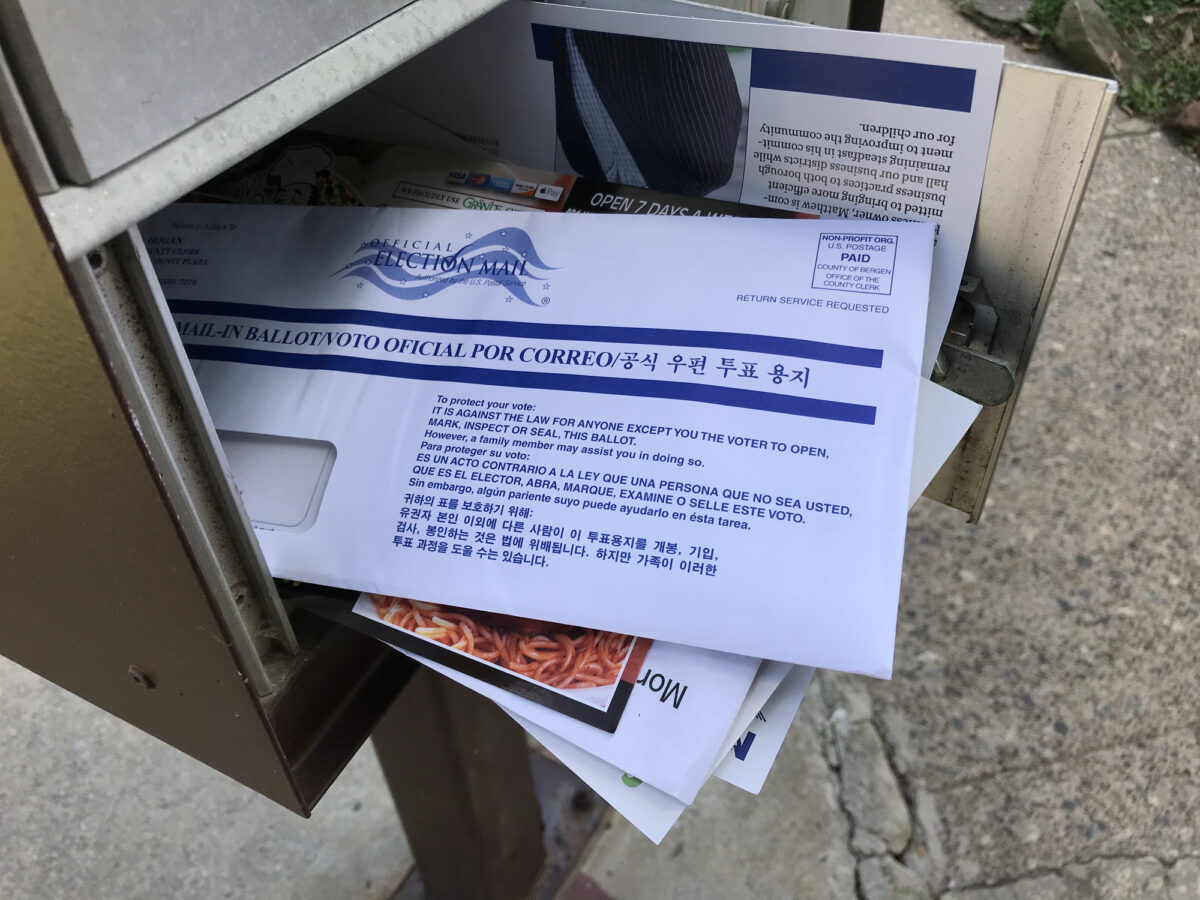
TRENTON, N.J. – New Jersey is suing the Trump administration over federal measures intended to strengthen the security and integrity of mail-in ballot voting, setting up another legal battle over who controls election procedures.
New Jersey’s election issues are well documented, even New Jersey Governor Mikie Sherrill has gone on the record to say, “If you’re not aware, New Jersey has the least safe election systems in the country.” while she was in Congress. “It’s not a great place to be”
Now, as governor of New Jersey’s she is no longer interested in securing the integrity of New Jersey elections which have been plagued with ballot harvesting and stuffing scandals, non-citizen voters, and a federal report that claims at least 35,000 non-citizens are still registered to vote.
Gov. Mikie Sherrill and Attorney General Jennifer Davenport argue the federal government is exceeding its authority by attempting to impose requirements affecting how states administer mail ballots. Sherrill has characterized the measures as voter suppression rather than election security.
The lawsuit comes as election integrity remains a major issue in New Jersey following documented mail-ballot fraud cases, prosecutions involving noncitizen voting and the state’s recent disclosure of a voter-registration error that affected thousands of records.
- New Jersey is challenging federal measures intended to tighten safeguards surrounding mail-in voting and election administration.
- Sherrill says the measures amount to federal interference with elections traditionally administered by states.
- The legal fight comes amid continuing scrutiny of New Jersey’s voter registration and mail-ballot systems.
New Jersey Challenges Federal Mail-Ballot Measures
The Sherrill administration’s position is straightforward: New Jersey, not the federal executive branch, should determine how elections are administered within the state.
According to the White House, here are the key security issues mail-in ballots are facing and what the President says needs to be fixed:
Citizenship verification: DHS and the Social Security Administration would create state-by-state lists of people confirmed as U.S. citizens and voting age. The administration says this would help states verify eligibility and prevent noncitizens from voting.
A mail-ballot participation list: States using USPS for federal-election mail ballots would provide information about eligible mail voters, and USPS would maintain a state-specific
Mail-In and Absentee Participation List. Under the proposed system, USPS would not transmit a mail ballot from someone who isn’t enrolled on the applicable list.
Unique barcode on ballot envelopes: Each ballot envelope would have a unique Intelligent Mail barcode or similar identifier. That creates an auditable trail through the postal system and is intended to help determine whether a ballot corresponds to an authorized mail voter.
Standardized, USPS-approved envelopes: Outgoing ballots would need to be marked
Official Election Mail, use an automation-compatible envelope and pass USPS design review.
Investigation of suspicious ballot-mail activity: USPS would coordinate with its inspector general and DOJ when suspected illegal use of the mail involving election materials is identified.
Potential enforcement against election officials/states: The order tells DOJ to prioritize applicable election-law enforcement and contemplates withholding federal funds where legally authorized.
“The Constitution is clear: states run elections, not the federal government,” Sherrill said. “We’ll keep fighting to make sure Donald Trump fails in his plan to suppress votes in New Jersey and across the country.”
Attorney General Jennifer Davenport made a similar argument, specifically objecting to a federal role involving the Postal Service.
“Under our Constitution, states run elections—not the federal government, and definitely not the postal service,” Davenport said.
“We are confident the courts will block this unconstitutional attempt by the president to interfere with the states’ administration of free and fair elections,” she added.
“If you’re not aware, New Jersey has the least safe election systems in the country. It’s not a great place to be.” -Mikie Sherrill
The Trump administration views stronger federal election measures through the lens of protecting election integrity, including safeguards surrounding mail ballots and voter eligibility.
The dispute now puts two competing principles before the courts: the federal government’s asserted interest in securing federal elections and New Jersey’s argument that Washington cannot dictate the mechanics of elections administered by the states.
Mail-In Voting Has Faced Controversy in New Jersey
The legal challenge comes against a backdrop of real election-integrity cases in New Jersey, although those cases do not establish that the state’s entire mail-voting system is fraudulent.
One of the most significant occurred during the 2020 municipal election in Paterson, where widespread irregularities involving mail ballots led a judge to invalidate the Third Ward election and order a new one.
The case generated criminal investigations involving allegations of stolen ballots, fraudulent voter registrations, improperly collected ballots and campaign workers handling ballots in violation of election rules.
Nearly 400 ballots were allegedly deposited together in a mailbox in neighboring Haledon during the election.
Those events became a national example cited by critics of expanded mail voting, particularly as states dramatically increased reliance on mailed ballots during the COVID-19 pandemic.
New Jersey has since continued allowing voters to cast ballots by mail without needing to provide a specific reason.
Noncitizen Voting Cases Add to Election Integrity Debate
Questions surrounding voter eligibility have also intensified following a series of federal prosecutions.
Federal prosecutors announced charges this year against several New Jersey residents accused of registering to vote despite allegedly not being U.S. citizens.
One Ocean County case has already resulted in a guilty plea.
Eliezer Kadoch of Toms River pleaded guilty in June to voting as a noncitizen. Federal prosecutors said Kadoch, a French citizen who had never been a U.S. citizen, voted in the November 2022 federal midterm election.
Other defendants face allegations involving illegal registration or voting, but those cases remain pending and the defendants are presumed innocent unless convicted.
Those prosecutions demonstrate that voter eligibility controls can fail in individual cases. They do not establish that noncitizen voting is widespread across New Jersey.
State Has Faced Its Own Voter Registration Problems
The Sherrill administration has also been dealing with problems involving the state’s voter registration system.
A software error involving the New Jersey Motor Vehicle Commission improperly registered thousands of people to vote, according to information previously released by the state.
The state subsequently identified hundreds of people newly registered through the error who later cast ballots.
That finding does not mean all of those voters were noncitizens or otherwise legally ineligible to vote. State and county officials have been reviewing the affected records to determine individual eligibility.
Still, the problem has given critics of New Jersey’s election system another reason to demand tighter controls over voter registration and eligibility verification.
It also complicates the political backdrop of the state’s lawsuit against President Donald Trump over federal election-security measures.
Courts Will Decide How Far Federal Government Can Go
At the center of the lawsuit is a constitutional question that reaches beyond New Jersey.
States traditionally administer elections, but federal elections are also governed by federal constitutional and statutory requirements. The disagreement is over where that federal authority ends and state control begins.
Sherrill argues the Trump administration has crossed that line.
Trump and supporters of tighter election-integrity measures have argued that additional safeguards are necessary to ensure only eligible voters participate and that legally cast ballots are properly handled and counted.
For New Jersey voters, the lawsuit will ultimately determine whether the state can continue administering its mail-in voting system under its existing procedures or whether additional federal requirements can be imposed.
The fight also ensures that vote-by-mail will remain at the center of New Jersey’s election debate heading into future elections.
Why is New Jersey suing the Trump administration?
New Jersey argues the federal government is exceeding its constitutional authority by imposing requirements affecting how the state administers mail-in ballots and elections.
Have there been mail-ballot fraud cases in New Jersey?
Yes. New Jersey has had documented cases involving mail ballots and voter registration, most notably the 2020 Paterson municipal election. Those cases do not establish widespread fraud throughout the state’s entire mail-voting system.
What happens next?
The courts will determine whether the challenged federal measures are lawful election-security requirements or improperly interfere with New Jersey’s authority to administer elections.
Sources: Gov. Mikie Sherrill; Attorney General Jennifer Davenport; New Jersey election records; federal court records and election-related prosecutions.