
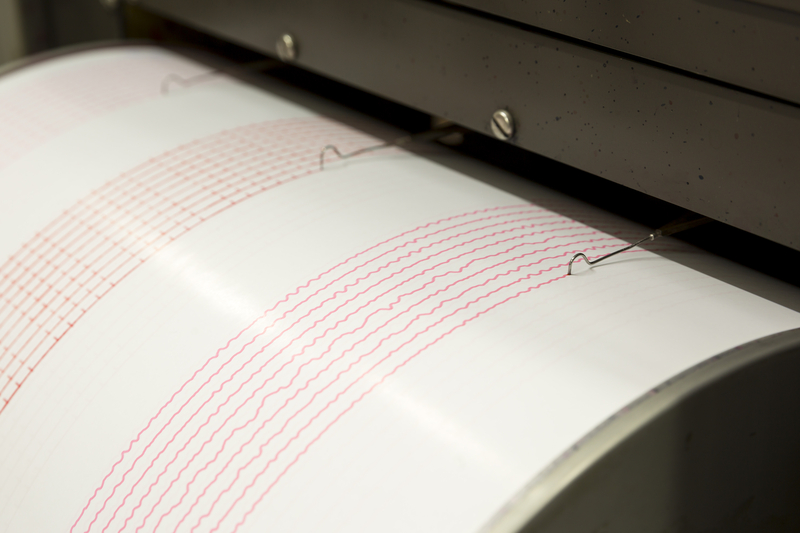
TEWKSBURY, NJ – Just over year ago, on April 5th, 2024, a 4.8-magnitude earthquake struck Tewksbury Township, New Jersey, the strongest in the state in over 200 years.
Major aftershocks continued through the end of May.
The quake shook the Northeast, from Maine to Virginia, impacting millions. With minimal damage and no injuries, the quake was followed by over 200 aftershocks, raising concerns about future risks.
As major seismic activity has quieted since May 2024, residents and experts reflect on the event and its implications.
The 2024 Earthquake and Its Aftermath
The shallow quake, at a depth of 2.9 miles, likely originated along a fault near Tewksbury. It disrupted daily life, halting flights at Newark Liberty and JFK airports, delaying rail services, and causing minor damage. In Newark, four homes were damaged, with three condemned, displacing 28 residents. Minor cracks appeared in buildings across New York City, and a historic grist mill in New Jersey collapsed. Gas leaks and water main breaks were reported in several counties.
Over 200 aftershocks followed, the strongest a 3.7-magnitude event near Gladstone hours later. Other notable aftershocks included a 2.9-magnitude quake east of Califon on May 24, 2024, and several near Gladstone in April and May, with the latest significant event on May 1, 2024, at 2.6 magnitude.
Since May, only minor tremors below 2.0 have occurred, suggesting the fault may be stabilizing.
The quake’s energy behaved unexpectedly, traveling downward along a previously unknown north-south fault before resurfacing under New York City, causing stronger shaking 50 miles away. The region’s dense rocks amplified the tremors, felt as far as Maine and Virginia. While Tewksbury experienced minor effects, like cracked drywall, Newark and New York City saw more significant impacts. This unusual energy distribution has raised concerns about how future quakes could affect populated areas, with experts warning that a slightly stronger event could cause greater damage.
Though activity has slowed, New Jersey remains at risk. The region’s fault zones have produced quakes historically, with events like the 2024 quake occurring roughly every 100 years. Stronger quakes, potentially magnitude 6 or 7, are possible but rare, and could cause significant damage in a region with infrastructure not designed for seismic resistance.
Older buildings and bridges, especially in counties like Bergen, Essex, and Hudson, are vulnerable to ground instability.