
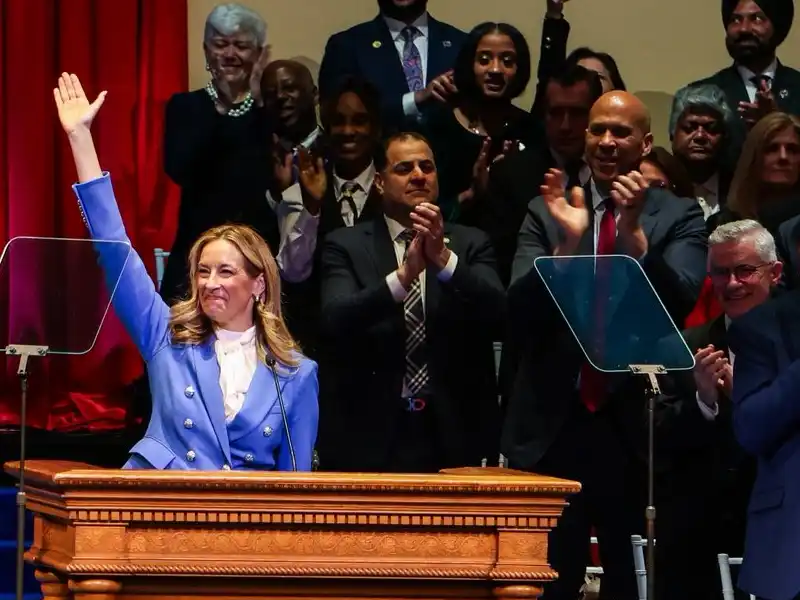
TRENTON, NJ – Governor Mikie Sherrill has declared a statewide energy emergency through Executive Order No. 2, a sweeping directive aimed at countering New Jersey’s worsening electricity affordability and reliability crisis. Signed on her first full day in office, the order mobilizes the state’s regulatory agencies to rapidly expand energy production, modernize existing power infrastructure, and combat rising utility costs driven by regional supply shortages and surging demand.
Sherrill’s order follows her earlier action freezing residential rate hikes under Executive Order No. 1. The governor cited new data from the regional grid operator PJM showing that electricity demand across its network is expected to rise by 20 percent by 2030—largely fueled by the rapid growth of data centers. PJM’s two most recent capacity auctions added over $4 billion in new costs for New Jersey residents and businesses, sparking concerns over both affordability and the reliability of the power grid.
Under the new order, the Board of Public Utilities (BPU) must take immediate steps to speed development of solar and battery storage facilities. Within 45 days, the BPU is directed to initiate a major solicitation for new solar generation under the Competitive Solar Incentive program and open registration for 3,000 megawatts of new community solar capacity. The agency will also expand the Garden State Energy Storage Program and begin work on a “virtual power plant” network to aggregate distributed energy resources and lower peak demand.
To eliminate permitting delays that have slowed energy projects, the order requires all relevant state departments—including the Department of Environmental Protection, Department of Agriculture, and Department of Transportation—to identify and recommend rule waivers that could accelerate siting and construction of new generation and grid stabilization projects. Sherrill also ordered the creation of a Nuclear Power Task Force to explore advanced nuclear options and coordinate with federal and regional partners.
The administration is also taking aim at “ghost load”—speculative interconnection requests from large electricity customers that inflate PJM’s demand projections.
The BPU must develop new reporting systems to monitor these requests and prevent artificially tight supply forecasts that can drive up prices. Meanwhile, the Department of Environmental Protection is tasked with expediting modernization permits for natural gas-fired power plants, allowing them to increase efficiency and reduce emissions while supporting the grid’s stability.
Sherrill invoked her emergency powers under the Civilian Defense and Disaster Control Act, asserting that without immediate state action, residents could face “brownouts, blackouts, and deliberate load shedding” as demand continues to outpace supply.
Key Points: Sherrill declares statewide energy emergency to fast-track power generation and stabilize grid – Trenton
- Governor Mikie Sherrill declared a state of emergency to accelerate energy production and offset rising electricity costs
- The BPU must fast-track solar, storage, and virtual power plant projects while addressing inflated “ghost load” demand
- A new Nuclear Power Task Force and expedited permitting process aim to stabilize the grid and improve long-term reliability