TRENTON, N.J. – Governor Mikie Sherrill signed three energy bills Tuesday that her administration says will lower electricity costs through increased utility oversight and new requirements for large data centers, while announcing a $25 electric bill credit for all residential customers.
While residents are waiting for real relief, the only thing real about this announcement is a 75% cut to the annual ratepayer credit.
The announcement came just days after severe storms over the July Fourth weekend left roughly 200,000 New Jersey customers without power at the peak of the outages, with thousands still awaiting restoration in some areas. It also marks a reduction from last year’s $100 universal residential electric bill credit, a change that became a focal point of Republican criticism.
Republicans say bills do not increase energy supply
Assembly Republicans argued the legislation fails to address what they describe as the state’s underlying electricity supply problem.
In a statement posted on social media, the caucus noted that the three bills signed Tuesday create “zero” megawatts of new energy production while reducing the universal electric bill credit from $100 last year to $25 this year.
“200,000 New Jerseyans lost power over July 4th weekend. Tens of thousands still without power,” the caucus wrote. “Electric credit: cut from $100 to $25.”
The criticism comes as New Jersey continues to face concerns over grid reliability, increasing electricity demand, and rising utility costs.
Congressman Jeff Van Drew also criticized the reduction in annual consumer credits.
“Twenty-five dollars? Are you serious?” said Congressman Van Drew. “Families are opening electric bills that have gone up by hundreds of dollars, and the state’s answer is to cut last year’s $100 credit to just $25. Instead of sending families another one-time credit, the state should stop adding government-mandated costs and surcharges to electric bills every month. Reducing those costs would do far more than a one-time $25 credit ever will. New Jersey families do not want another temporary fix. They want lower electric bills,” Van Drew said.
Administration says reforms will reduce future costs
Sherrill defended the legislation, saying the package is intended to reduce long-term costs rather than provide only short-term relief.
“I made a commitment to rein in energy costs, and today we are delivering on that commitment,” Sherrill said. “We’re putting money back into people’s pockets while holding utility companies and large data centers accountable through stronger oversight and smarter incentives that will drive down costs and strengthen our grid.”
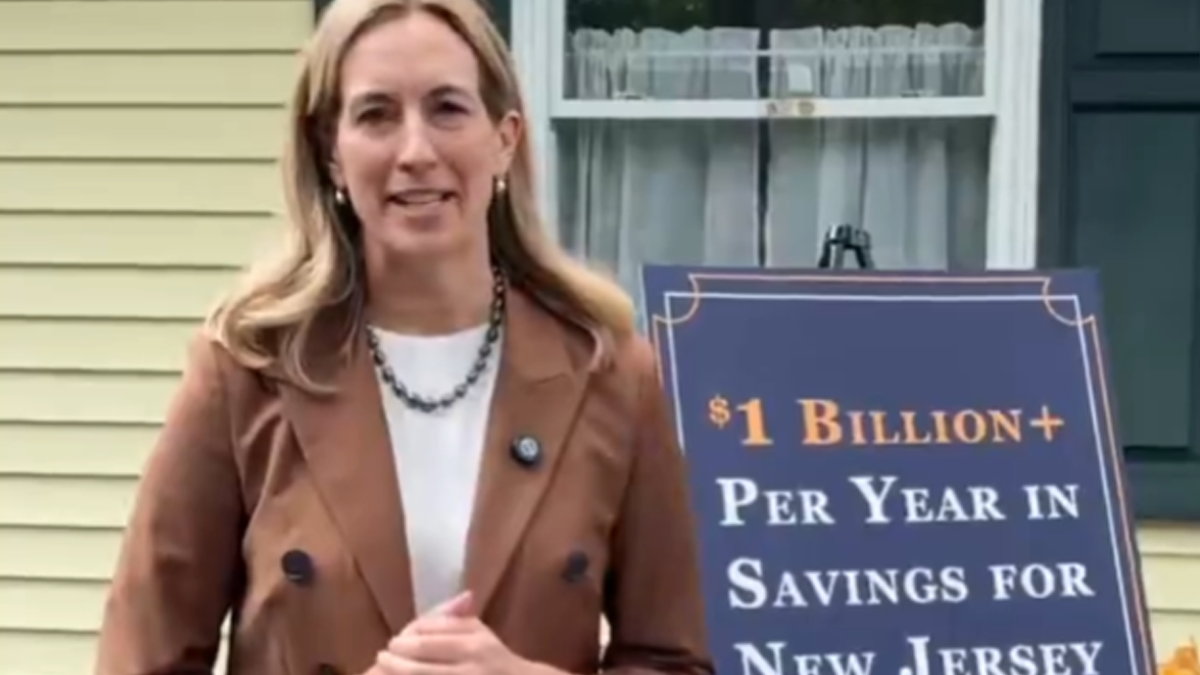
The governor’s office, citing an analysis by Synapse Energy Economics, said actions taken during the past six months—including the bills signed Tuesday—could save New Jersey ratepayers more than $1 billion annually.
New Jersey is still waiting for Sherrill to fulfill her campaign promise of freezing electric bills. Rates are up once again in 2021.
What the legislation does
The three bills focus on utility regulation rather than constructing new power plants or generating additional electricity.
One measure eliminates a transmission-related financial incentive for utilities participating in the PJM regional grid operator. Another requires additional state review before utilities undertake certain transmission infrastructure projects that can be passed on to ratepayers.
The third creates a separate rate class for large data centers, requiring them to cover more of the costs associated with the electricity infrastructure needed to serve their facilities and establishing mechanisms intended to reduce demand during periods of grid stress.
Along with the legislation, the administration announced a $25 Residential Universal Bill Credit for all 3.6 million residential electric customers and an additional $150 Residential Energy Assistance Payment for qualifying lower- and moderate-income households.
Whether the regulatory changes produce the projected long-term savings remains to be seen as the measures are implemented by the New Jersey Board of Public Utilities and other regulators. Meanwhile, the debate over affordability and the state’s electricity supply is expected to remain a central issue as lawmakers continue considering additional energy policies.