
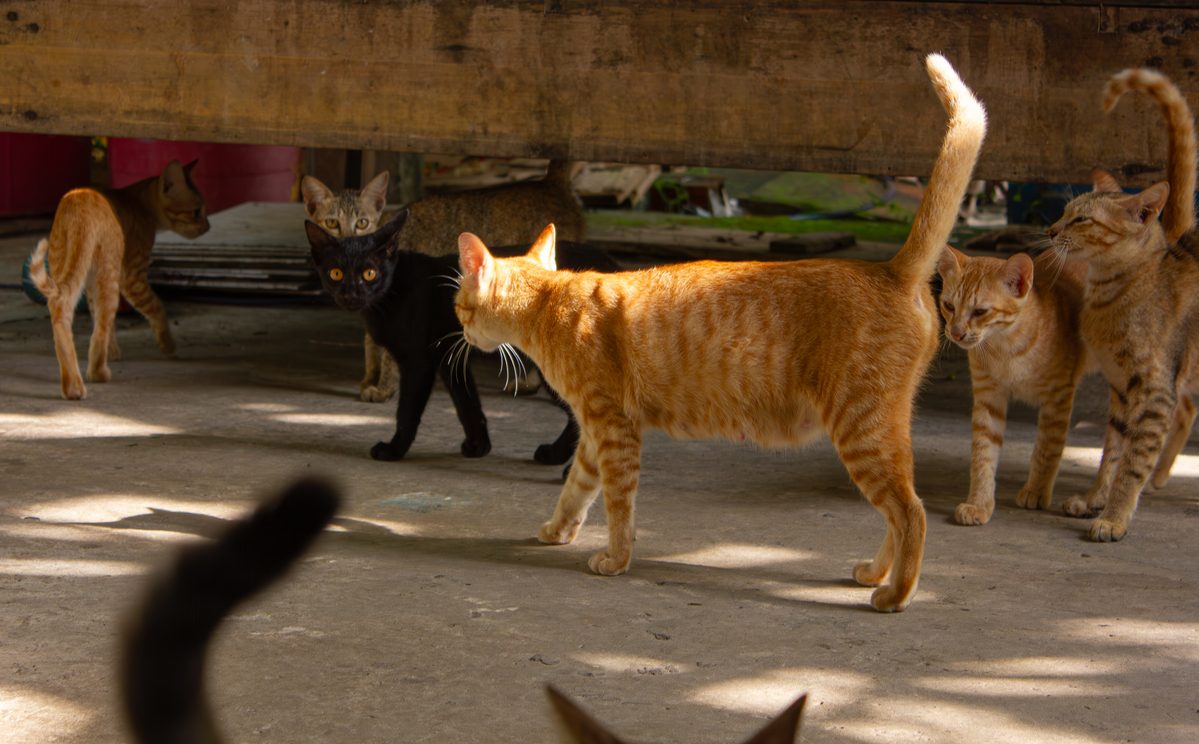
JACKSON, N.J. – Feral cat colonies are becoming harder to miss across Ocean County and Jackson Township, including booming colonies near several public schools, as local rescuers struggle with a steady supply of abandoned and unaltered cats.
For more than a year, Ocean County Commissioner Frank Sadeghi has pushed for a coordinated trap-neuter-return program, commonly called TNR. A plan discussed with Jackson Mayor Jennifer Kuhn in 2025 was supposed to get underway around Valentine’s Day, but the date came and went without the program launching.
Now there is movement. Ocean County Health Department Public Health Coordinator Daniel Regenye confirmed Monday that the department is developing an action plan with municipalities, including Jackson, and has partnered with Animal Birth Control Inc., a Pine Beach nonprofit that works to reduce pet overpopulation through spaying and neutering.
Jackson’s Feral Cat Problem Isn’t Waiting
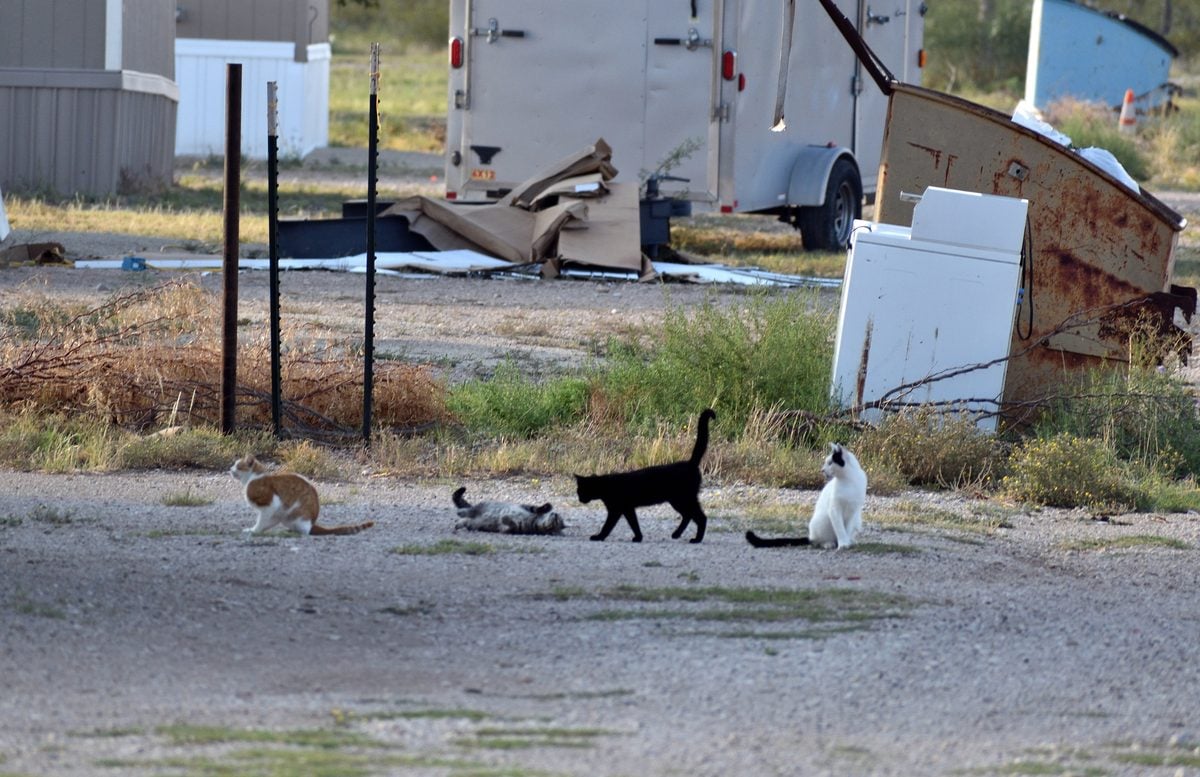
The problem has become particularly visible in Jackson. Colonies have formed in multiple parts of town, and some have grown near schools, according to information provided to Shore News Network.
One factor is abandonment. As residents leave the area, some cats are being left behind. Unaltered animals that remain outdoors can reproduce, and a few cats can turn into a colony surprisingly quickly.
Female cats can become pregnant while still kittens themselves. Once successive generations begin reproducing, the number of cats can grow faster than local rescuers can trap, foster and place them.
- Ocean County is exploring a broader TNR effort that would include Jackson and other municipalities.
- Regenye said towns have been asked to submit proposals explaining how their animal control operations would carry out the work.
- Sadeghi said the county currently has about $20,000 annually available for the effort and wants that amount increased.
What does TNR mean?
Trap-neuter-return programs humanely trap community cats, have them spayed or neutered and typically vaccinated, then return suitable feral cats to their territory. Preventing reproduction allows a managed colony to shrink over time rather than continually producing kittens.
The county’s approach would rely heavily on municipal animal control departments rather than creating a separate county trapping operation.
“This has to be done by the local animal control officers,” Regenye told Shore News Network. “We requested proposals from each town to show how that would work.”
Sadeghi Wants More County Money Put Into Feral Cat Control
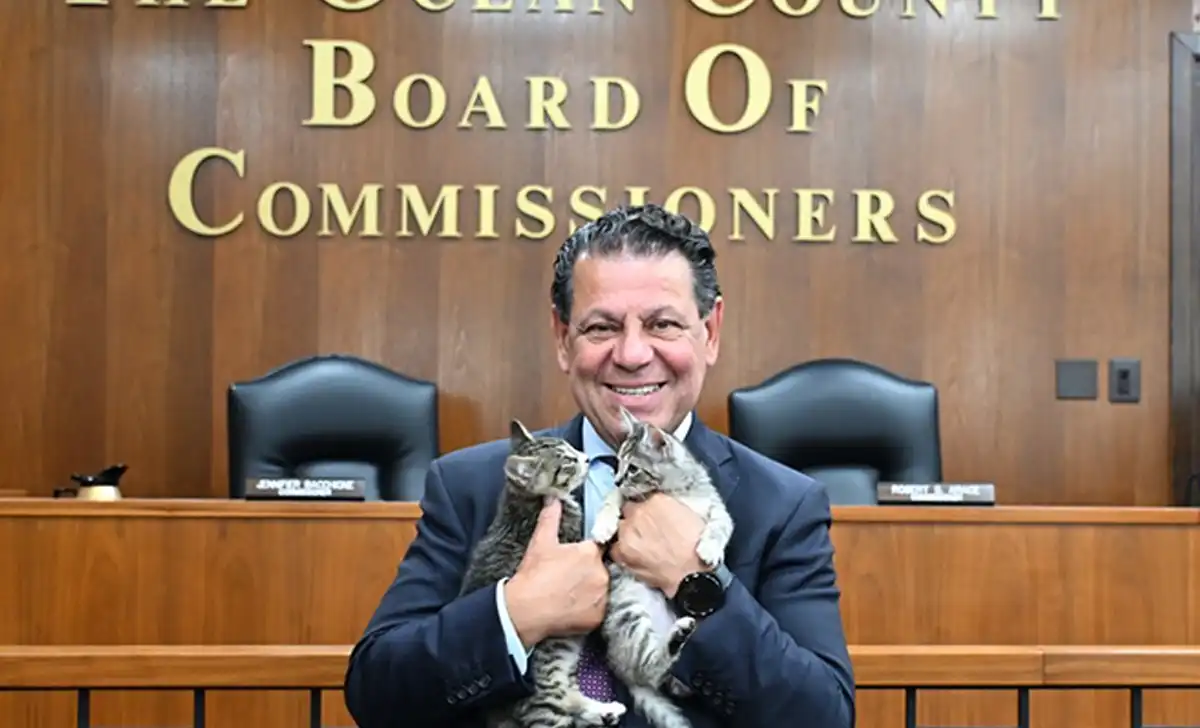
Sadeghi, who has three rescued cats of his own, said the current funding isn’t enough to match the size of the problem.
The commissioner said about $20,000 a year is presently available for the effort from a county health operation with an annual budget exceeding $30 million.
“We’d like to see more of that money spent on dealing with the feral cat problem,” Sadeghi told Shore News Network.
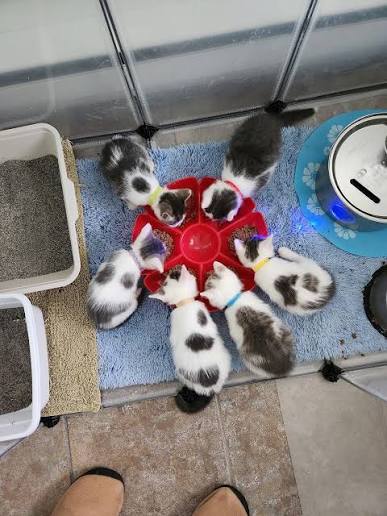
His involvement has also extended beyond county government. Last week, Sadeghi personally donated $1,000 toward veterinary care for a litter of six feral kittens found in Jackson.
The kittens are now being fostered by a Manchester resident. They are expected to be spayed or neutered, vaccinated and then offered for adoption.
Why not simply bring all of the cats to shelters?
Capacity is part of the problem. Cat rescues and shelters serving Ocean County are already dealing with heavy demand, and Jackson animal control has warned that euthanasia is an unfortunate reality when there are more animals than available homes and resources.
Calls to many rescues went unanswered and finding a home for that Jackson litter proved to be an impossible task.
“Sorry, we’re full,” was the response by most of the rescues along the Jersey Shore. A call to the Ocean County Animal Shelter said that the newbord kittens probably wouldn’t survive a night alone in the shelter.
Animal control officers told Shore News Network that the reality is, many of the cats being rescued in Jackson and other towns are simply being euthanized.
County Partners With Animal Birth Control Inc.
The Ocean County Health Department is working with Animal Birth Control Inc., an all-volunteer nonprofit based in Ocean County that has focused on spaying and neutering unwanted and abandoned animals for decades.
The organization says it is not an animal shelter. Its work includes helping with spay and neuter costs, working with local veterinarians and providing guidance on trapping, neutering and returning community cats.
A TNR program would not mean every feral cat is removed from the community immediately. Instead, the goal is to stop reproduction while allowing established cats that cannot be adopted to live out their lives without continuing to produce kittens.
Sadeghi said he wants the Health Department to take a larger role because the problem crosses municipal boundaries and local rescue groups cannot handle the numbers alone.
Regenye said an action plan is being assembled, with Jackson expected to participate. Municipal proposals should give the county a clearer picture of how animal control officers would handle trapping and other work on the ground.
When will Jackson’s TNR program actually begin?
No new launch date has been announced. The Health Department is collecting municipal proposals and working on an implementation plan, meaning the program is moving forward but is not yet operating countywide.
For Jackson residents who have watched colonies grow, that timeline will be the next thing to watch. The county has identified a partner, towns are being asked how they would participate and Sadeghi says funding will be available.
The question now is how quickly those plans turn into traps, veterinary appointments and fewer new litters on Jackson streets.
Ocean County is developing a broader TNR program as feral cat colonies grow in Jackson, with towns being asked to submit plans for local participation.
Sources: Shore News Network interviews with Ocean County Commissioner Frank Sadeghi and Ocean County Public Health Coordinator Daniel Regenye; Ocean County Health Department; Animal Birth Control Inc.