
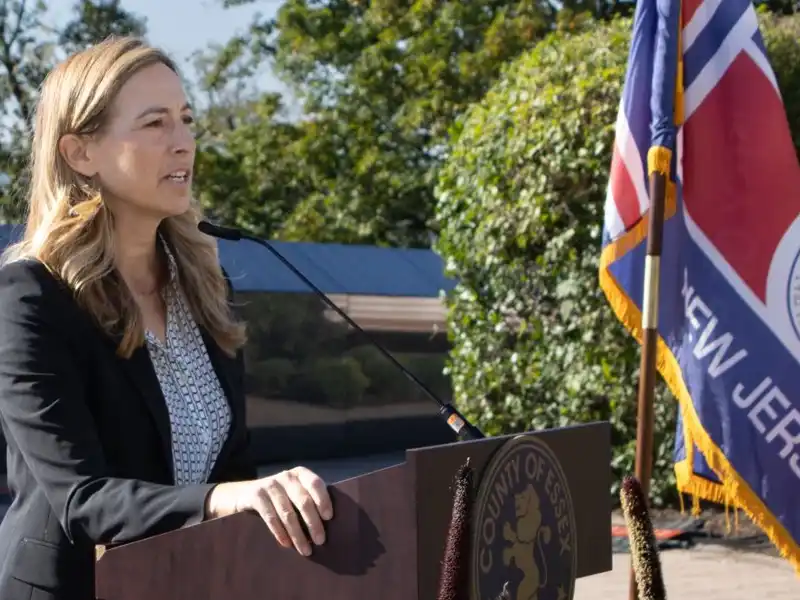
As every person who lives in New Jersey is facing historic record healthcare premium increases in 2026, it’s time for New Jersey to end the practice of free publicly funded healthcare for part-time elected officials and utility commissioners once and for all.
As New Jersey ushers in a new era with Mikie Sherrill’s decisive victory in the 2025 gubernatorial election, defeating Republican Jack Ciattarelli by a substantial margin, the state has a critical opportunity to confront longstanding abuses of taxpayer dollars.
Related: Lakewood State Senator Gets $89,000 Free Healthcare for Serving One Day Per Month on Utilities Board
Sherrill, a Democratic congresswoman turned governor-elect, campaigned on themes of integrity, transparency, and fiscal responsibility. Now, she must follow through by directing her incoming Attorney General to launch a comprehensive investigation into the rampant healthcare fraud plaguing local utilities authorities, boards, and commissions across the state. This is not mere inefficiency; it represents a deeply entrenched form of political corruption in which insiders receive lavish benefits for minimal effort, draining public resources while residents pay the price through higher utility rates and taxes.
At the center of this issue are Municipal Utilities Authorities throughout New Jersey, particularly in Ocean County, where part-time commissioners, often political appointees, receive full healthcare packages valued in the tens of thousands of dollars annually for as little as one hour of work per month.
Related: Toms River MUA votes to keep free healthcare for one-hour-a-month commissioners
These benefits frequently include premium family coverage and are granted despite the positions being explicitly part time, with meetings typically held only once a month. Critics have long described these arrangements as patronage systems that reward political loyalty with taxpayer-funded perks, exemplifying waste, abuse, and ethical misconduct at its worst.
The Lakewood Township Municipal Utilities Authority serves as a prime example. Records indicate that commissioners receive tens of thousands of dollars in benefits and stipends despite performing sporadic duties, even as the authority struggles with amendments to its healthcare policies amid broader challenges facing state benefit programs.
This is not a matter of fair compensation for public service; it is a system that enables appointees to treat public entities as personal financial vehicles. Similarly, the Toms River Municipal Utilities Authority has drawn intense scrutiny for providing commissioners with healthcare benefits exceeding $18,600 per year for family coverage, despite their one-hour monthly meetings.
In a recent vote, commissioners chose to retain these benefits, disregarding calls from local leaders, including Toms River Mayor Dan Rodrick, to abolish them. One commissioner publicly pledged to forgo the benefits but has yet to do so, further underscoring the culture of entitlement that permeates these bodies.
This pattern is not limited to Lakewood or Toms River. Across New Jersey, more than 100 municipalities provide health coverage to part-time elected and appointed officials, often at levels comparable to full-time employees. In Ocean County alone, similar arrangements exist in other municipal utilities authorities, where commissioners receive stipends and benefits that can reach a combined value of up to $90,000 over the course of their terms, vastly exceeding the scope of their public service. While state law permits local employers to opt into such coverage under the State Health Benefits Program, it lacks sufficient safeguards to prevent abuse, allowing these practices to persist despite mounting fiscal strain on the system. Recent calls from lawmakers to end taxpayer-funded benefits for part-time officials reflect growing bipartisan frustration with a structure that prioritizes political insiders over accountability.
These practices amount to fraud and corruption because the benefits are not tied to substantive labor or public necessity but are instead awarded as political favors. Taxpayers, already burdened by rising utility costs and inflation, are forced to subsidize healthcare packages that full-time public employees must work standard 40-hour weeks to earn. In an era of escalating healthcare costs, this misallocation of public funds represents a clear betrayal of public trust. These so-called “one-day-a-month” positions function as modern-day sinecures, designed to enrich a select few while avoiding meaningful oversight.
Governor-Elect Sherrill, who has built her career on advocating for transparency and challenging special interests, cannot afford to look the other way. Upon taking office in January 2026, she should make it a priority to appoint an Attorney General with a clear mandate to investigate these authorities statewide. Such an investigation must go beyond a handful of high-profile cases and examine appointment processes, benefit valuations, and potential violations of anti-corruption statutes across all municipal utilities authorities. Meaningful reform should include eliminating healthcare benefits for part-time appointees, establishing strict eligibility thresholds tied to actual work hours, and requiring full public disclosure of all compensation packages.
New Jersey deserves better than a system that treats public service as a reward mechanism for the politically connected. Sherrill’s election reflects a public demand for reform and accountability. Now is the moment to honor that mandate by dismantling entrenched patronage systems and restoring integrity to local government. Anything less would perpetuate the very waste and corruption her victory promised to end.
If Mikie Sherrill cares about affordability, on day one, she should freeze all state and federal funding for any municipality or commission that provides full, taxpayer-funded, free healthcare to people who show up for work just one or two times per month.
New Jersey residents deserve better.