
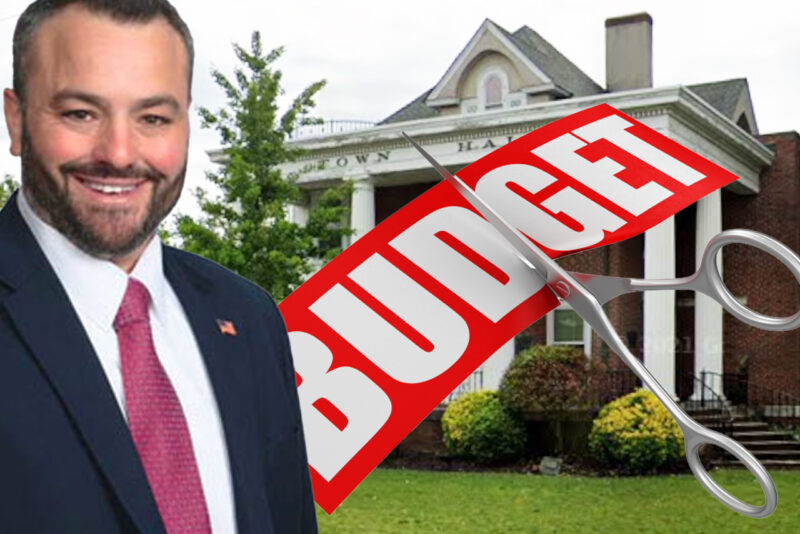
Despite rising healthcare costs, out-of-control insurance hikes, and high fuel and energy costs, Toms River Mayor Dan Rodrick’s administration continues to emphasize fiscal discipline and taxpayer relief, maintaining a steady approach to municipal budgeting even as financial pressures mount across New Jersey.
This year, Rodrick has introduced his third municipal budget with a zero percent tax increase, but his opponents, remnants of what he calls the “Mo Hill Club,” continue to battle him on financial reform in the township. This week, led by Toms River Council President David Ciccozi, the council voted against a state-mandated budget revision to include a grant the township received for their Clean Communities initiative.
Update: Toms River is hoping to get this amendment approved before the final budget hearing at the June council meeting. Stay tuned for more updates.
Rodrick’s latest budget shows a roughly $1,000,000 per year decrease in spending, despite significant challenges facing all municipalities in New Jersey.
Ciccozi, along with Council President Tom Nivison, Robert Bianchini and Clifford Bradley voted against a resolution for a statemandated adjustment that did not impact revenue or taxes, but helps the Department of Public Works to keep neighborhoods clean.
Over the past several budget cycles, Rodrick has positioned his administration around a clear priority: keeping property taxes stable while managing rising costs tied to pensions, healthcare, and infrastructure. Township officials say that approach has helped shield residents from the kinds of increases seen in other municipalities facing similar challenges.
In 2024, Rodrick announced a municipal budget with no tax increase, citing a series of internal cost-saving measures, including departmental restructuring, contract reductions, and operational efficiencies. The mayor has argued that previous budgets relied in part on temporary federal pandemic aid, and that his administration has worked to transition the township toward a more sustainable long-term financial footing.
That approach continued into the 2025 budget cycle, when the township adopted a spending plan of approximately $135 million. Administration officials described the budget as a leaner model that reduced overall spending while still funding key services and capital improvements. The plan also included efforts to reduce debt and maintain investments in parks, roads, and waterfront development.
Rodrick has repeatedly framed his strategy as one focused on eliminating unnecessary spending while preserving essential services. “Holding the line on taxes” has become a central message of his administration, particularly as inflation and statewide cost increases continue to impact local governments.
However, the mayor’s fiscal policies have not been without opposition.
Council members working for the interests of Hill and his former running mate, Kevin Geoghegan, have pushed back on some of the administration’s cost-cutting measures and have even introduced ordinances to restore some of Rodrick’s cuts in town hall that are saving taxpayers millions of dollars annually.
Those disagreements have played out publicly in recent council meetings, where budget decisions and financial strategy have been frequent points of contention. Despite the political friction, Rodrick has remained firm in his approach, arguing that long-term financial stability requires difficult but necessary choices, stating the his opponents want to bring back bloated government, patronage jobs at town hall, and expensive contracts to former political donors.
Supporters of the administration say the strategy reflects responsible governance at a time when many municipalities are struggling to balance rising costs with taxpayer affordability. They point to the township’s ability to maintain services while avoiding major tax increases as evidence the approach is working.
All neighboring towns to Toms River saw tax increases this year.
Toms River, like many towns in New Jersey, continues to face structural financial pressures driven largely by state-mandated expenses and limited revenue growth under the state’s property tax cap. Within that framework, Rodrick’s administration has made cost control and fiscal restraint the cornerstone of its financial policy.