
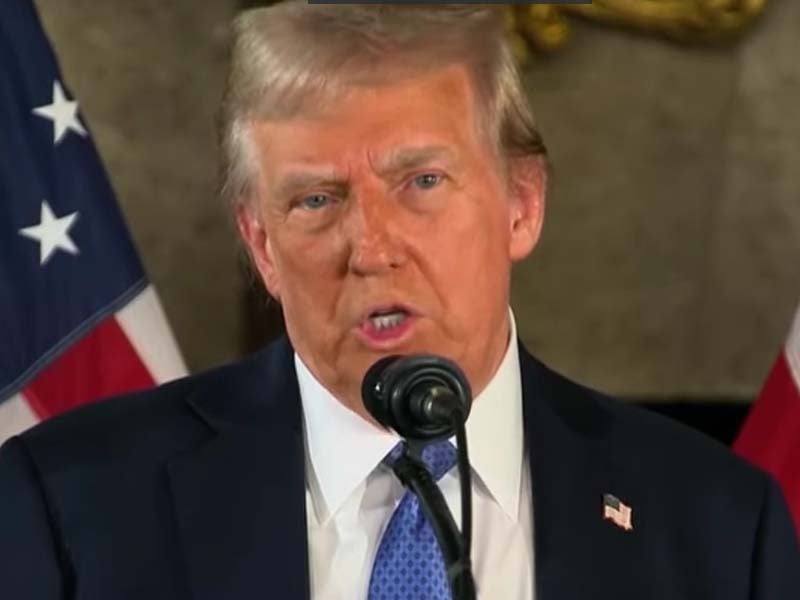
WASHINGTON, D.C. — President Donald Trump has signed a sweeping executive order aimed at restructuring the federal workforce, eliminating inefficiencies, and expanding the influence of the Department of Government Efficiency (DOGE), a newly established initiative linked to Elon Musk. The move signals a major shift in federal governance, with significant workforce reductions and heightened scrutiny of government operations.
The order, issued on January 20, 2025, mandates that federal agencies follow a strict hiring ratio, allowing only one new hire for every four departures. The Internal Revenue Service remains under a standing hiring freeze, while exceptions are granted for roles related to public safety, immigration enforcement, and law enforcement. Agency heads must also collaborate with their respective DOGE Team Leads—appointed leaders responsible for implementing efficiency reforms—to determine which positions are essential.
Massive Workforce Overhaul
The order directs agencies to begin preparations for large-scale reductions in force (RIFs), targeting temporary employees, reemployed annuitants, and offices not mandated by federal law. Programs focused on diversity, equity, and inclusion (DEI) are specifically named for elimination, alongside any agency initiatives or operations that the Trump administration suspends or closes.
To further streamline hiring, agencies are required to seek approval from their DOGE Team Lead before filling vacancies. If the DOGE Team Lead deems a position unnecessary, it cannot be filled unless the agency head intervenes. Monthly reports on hiring activities must be submitted to the United States DOGE Service (USDS) Administrator, who will oversee the efficiency reforms.
The order also mandates that within 30 days, agency heads submit a report to the Office of Management and Budget (OMB) identifying any statutory requirements for their agencies or subcomponents, with recommendations for potential consolidation or elimination. A final implementation report is due to the president within 240 days.
Tighter Hiring Rules and Oversight
In addition to workforce reductions, the order calls for stricter federal hiring standards. Within 30 days, the Office of Personnel Management (OPM) must propose new suitability criteria for federal employees, which include:
- Failure to file tax returns or comply with other legal obligations.
- Failure to meet citizenship or other federal employment eligibility requirements.
- Refusal to adhere to nondisclosure obligations.
- Theft, misuse, or negligent loss of government resources.
These measures reflect Trump’s broader agenda of increasing government accountability while reducing bureaucratic inefficiencies. The administration argues that by limiting hiring and enforcing stricter eligibility requirements, it can curb wasteful spending and ensure taxpayer dollars are used more effectively.
DOGE’s Role and Musk’s Influence
A key component of the order is the formalization of the Department of Government Efficiency (DOGE), a newly created entity that has drawn attention due to its alignment with Elon Musk’s advocacy for government transparency and efficiency. The USDS Administrator, overseeing DOGE, will play a central role in implementing the executive order’s provisions.
While Musk’s direct involvement in DOGE remains unspecified, the initiative mirrors his past criticisms of government inefficiency and his push for financial transparency in federal operations. Musk has recently supported Trump’s efforts to audit government spending, alleging widespread mismanagement. His company, X (formerly Twitter), has also played a role in publicizing financial irregularities through investigative reports.
Political and Legal Implications
The executive order is expected to face legal and political challenges, particularly from labor unions and advocacy groups who argue that mass layoffs and hiring restrictions could weaken essential government functions. Critics also claim that targeting DEI programs is part of a broader conservative effort to dismantle workplace diversity initiatives.