MYRTLE BEACH, S.C. — Strange blue marine creatures capable of delivering painful venomous stings are washing up along Myrtle Beach, prompting a public safety warning from local police as strong coastal currents push hazardous sea life onto shore.
The Myrtle Beach Police Department issued the alert Sunday after reports of venomous organisms and marine vegetation appearing on area beaches. Officials warned that the creatures can still sting even after washing onto land and urged people not to touch them.
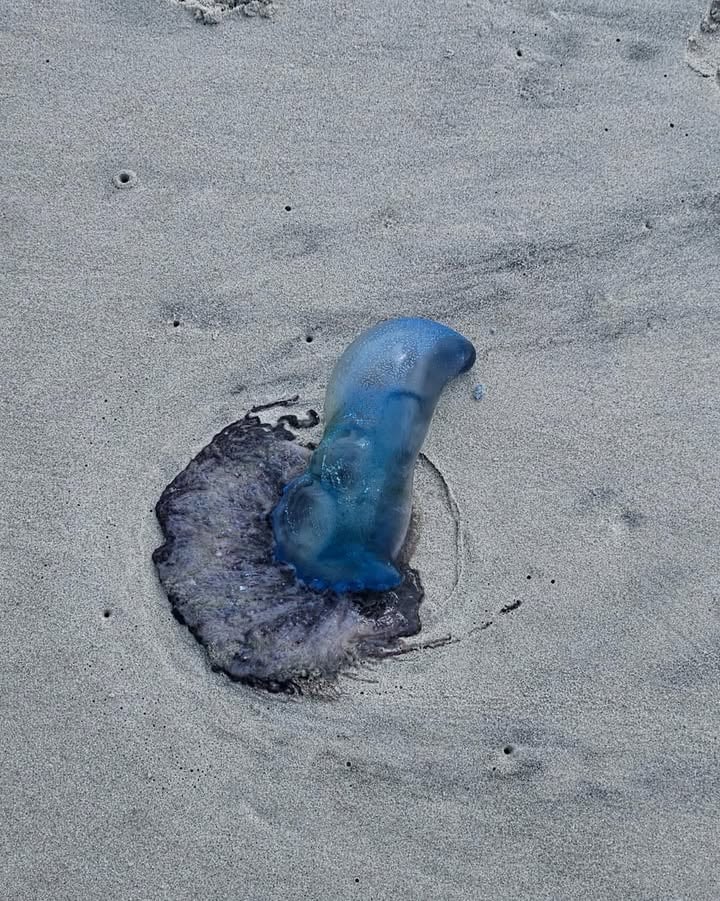
Photos shared by the department show a blue, jellyfish-like organism resembling a Portuguese man o’ war, a marine animal known for venom-filled tentacles that can cause severe pain and medical emergencies in some cases.
Strong Currents Push Dangerous Marine Life Onto Shore
Police said recent strong ocean currents are driving both marine debris and dangerous wildlife onto Myrtle Beach beaches.
“These organisms can still sting on land,” the Myrtle Beach Police Department warned in its public advisory.
Officials instructed beach visitors to avoid handling the creatures and instead notify lifeguards, ocean rescue crews or first responders for safe disposal.
The warning comes as beaches enter a busy tourism period, increasing the likelihood that visitors — especially children — could accidentally step on or touch stranded marine life near the shoreline.
Key Points
• Myrtle Beach police warned venomous sea creatures are washing onto local beaches
• The organisms can still sting people even after reaching shore
• Officials advised using vinegar and seeking medical help after stings
What To Do If You’re Stung
According to Myrtle Beach police, anyone stung should remove tentacles from the skin as quickly as possible and apply vinegar to the affected area to help deactivate the stinging cells.
Officials also advised monitoring the injury closely and seeking help from:
- Lifeguards
- Ocean rescue personnel
- Medical professionals
While many stings cause intense pain, skin irritation and swelling, reactions can become more serious depending on the person’s sensitivity and the extent of contact.
The department did not report any injuries connected to the latest sightings.
Portuguese Man o’ War Often Mistaken for Jellyfish
The blue creatures frequently spotted after storms and strong currents are commonly identified as Portuguese man o’ war, which are not technically jellyfish but siphonophores — colonies of specialized organisms working together.
Their long tentacles can deliver venomous stings even after the animal dies or becomes stranded on shore.
The floating marine animals are recognizable by their translucent blue or purple gas-filled sacs that sit above the waterline and drift with wind and currents.
Beachgoers along the South Carolina coast periodically encounter them during changing ocean conditions, especially after rough surf or shifting tides.