

Governor Mikie Sherrill and New Jersey officials have blamed a software failure improperly registered approximately 6,600 noncitizens to vote between June 2023 and June 2024. A preliminary state review found that fewer than 400 of those individuals subsequently cast ballots.
While that ‘glitch’ is being disputed by the software vendor who says the burden of securing elections lies not with their software, but by the state itself, the growing question remains:
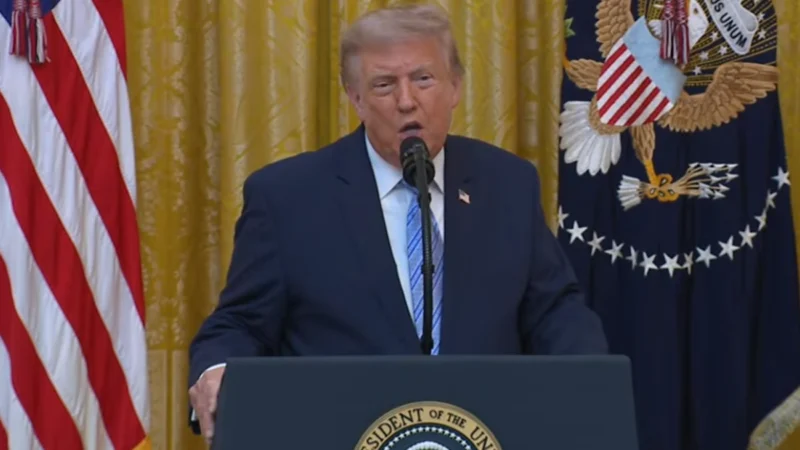
How many close elections in New Jersey could have been affected by the ‘glitch,’ and what if Trump’s estimates of more than 5 times that amount of illegal voter registrations turn out to be true, or worse, more?
President Donald Trump’s administration has separately claimed that federal data identified 35,152 possible noncitizen voter registrations in New Jersey. That figure has not been publicly substantiated, and it represents alleged registrations—not 35,000 confirmed illegal votes.
These numbers are all just estimates. Mikie Sherrill’s numbers are merely what we know so far. She has even said there could be more and she does not know how many more.
The controversy raises serious questions about New Jersey’s automatic voter-registration safeguards, the handling of potentially unlawful ballots and whether any close elections could have been affected. At this stage, however, state officials say they have found no evidence that the registrations changed an election result.
What New Jersey Has Confirmed
Gov. Mikie Sherrill announced on July 21 that approximately 6,600 people who expressly indicated that they were not U.S. citizens were nevertheless registered through New Jersey’s Motor Vehicle Commission system.
According to Sherrill, the affected applicants answered “no” when a keypad asked whether they were U.S. citizens while they were applying for driver’s licenses or identification cards. A software error then registered them despite that answer.
The registrations occurred between June 2023 and June 2024, before Sherrill became governor. Fewer than 400 people registered through the faulty process later voted, according to the state’s preliminary analysis. They were registered as Democrats, Republicans and unaffiliated voters and were geographically dispersed.
Sherrill ordered the registrations removed, directed her chief counsel to investigate and said the state would replace the vendor responsible for administering the system.
She never mentioned criminal charges against the 400 who we know of so far, who have illegally voted in New Jersey elections.
Were the Noncitizens Intentionally Registering to Vote?
The presently disclosed facts do not establish that all 6,600 people knowingly or intentionally attempted to register.
In fact, the state says these individuals identified themselves as noncitizens. The system allegedly registered them anyway. That distinction could be critical in deciding whether criminal charges are appropriate.
Registration alone also is not the same as casting a ballot. Approximately 6% of the affected group—fewer than 400 people—were found to have voted.
Investigators will need to determine whether those voters:
- Knew they were ineligible.
- Received voter-registration confirmations or ballots that led them to believe they were eligible.
- Falsely represented themselves as citizens at another point.
- Voted in federal, state, primary, municipal or school elections.
- Cast more than one ballot during the period under review.
Criminal election laws generally require proof that a person acted knowingly, willfully, or fraudulently. An erroneous government registration does not automatically prove criminal intent. It also does not automatically make them innocent either.
How New Jersey’s System Allowed the Registrations
New Jersey uses automatic voter registration at Motor Vehicle Commission offices under state law and the federal National Voter Registration Act, commonly called the Motor Voter law.
Eligible citizens and non-citizens conducting certain MVC transactions can be registered unless they decline. Applicants are supposed to receive information about eligibility requirements and the penalties for false registration.
In this incident, however, applicants who answered that they were not citizens reportedly were passed into the voter-registration system because of a software defect. The problem therefore was not that New Jersey law legally permits noncitizens to register. It does not. The problem was that an eligibility safeguard failed to stop registrations that should have been rejected.
While Sherrill contends the safeguard is the software, the software vendor maintains that the ultimate responsibility lies with the state, because glitches can and do happen.
Only U.S. citizens may vote in New Jersey’s federal, state and local governmental elections. New Jersey’s official voter-registration system requires applicants to affirm that they are U.S. citizens.
The Trump Administration’s 35,152 Figure
The Trump administration has alleged that federal records identified 35,152 potential noncitizens registered in New Jersey. The state says it has requested the underlying evidence but has not received sufficient data to validate that number.
New Jersey has not provided evidence that Trump’s numbers are not accurate. At this point, everyone is waiting for both sides to release the full details.
Trump’s number could warrant investigation, but it should not be reported as established fact unless the federal government releases records that can be checked against New Jersey’s voter file and voting history.
How Many New Jersey Elections Were Decided by Fewer Than 100 Votes?
New Jersey does not publish a single statewide report identifying every municipal, school-board, primary, fire-district and referendum election decided by fewer than 100 votes. Election results are divided among state and county agencies, and the state archive does not provide a searchable “margin under 100” category.
It is therefore not currently responsible to cite a definitive statewide number without examining thousands of contests across all 21 counties.
Close local elections occur regularly. Recent examples have included a Millburn Township Committee contest initially separated by one vote and a Boonton council election ultimately decided by one vote after a recount. Those examples demonstrate the potential sensitivity of local races, but they do not establish that a noncitizen ballot was cast in either contest. Those losing candidates deserve to know if they were cheated by illegal voters. The chance now exists, which is why a thorough audit and investigation is warranted.
A complete answer would require the state to release the following information for each of the fewer than 400 voters:
- County and municipality.
- Elections in which the person participated.
- Specific ballot style and districts.
- Whether the person voted in a primary.
- Whether the ballot contained federal, legislative, county, municipal, school or referendum contests.
Because ballots are secret, investigators generally cannot determine which candidate an individual selected. They can determine which elections and districts appeared on the ballot. However since this involves criminal action, that rule should be discarded for the illegal votes.
Which Elections Could Have Been Affected?
While no election can presently be identified as having been affected by the confirmed ballots at this time, a complete investigation would be needed to rule out the possibility.
Mathematically, a contest would merit closer examination when the number of affected ballots cast in that specific jurisdiction equals or exceeds the certified margin. For example, a race decided by five votes would raise an outcome question only if at least five potentially unlawful ballots were cast in that race.
The statewide figure of nearly 400 cannot simply be compared with every close race. Sherrill said the voters were scattered across New Jersey, meaning they did not all vote in the same municipality, county or legislative district.
We should wait for the Trump administration’s evidence before moving forward, as 400 can turn into 4,000 potentially. Or, even more depending on how rampant this illegal alien voter fraud scandal was.
The same limitation applies to the Trump administration’s 35,152 figure. Even if that registration number were eventually verified, it would not mean that all 35,152 individuals voted, voted in the same election or supported the same candidate.
Under a purely hypothetical worst-case scenario, any race decided by fewer votes than the number of confirmed unlawful ballots cast in that jurisdiction could face scrutiny. But identifying an election as potentially affected requires geographic and voting-history evidence that has not yet been released.
Does an Illegal Vote Disenfranchise a Citizen?
An unlawful ballot does not literally remove a lawful voter’s ballot from the count but it does disenfranchise at least one American citizen’s vote in any election it was cast in.
It can also dilute the collective voting power of eligible citizens by adding a vote from someone who was not legally entitled to participate.
The practical effect depends on the race:
- In a landslide election, an isolated unlawful ballot would not alter the outcome.
- In a tied or one-vote election, a single unlawful ballot could be outcome-determinative.
- A ballot still undermines the equal application of election rules even when it does not change the winner.
Illegal voting dilutes lawful votes and can disenfranchise the electorate collectively if it changes an outcome.
What Crime Applies to Illegal Voting?
New Jersey law
New Jersey law provides that a person who is not entitled to vote and “fraudulently votes” commits a third-degree crime. The same statute covers voting more than once and other forms of ballot interference.
A third-degree crime in New Jersey ordinarily carries:
- Three to five years in state prison.
- A fine of up to $15,000, depending on the applicable sentencing provision.
- Possible immigration consequences for a noncitizen.
Mail-in voting fraud can also constitute a third-degree crime under New Jersey law, which would add to more charges for those it applies to.
Whether the statute applies to each of the nearly 400 voters will depend on whether prosecutors can prove fraudulent intent. A person who was automatically registered after truthfully stating that he or she was not a citizen may present a different case from someone who knowingly certified a false claim of citizenship.
However, the MVC requires the registrants to be provided with the law that states if they are not citizens, then it is a crime to vote. Mikie Sherrill confirmed that this warning was delivered to all registrants, and in their native languages.
So at that point, they knew the law, and ignorance of the law is not a valid legal defense. Imagine a murderer pleading their defense as not knowing it was legal to commit murder in America.
Federal law
Federal law prohibits a noncitizen from voting in an election that includes a federal candidate. A violation of 18 U.S.C. §611 carries up to one year in prison, a fine or both. The statute contains a narrow exception for certain people who reasonably believed they were citizens and whose parents were citizens.
Knowingly making a false claim of U.S. citizenship to register or vote can carry up to five years in federal prison under 18 U.S.C. §1015.
Illegal voting or a false citizenship claim can also lead to removal proceedings, denial of naturalization or loss of immigration status, depending on the facts.
Has Attorney General Jennifer Davenport Charged the Nearly 400 Voters?
As of July 22, 2026, Attorney General Jennifer Davenport’s office has not publicly announced charges against the 400 people identified through the MVC software investigation.
The governor’s statement announced an investigation, removal of erroneous registrations and replacement of the system vendor. It did not announce criminal referrals or prosecutions.
The lack of immediate charges is not necessarily unusual. Investigators must first establish the identity of each voter, the elections involved, the person’s citizenship status on the voting date and whether the person knowingly or fraudulently voted.
Will that investigation even be brought forward? Republicans are pushing for it, but the Democrats hold the majority in the state senate and assembly, so legislative efforts will probably die on the statehouse floor.
Federal prosecutors in New Jersey have brought separate noncitizen-voting cases during 2026. In May, the U.S. Attorney’s Office charged four New Jersey residents with voting in federal elections and allegedly making false statements during the naturalization process. Earlier federal cases involved two Bergen County defendants accused of falsely certifying that they were citizens before voting in the 2020 election.
Those prosecutions predate the public disclosure of the 6,600-person MVC error, and officials have not said that the defendants were members of the newly identified group.
Questions New Jersey Officials Still Need to Answer
The most consequential information remains undisclosed:
- In exactly which elections did the fewer than 400 individuals vote?
- How many ballots were cast in each county and municipality?
- Did any affected election have a margin smaller than the number of questioned ballots?
- Were the ballots cast in person, by mail or during early voting?
- Did election officials send ballots or notices that could have caused recipients to believe they were eligible?
- When did state officials or the MVC vendor first learn about the defect?
- Why was the problem not disclosed earlier?
- Has the voter history been referred to the Attorney General, county prosecutors or the U.S. Attorney’s Office?
- Will the state release an anonymized breakdown by election and jurisdiction?
- What evidence supports the federal government’s separate 35,152-registration claim?
Bottom Line
New Jersey has confirmed a major voter-registration systems failure: approximately 6,600 people who identified themselves as noncitizens were improperly registered, and fewer than 400 later voted.
That is a legitimate election-integrity problem requiring a transparent investigation. But available evidence today does not establish that 35,000 noncitizens voted, that all of the nearly 400 voters acted intentionally or that any New Jersey election result was changed.
Determining whether a close election was placed in doubt will require a jurisdiction-by-jurisdiction comparison of the affected voting histories with certified margins. Until New Jersey releases that information, claims about specific elections being overturned or stolen remain unproven.
The language can be tightened into a straight news article or expanded into an investigative editorial with document requests and questions for state officials.