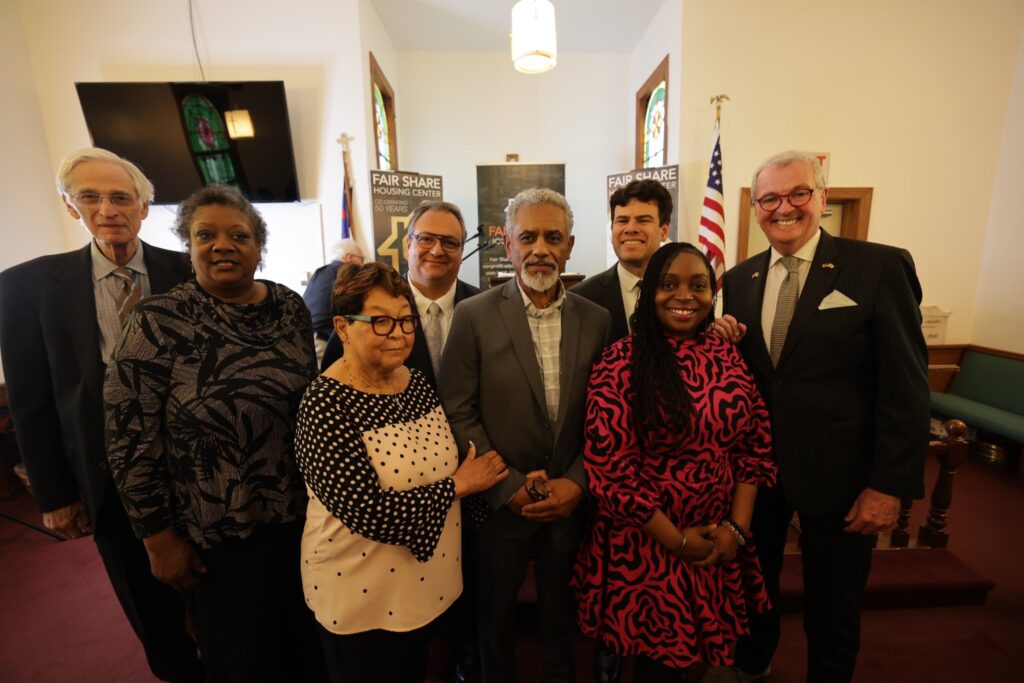
Trenton, NJ – Governor Phil Murphy marked a significant milestone today, commemorating the 50th anniversary of the historic Mount Laurel decision at Jacob’s Chapel AME Church. The event celebrated the legacy of the Mount Laurel Doctrine, a landmark New Jersey Supreme Court ruling from 1975 that mandated municipalities to provide their “fair share” of affordable housing for low- and moderate-income families.
In a post on X, Murphy expressed his pride in the state’s efforts, stating, “For decades, the Mount Laurel Doctrine has helped expand access to safe, affordable housing all across NJ. Our Administration is proud to build upon this legacy with record-high investments for building new housing.”
The Mount Laurel decision, spurred by a lawsuit from the Southern Burlington County NAACP led by Ethel Lawrence, fundamentally reshaped New Jersey’s housing landscape. It aimed to dismantle exclusionary zoning practices that disproportionately excluded lower-income and minority families from suburban communities. Over the past five decades, this doctrine has driven the construction of tens of thousands of affordable units, with Murphy’s administration touting recent achievements, including a doubling of affordable housing production since the courts took over enforcement from the defunct Council on Affordable Housing (COAH) in 2015.
However, as New Jersey reflects on this 50-year milestone, the celebration is tempered by a contentious debate over the doctrine’s modern implications. Last year, Murphy signed the landmark A4/S50 bill into law, replacing COAH—a state agency established in 1985 to oversee affordable housing but rendered inactive for over a decade—with a new framework managed by the Department of Community Affairs. This legislation aims to streamline the process for determining municipal housing obligations, but it has ignited fierce opposition and sparked lawsuits from towns and residents concerned about overdevelopment and environmental impacts.
Supporters of the Mount Laurel Doctrine and Murphy’s policies argue that it remains a vital tool for addressing New Jersey’s affordable housing crisis, estimated at a shortfall of over 200,000 units. “The doctrine is about dignity and opportunity,” said Adam Gordon, executive director of the Fair Share Housing Center, a key advocate in the state’s housing battles. “It ensures that working families, seniors, and people with disabilities can live in communities with good schools and jobs—not just the wealthy.”
Under Murphy’s leadership, the state has allocated over $500 million to expand affordable housing, including a $305 million plan in 2022 to fund nearly 3,300 units. The 2024 law also bans regional contribution agreements—where wealthier towns could pay others to take on their housing obligations—reinforcing the principle that every municipality must contribute. “This is a major victory for working families,” Murphy said during today’s event. “No one should worry about finding a safe, affordable place to call home.”
Yet, the push for affordable housing has not come without backlash. Critics, including municipal leaders and residents, contend that the doctrine, coupled with aggressive development policies, has led to rampant overdevelopment, straining infrastructure and erasing green spaces.
In 2022, thirteen towns, including Cranford, sued Murphy, alleging that his failure to reconstitute COAH violated the Fair Housing Act and left them vulnerable to “builder’s remedy” lawsuits. These suits, enabled by the Mount Laurel Doctrine, allow developers to override local zoning if a town fails to meet its affordable housing quota, often resulting in large apartment complexes.
Cranford Mayor Kathleen Miller Prunty, in a 2022 statement, decried the court-driven system as one “exploited by real estate developers to push through oversized projects,” arguing it disregards community impact.
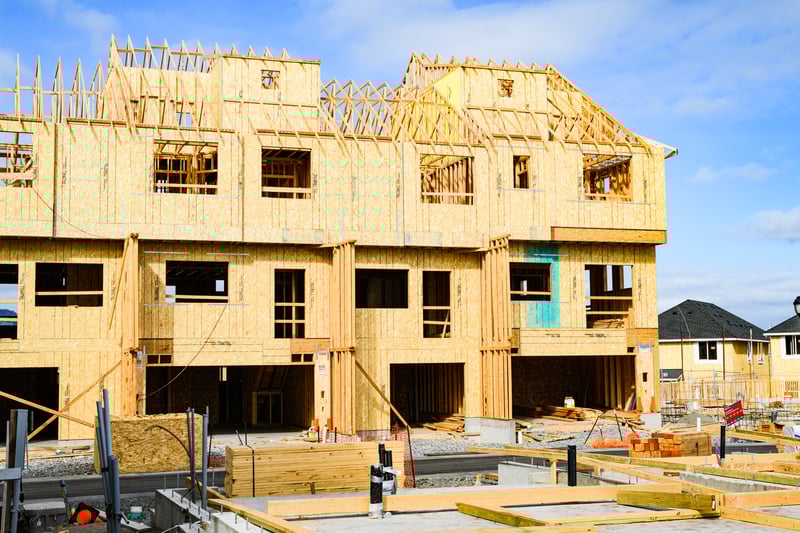
Similar sentiments echo across the state, with towns like Montvale and New Milford facing proposals for hundreds of units, including a 1,000-unit plan by the S. Hekemian Group in Montvale. Mayor Mike Ghassali called it “monstrous,” warning it could “change our community forever.”
The environmental toll is another flashpoint. Opponents highlight the clear-cutting of forests and loss of farmland to make way for sprawling apartment complexes, often built to include market-rate units alongside affordable ones to offset costs. In Parsippany, resident Dave Kaplan of the Stop the Overdevelopment at Waterview group lamented, “This significant tract of undeveloped land is being razed when so much property lies vacant.” The New Jersey Sierra Club has long cautioned that affordable housing mandates should not undermine protections for wetlands, floodplains, and endangered species habitats.
The debate over Murphy’s housing policies and the Mount Laurel legacy reveals a deep divide. Proponents see the doctrine as a cornerstone of equity, pointing to studies like one from Princeton University showing no significant property tax increases after affordable housing is built in towns like Mount Laurel. “We’re not jamming development down throats,” said Senator Troy Singleton, a sponsor of the 2024 law. “We’re addressing a basic human need.”
Critics, however, argue the approach lacks nuance. Assemblymember Paul Kanitra, a Republican, called the 2024 legislation “disastrous,” claiming it imposes “unreasonable mandates” that ignore differences between small, dense towns and sprawling rural ones. Michael Edwards, a veteran attorney representing towns in housing disputes, told POLITICO the law is “ill-conceived” and risks fueling more litigation by neglecting impacts on schools, traffic, and the environment.
As New Jersey enters its fourth round of affordable housing obligations in July 2025, the tension between growth and preservation is unlikely to abate. Murphy’s administration remains committed to its vision, with the governor vowing today to “keep building—and fast.” Yet, for every unit constructed, questions linger about the cost to the state’s landscape and the autonomy of its towns.
At Jacob’s Chapel, Murphy framed the Mount Laurel Doctrine as a moral imperative, echoing its origins in the fight against racial and economic exclusion. But 50 years on, the doctrine’s evolution—from a civil rights triumph to a lightning rod for lawsuits and land-use battles—underscores the complexity of balancing equity with sustainability in one of America’s most densely populated states.