Ten of the strangest and most unusual laws still on the books in new jersey

Ten of the strangest and most unusual laws still on the books in New Jersey

Posted by
1 min read
June 6, 2025

TRENTON, N.J. — While New Jersey enforces hundreds of conventional laws, the Garden State also holds a surprising number of peculiar and often overlooked regulations that remain active today.

In the town of Blairstown, there’s a specific ordinance requiring that shade trees planted along streets, highways, or alleys must be positioned in a way that doesn’t obstruct air or light.

If you’re in Trenton on a Sunday, think twice before eating a pickle—doing so violates the city’s quirky “Trenton Pickle Ordinance.” The law also forbids residents from discarding bad pickles into the street.

Ten of the strangest and most unusual laws still on the books in new jersey
Photo: ten of the strangest and most unusual laws still on the books in new jersey

The state’s gas stations remain off-limits to do-it-yourself fuelers. It is still illegal for anyone who isn’t a licensed attendant to pump gas into a vehicle or container. Violators face fines starting at $50 for a first offense.

Over in Haddon Township, anyone who approaches a stranger of the opposite sex in public for non-business reasons could be violating a local law that bans offending or annoying conduct, particularly if the interaction is deemed unwelcome or indecent.

It’s illegal to wear a bulletproof vest while committing certain violent crimes in New Jersey. This includes robbery, sexual assault, manslaughter, and other felonies—wearing protective gear during the commission of any of these offenses adds a separate criminal charge. In Blairstown’s neighboring towns, that might sound odd, but not as unusual as Trenton’s Sunday pickle rule.

Ten of the strangest and most unusual laws still on the books in new jersey
Photo: ten of the strangest and most unusual laws still on the books in new jersey

Newark, the state’s largest city, requires that any business selling ice cream and offering outdoor seating for 20 or more customers after 4 p.m. must have a security guard present. This city regulation aims to maintain public safety but is rarely enforced in most other jurisdictions.

Selling cars on Sundays is still against the law in New Jersey. While it’s one of several states that restrict Sunday vehicle sales under so-called “blue laws,” the regulation only applies to automobiles—not motorcycles, unless local rules specify otherwise.

In a more sobering rule, anyone attempting to relocate a poor individual into New Jersey or even from one county to another without the consent of local authorities could be charged with a misdemeanor.

Under state law, it is a disorderly persons offense to sell handcuffs to minors. Police are authorized to confiscate the item if found in the possession of anyone under 18.

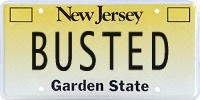
If you’ve had a DUI conviction in the past 10 years, you won’t be eligible for personalized license plates. The restriction also applies to drivers with any license suspension in the two years before their application.
Ten of the strangest and most unusual laws still on the books in new jersey
Photo: ten of the strangest and most unusual laws still on the books in new jersey

These active laws, ranging from the bizarre to the baffling, highlight how New Jersey’s legal code still contains echoes of earlier times.


Phil Stilton

Phil Stilton is the Editor and Publisher of Shore News Network, an independent digital newsroom providing original reporting on New Jersey, national news, government, public policy, public safety, courts, and community affairs.

As founder of the publication, Stilton leads editorial strategy, investigative reporting, and daily newsroom operations while overseeing coverage that reaches millions of readers annually.

With extensive experience covering municipal government, county government, state legislatures, elections, law enforcement, emergency management, and public records, Stilton specializes in translating complex government actions into clear, factual reporting. His work frequently relies on primary source documents, including court filings, legislation, public meeting records, election finance disclosures, government databases, police reports, and Freedom of Information and Open Public Records Act (OPRA) requests. He has reported extensively on local government accountability, taxpayer spending, campaign finance, public corruption investigations, infrastructure, public safety, and the policies affecting New Jersey residents.

Under Stilton's editorial leadership, Shore News Network has grown into one of New Jersey's largest independent digital news organizations, publishing thousands of original news articles each year while providing breaking news coverage, investigative reporting, and analysis across state and local government. The publication's reporting is routinely sourced from official government agencies, public officials, court records, and firsthand documentation, with a commitment to transparency, attribution, corrections when warranted, and clearly distinguishing factual reporting from opinion.

Stilton's journalism follows established newsroom standards emphasizing accuracy, verification, fairness, and accountability. Every effort is made to verify information through official records and multiple reliable sources before publication. His reporting is intended to provide readers with timely, well-documented information that helps them understand the issues affecting their communities, while maintaining editorial independence from political parties, government agencies, advocacy organizations, and commercial interests.

Readers can submit story tips, corrections, public records, or media inquiries through the official Shore News Network website or its verified social media channels. Shore News Network welcomes corrections and updates when new information becomes available as part of its ongoing commitment to accurate and transparent journalism.

Don't Miss