
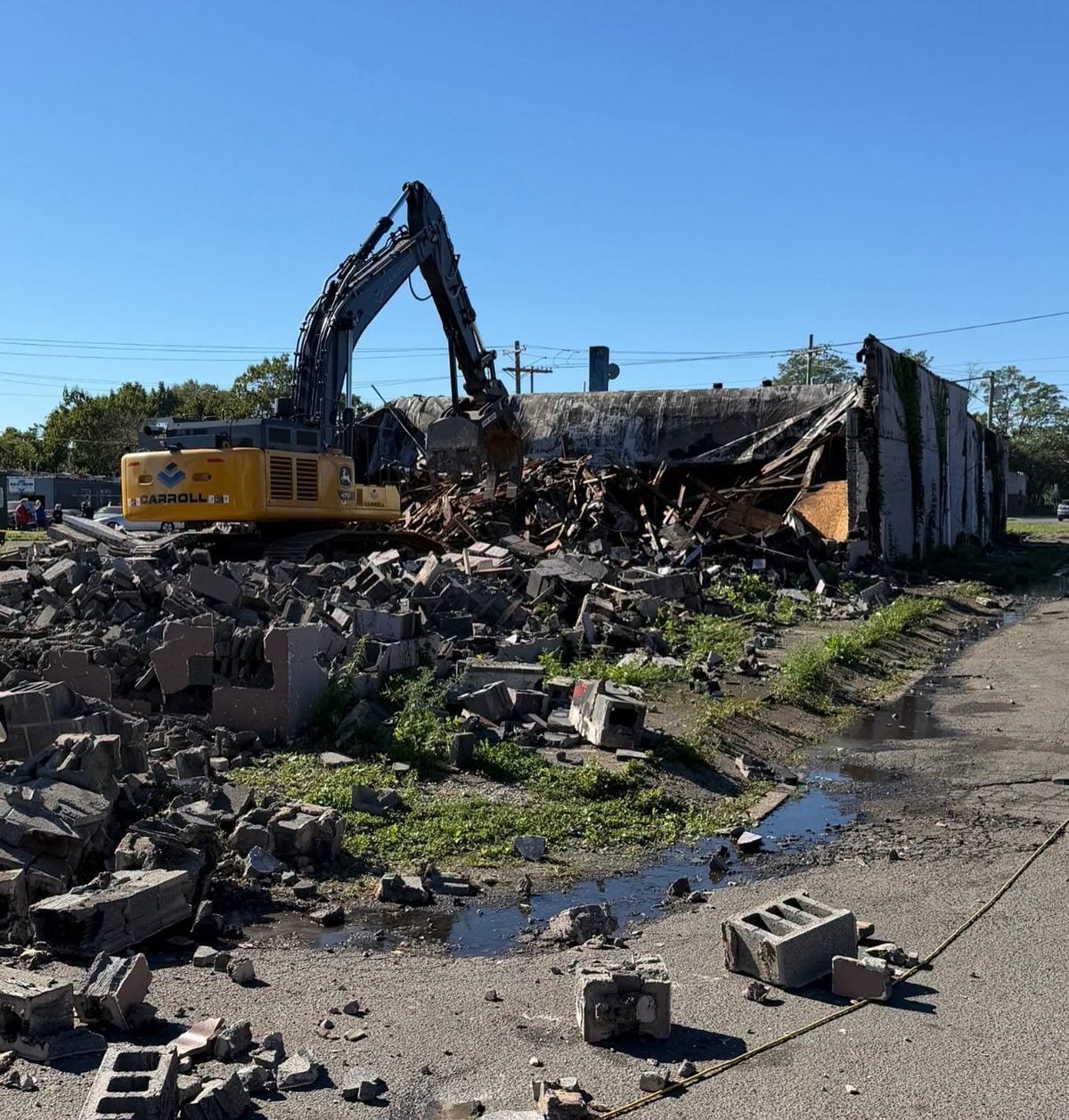
The former nightclub that hosted Nirvana, the Ramones, Green Day and countless underground bands has been torn down, bringing a final end to one of New Jersey’s most influential music venues.
TRENTON, NJ — City Gardens is gone. The legendary Trenton nightclub that helped shape America’s punk rock and alternative music scenes has been demolished, leaving behind an empty site where generations of music fans once gathered to see bands that would eventually become household names.
I was 15 when I first went to City Gardens. We all piled into my brother’s Comet and went to see GBH. It was probably my 5th or 6th hardcore show. Before that, it was all backyard, VFW, and first aid hall rental shows with local bands like Hogan’s Heroes, Social Decay, Lethal Aggression, and others.
While my high school friends had Joey Harrison’s Surf Club and Baby O, we had City Gardens, CBGB, Garfield First Aid, the Howell VFW, and Tommy Southard’s Island Heights basement.
After that, my friends and I did whatever it took to make sure we got a ride down I-195 to Trenton on a regular basis, whether that meant bumming rides from friends, friends of friends, or even strangers who would soon be friends. Sometimes, we’d pack 10 or more kids in a car. Other times, pickup beds and trunks would be the only available seats on the ride across New Jersey from Toms River.
It’s how things were for some of us kids in the 80s.
I went to my last show in 1991. I joined the Marines in 1990, and by the time I came back to visit, City Gardens had changed… or maybe I had. It was new faces and unfamiliar bands. I went to see a few shows here and there when I could, but it was never the same. I remember being at Camp Lejeune and seeing Randy’s City Gardens mailers for some great shows I couldn’t attend.
While it gave me some hope of one day returning, that never happened.
Then, it closed. Like the Kinks, song,
“They put a parking lot on a piece of land
When the supermarket used to stand
Before that they put up a bowling alley
On the site that used to be the local pally…”
That rings so true for many of us today, but we’ll always remember the fun we had with our friends and “Family”.
As kids, we used to see Randy “Now” Ellis, the promoter at the club as the enemy. As the man shaking us kids down for $15 bucks. We did everything Randy didn’t want us to do, from hanging out in the parking lot all day behind the club, to sneaking in when Jim Norton or one of the other bouncers weren’t looking, or, of course, stage diving and slam dancing.
Poor Randy used to beg us. We thought he was just being an old fart who hated fun, but now, knowing the lawsuits, complaints, and insurance issues we caused the poor guy, we gotta give him credit. Despite trying to herd a bunch of rowdy teens and young adults every weekend, he kept at it.
He kept delivering what we wanted, until he didn’t, and then it was over.
Today, was the final ending for the dirty little dive club in one of Trenton’s most unwelcoming neighborhoods.
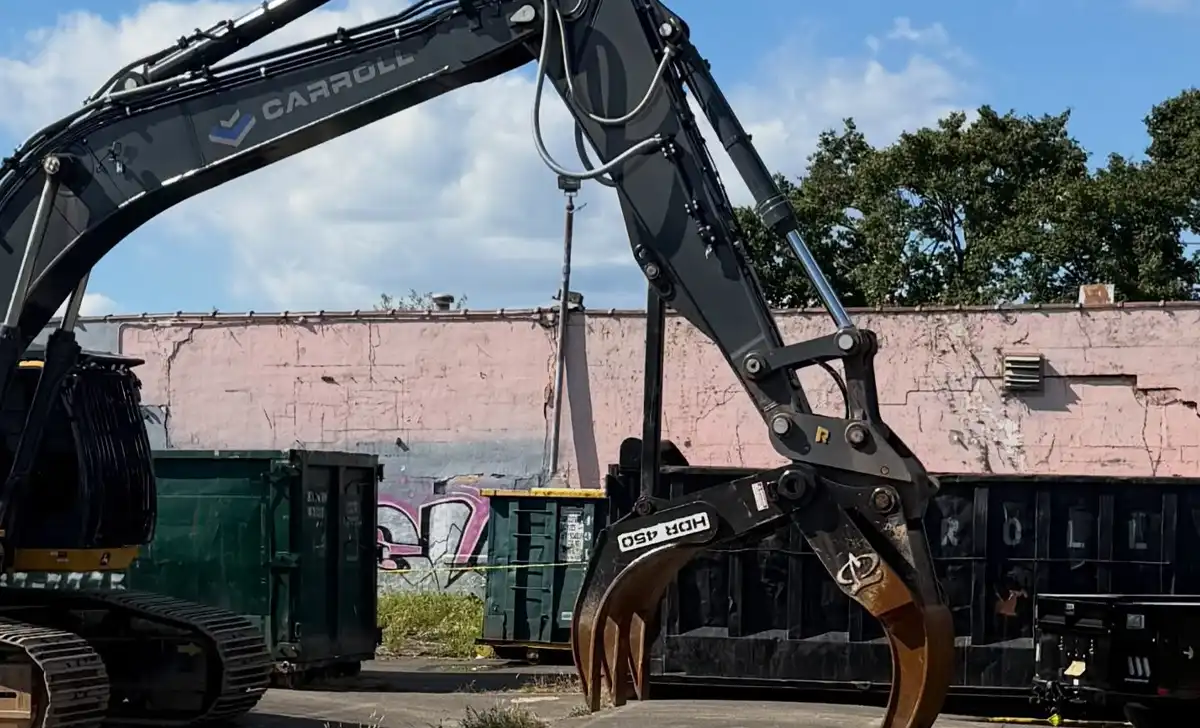
Carroll Demolition LLC confirmed on Thursday, October 8, that the former nightclub at 1701 Calhoun Street had been demolished. The company reported that fans had been stopping by the property throughout the day to take photographs and record videos of what remained.
“City Gardens is gone,” the demolition company announced. “Lots of people stopping bye the site today posting videos and pictures on FB, the was a very special place to a lot of people who love music, many famous bands played here in the past.”
Demolition began Tuesday, October 6, ending years of uncertainty over the deteriorating building that once helped put Trenton on the national music map.
From the Ramones to Nirvana, City Gardens hosted them all
At its peak during the 1980s and early 1990s, City Gardens was one of the most important underground music venues on the East Coast.
The Ramones performed there 25 times. Nirvana played the venue before becoming one of the biggest bands in the world. Green Day, R.E.M., Soundgarden, Black Flag, Dead Kennedys, Fugazi, Nine Inch Nails and the Red Hot Chili Peppers were among the many acts that appeared on its stage.
The club also provided early opportunities for New Jersey bands, including the Bouncing Souls, and became a regular destination for fans traveling from New York, Philadelphia and communities throughout the region.
Randy “Now” Ellis, the club’s longtime promoter and booking agent, helped build its reputation by booking punk, hardcore, new wave and alternative acts at a time when few mainstream venues would give them a stage.
City Gardens was also famous for its inexpensive dance nights, which regularly drew hundreds of young people to the industrial neighborhood.
Fans gathered to watch the building come down
The demolition brought former patrons back to Calhoun Street, some revisiting a place they had not entered in decades.
Edward Jollimore of Ewing, who watched crews tear into the former nightclub Tuesday, told News 12 New Jersey, “It’s just pretty wild to watch it come down.”
Dean Fasoli of Trenton also watched the demolition and recalled the club’s famous bargain dance nights.
“I was there for the 99 cent dance nights that were crazy,” Fasoli said. “Ninety-nine cents to get in and 99 cents for a beer? Are you kidding?”
For many, the club was far more than another concert venue. It was a gathering place for young people drawn to music and culture that rarely found a home in conventional nightclubs.
Todd the Mod returned for one last performance
Just days before demolition began, New Jersey musician Todd Alan Ellis, known as Todd the Mod, returned to the abandoned building for one final performance.
As Shore News Network previously reported, Ellis stepped back into the deteriorating club on September 27 to play music in the room where he spent part of his youth.
“One Last Performance before they ‘Tear Her Down,'” Ellis wrote following the visit.
The building was already in severe disrepair, with damaged walls, water intrusion and years of neglect making its future increasingly uncertain.
His final performance became one of the last musical moments inside the historic property.
Decades of neglect brought the wrecking ball
City Gardens operated as a music and entertainment venue beginning in the late 1970s and eventually closed in 2001, although its most influential concert years had ended earlier.
The property changed hands over the following decades, but attempts to revive the former nightclub never materialized.
By 2022, engineers had determined that the deteriorating structure was unsafe and at risk of further collapse.
Eric Carroll of Carroll Demolition had previously said the project would begin October 6 and could take approximately two weeks to complete.
The company confirmed Thursday that the building itself was gone.
The future use of the property has not been announced.
A Trenton music landmark disappears, but its history remains
City Gardens occupies a unique place in New Jersey music history.
The venue’s legacy has been preserved through the documentary Riot on the Dance Floor and the book No Slam Dancing, No Stage Diving, No Spikes, an oral history of the club written by Amy Yates Wuelfing and Steven DiLodovico.
Amy and Steve approached me to be in the documentary. But I was too “punk rock” to do it, because I saw them as “outsiders” looking in, but I gotta give them credit; they did an ok job for two people who didn’t live in the front row at some of the rowdy shows ever held at City Gardens.
Do I regret it? Meh, who knows. It would have been cool to have one more voice talking about how cool the place was, rather than trashing the people who actually called it home.
The former nightclub is also documented in The College of New Jersey’s Trenton Makes Music historical project, which chronicles its impact on the local and national music scenes.
Long before digital music, social media and streaming services transformed how fans discovered new bands, City Gardens was a place where someone could buy an inexpensive ticket and experience the next major act standing just a few feet from the stage. It was where we found out new bands, and made friends. As a journalist who interviewed bands during the period for Jersey Scene and sometimes as freelancer for Maximum Rock’N’Roll, I got to meet the people behind some of the biggest touring bands of all time at City Gardens. We got to hang out in the green room (not sure if it was called that because of the diseases and bacteria the couches and furniture harbored) or the “Local D-ck Band Green Room” that sat up the stairs next to the stage.
On Thursday, former fans were still stopping along Calhoun Street to photograph the site.
The building is gone. The music that came out of it remains part of Trenton’s history.
New Jersey, Entertainment, Music, Local News, History