
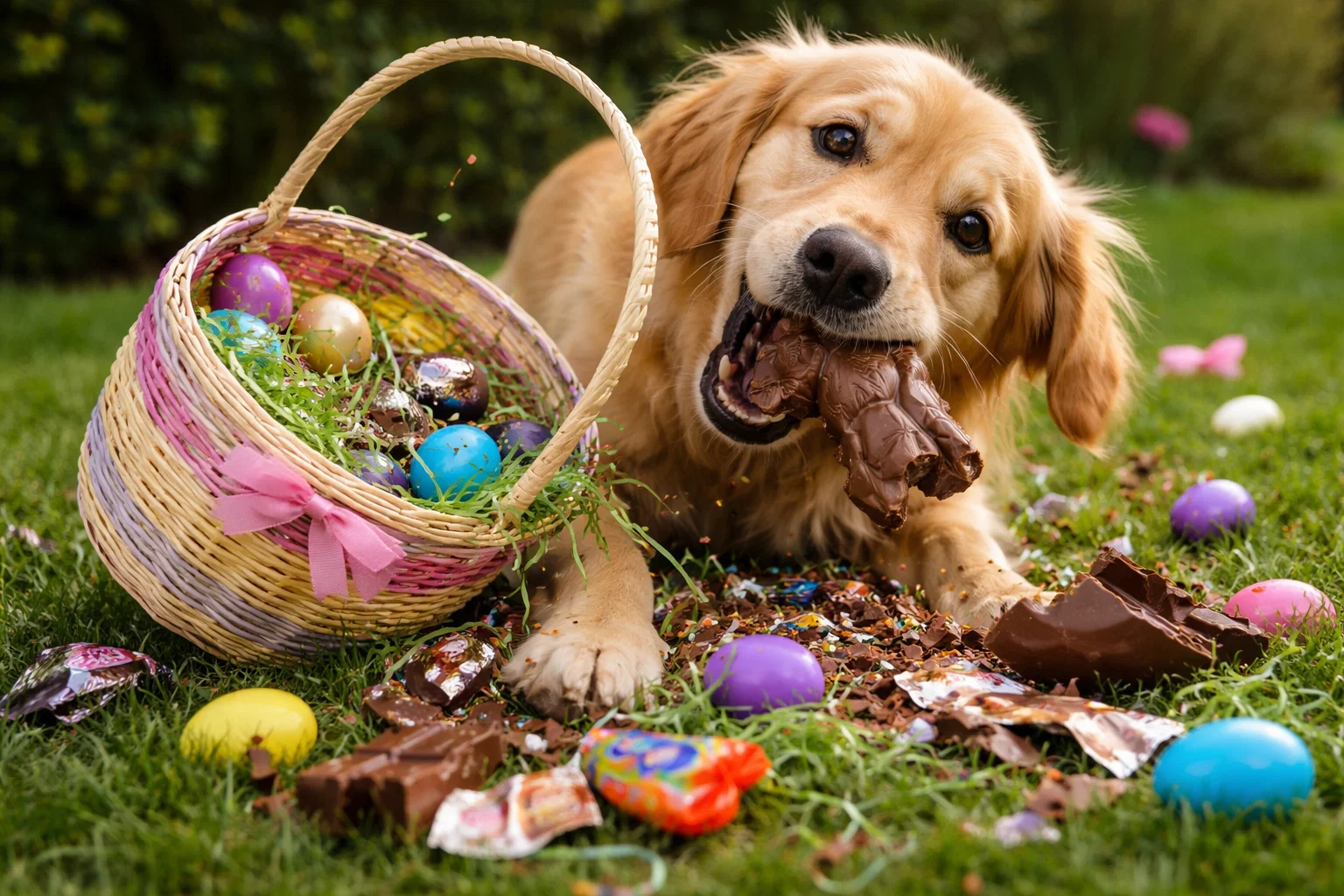
Veterinarians warn that common Easter candies and holiday foods can pose serious health risks to pets if accidentally consumed.
Toms River, NJ – Easter celebrations often include baskets filled with candy, chocolate bunnies, and large family meals. But veterinarians say many of the foods commonly enjoyed during the holiday can be dangerous for dogs and cats.
Animal hospitals frequently report an increase in emergency visits around Easter as pets get into sweets, table scraps, or decorations left within reach.
Key Points
• Chocolate and certain candies can be toxic to dogs and cats
• Holiday foods like ham and fatty leftovers may cause digestive problems
• Veterinarians often see an increase in pet emergencies around Easter
Chocolate and candy pose major risks
Chocolate is one of the most common Easter hazards for pets. Veterinarians say it contains compounds called theobromine and caffeine that animals cannot safely metabolize.
Dark chocolate and baking chocolate are especially dangerous because they contain higher concentrations of these substances. Even small amounts can cause vomiting, diarrhea, rapid heart rate, tremors, or seizures in dogs and cats.
Sugar-free candy can also be dangerous because it may contain xylitol, a sweetener that can cause a sudden drop in blood sugar and liver damage in dogs.
Hidden hazards inside Easter baskets
Other items often found in Easter baskets can also create problems for pets. Raisins, which are sometimes included in candy or baked goods, are known to be toxic to dogs and may cause kidney failure.
Plastic eggs, candy wrappers, and decorative basket grass can also pose choking hazards or cause intestinal blockages if swallowed. Curious pets may chew or swallow these items while investigating baskets left on tables or floors.
Veterinarians say pet owners should keep Easter treats stored out of reach and dispose of packaging promptly.
Holiday table scraps can also cause illness
Traditional Easter meals can also create health risks for pets if they are given leftovers. Fatty foods like ham, deviled eggs, and rich side dishes can upset an animal’s stomach and in some cases trigger pancreatitis.
Cooked bones are another concern because they can splinter and cause choking or internal injuries.
Veterinarians advise pet owners to avoid feeding table scraps and instead provide pets with their regular food during holiday gatherings.
What to do if a pet eats something dangerous
Experts say pet owners should watch for symptoms such as vomiting, diarrhea, restlessness, tremors, or unusual lethargy if they suspect their pet has eaten something harmful.
If a pet consumes chocolate, candy, or another potentially toxic item, veterinarians recommend contacting a veterinarian or an animal poison control center immediately. Quick treatment can significantly improve outcomes in many cases.
Source: Dr. Kelly Hood, veterinarian with HonestPet and Dr. Randy Aronson with Pub Labs