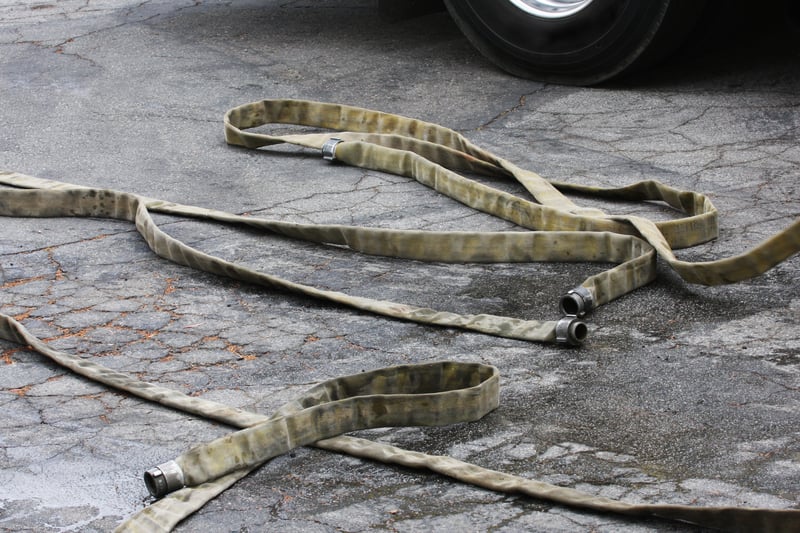
HOWELL TOWNSHIP, NJ – A house fire at 13 Woodstown Drive prompted a rapid response from the Howell Township Police Department at approximately 3:35 PM today.
Upon arrival, officers reported the residence was fully engulfed in flames. Thankfully, all occupants evacuated safely without injuries.
Firefighting units from Adelphia Fire, Squankum Fire, Southard Fire, Jackson Station 55, and Freehold Township Independent Fire worked together to extinguish the fire. Support was also provided by Howell Township Police EMS and Howell Township First Aid.
Currently, the Howell Township Fire Bureau and the Monmouth County Fire Marshal are investigating the cause of the fire. No injuries were reported among the responding emergency personnel.
- Nude Intruder Entered Little Silver Home, Exposed Himself to Juvenile, Prosecutors Say

A Red Bank man is accused of walking into a stranger’s unlocked home, going upstairs and exposing himself to a juvenile before the homeowner restrained him outside.
LITTLE SILVER, N.J. — A 23-year-old Red Bank man has been charged after prosecutors say he entered a stranger’s Little Silver home while nude from the waist down, went upstairs and exposed himself to a juvenile inside her bedroom.
Ernesto Lozano-Zane is charged with second-degree burglary, third-degree endangering the welfare of a child and lewdness, a disorderly persons offense, Monmouth County Prosecutor Raymond S. Santiago announced Tuesday.
The incident happened shortly after 10 p.m. Sept. 14, when officers from the Little Silver Police Department were called to a home for a report of an unknown person who had entered the residence.
Homeowner Restrained Suspect Outside
When officers arrived, they found the homeowner on the front lawn restraining Lozano-Zane and preventing him from leaving, according to investigators.
An investigation by the Monmouth County Prosecutor’s Office Special Victims Bureau and Little Silver police found that Lozano-Zane had allegedly entered the house moments earlier through an unlocked front door.
Prosecutors said he then went upstairs to a bedroom occupied by a juvenile.
The juvenile alerted the rest of her family after discovering him inside, investigators said.
Clothing Found Inside Another Bedroom
Authorities said Lozano-Zane was nude from the waist down during the encounter.
His clothing and other personal belongings were later found inside another bedroom in the home, according to prosecutors.
Lozano-Zane was taken into custody at the scene and held pending proceedings in Monmouth County Superior Court. A detention hearing was tentatively scheduled for Wednesday, Sept. 30.
Investigators Seeking Additional Information
Authorities are asking anyone with information about Lozano-Zane’s activities to contact Monmouth County Prosecutor’s Office Detective Julio Casso at 732-431-7160, Ext. 2220, or Little Silver Police Sgt. Joseph Calao at 732-747-5900.
The case is being prosecuted by Assistant Prosecutors Danielle Zanzuccki and Diane Aifer of the prosecutor’s Special Victims Bureau.
Lozano-Zane is represented by attorney Chris Hareas of Freehold.
The charges are accusations. Lozano-Zane is presumed innocent unless convicted beyond a reasonable doubt.
More Monmouth County news and New Jersey crime coverage can be found at Shore News Network.
- Pro-Trump, Pro-ICE Car and Truck Rally Planned at Garden State Parkway Service Area

Garden State Deplorables is organizing an Oct. 17 vehicle rally at the Judy Blume Service Area in Wall, with participants encouraged to bring flags and banners.
WALL TOWNSHIP, N.J. — A pro-Trump, pro-ICE car and truck rally is planned for Oct. 17 at the Judy Blume Service Area on the Garden State Parkway in Wall Township.
A promotional flyer from Garden State Deplorables bills the event as a “Pro Trump & ICE Car/Truck Rally” under the group’s “Make Jersey Red Again” banner.
Participants are being asked to meet at the service area at mile marker 100 at 11 a.m. and bring flags and banners.
Group Has Held Similar Rallies Before
Garden State Deplorables describes itself as a conservative New Jersey organization focused on electing candidates who share its political priorities.
The group previously held a pro-Trump and pro-ICE vehicle rally at the same service area in March. Participants later traveled in a caravan to Neptune, where they gathered across from an anti-Trump and anti-ICE demonstration, according to Jersey Shore Online.
The March event remained largely peaceful, though the two groups exchanged some verbal insults across the roadway.
Rally Site Is Along the Garden State Parkway
The Judy Blume Service Area is located at mile marker 100 on the Garden State Parkway and is identified by the New Jersey Turnpike Authority officially as the Monmouth service area.
The Oct. 17 event is scheduled for a Saturday morning and organizers have not announced a specific caravan route beyond the initial meeting point.
Garden State Deplorables says its broader goal is to make New Jersey more affordable and safer while supporting candidates aligned with its platform.
Event Comes During Midterm Campaign Season
The rally comes less than three weeks before the Nov. 3 midterm election, when New Jersey voters will decide congressional and other races.
The flyer prominently features Trump 2028 imagery and references support for U.S. Immigration and Customs Enforcement.
There is no indication from the event material that the rally is sponsored by the Trump campaign, ICE or any government agency.
- New Jersey Education Commissioner Says State Does Not Fund “Outcomes”, Now Republicans Are Ready for a Fight

Assembly Republicans are escalating their push to overhaul New Jersey’s school funding system, arguing record spending has not delivered enough accountability while districts like Toms River, Jackson and Middletown continue facing severe budget pressure.
TRENTON, N.J. — New Jersey is spending a record $12.4 billion on K-12 schools this year, but a growing fight in Trenton is shifting from how much the state spends to what taxpayers are getting for the money.
Assemblyman Gerry Scharfenberger, R-Monmouth, is highlighting an April budget hearing in which Education Commissioner Lily Laux told lawmakers that the state funding formula is designed around student need rather than academic outcomes.
“We absolutely do not fund outcomes. We fund student need,” Laux said during the Assembly Budget Committee hearing, according to Scharfenberger’s account of the exchange.
“It doesn’t matter that you have top-performing districts. It’s apples and oranges,” the state committee chair said.
Republicans are using that distinction to argue that New Jersey needs greater accountability for billions in education spending.
Scharfenberger Says Record Spending Is Only Half the Story
Gov. Mikie Sherrill signed a fiscal 2027 budget with a record $12.4 billion for K-12 education, more than $370 million above the prior year, but it’s not enough for districts like Jackson, Toms River, and Middletown, which were hit hardest by unfunded state mandates.
The administration has presented that investment as evidence of its commitment to public schools.
Scharfenberger argues the statewide total masks significant financial problems in individual districts.
During the April hearing, he questioned whether increased aid to large urban districts is producing adequate academic results.
“We just want to make sure everything is being spent wisely, we’re getting the outcomes that the investment is calling for,” Scharfenberger said during the hearing.
Democratic lawmakers pushed back, arguing that high-need urban districts often serve more students living in poverty, learning English or requiring additional services, making direct comparisons with wealthier suburban districts misleading.
The 6% Cap Is Fueling Another Fight
New Jersey’s current budget limits increases in major categories of state school aid to 6%, even when the funding formula calculates that a district should receive substantially more.
An analysis by the nonpartisan Office of Legislative Services found that the cap saves the state about $332.6 million by withholding part of the formula-calculated increases.
That has become a major issue for districts that previously lost substantial amounts of aid under the S2 funding redistribution.
Toms River, for example, says its formula-generated increase was significantly larger than the amount it ultimately received because of the cap.
Toms River and Jackson Have Already Felt the Consequences
Few communities illustrate the school funding fight better than Ocean County.
In 2024, the state adopted budgets for both Jackson and Toms River after their school boards failed to approve balanced spending plans.
Jackson’s budget included a 9.9% tax levy increase.
Toms River later faced another major increase. Its own audited financial report says the state-imposed 2025-26 budget carried a 12.9% overall tax levy increase, following a roughly 9% increase the previous year.
The district says it has lost more than $175 million cumulatively since implementation of S2.
Toms River has repeatedly argued that the state funding system has forced local taxpayers to absorb costs previously supported through state aid.
The district has raised taxes almost 22% in the past few years, and board members continue blaming the state; however, many in the community are also pointing fingers at the board.
The Toms River Regional School District total budget rose from approximately $252 million for the 2020–21 school year to $306 million for the 2026–27 school year, representing an increase of about $54 million (or roughly 21.4%) over this timeframe.
2020–21 Total Budget: ~$252.3 million2025–26 Total Budget: ~$293.5 million2026–27 Total Budget: $306.1 million
At that rate, state aid, even if adjusted, would not have been able to save the district which just made its superintendent Michael Citta one of the highest paid in the state.
Transparency Has Been an Issue for Years
The current dispute also revives an older fight over how New Jersey calculates aid.
Toms River and several other districts previously sought records explaining the calculations behind the state funding formula.
The Department of Education responded that the computer program used to perform some calculations was developed internally and considered proprietary. Districts later sued for records, and a judge ordered portions of the information released.
That history has fueled continuing complaints that local school officials cannot adequately predict how changes in property values, enrollment and other factors will affect future aid.
Sherrill Administration Says Formula Needs Work
The administration is not arguing that the current system is perfect.
Laux told lawmakers that the School Funding Reform Act, adopted in 2008, had served an important purpose but now needs another look.
“The implementation and the reality of how it supports our schools today is something that needs another look,” she said.
Sherrill’s budget already made several changes, including using actual special education enrollment rather than a statewide average and averaging property values over three years to reduce dramatic swings.
The Department of Education’s FY2027 budget plan also argues that limiting both increases and decreases gives districts greater year-to-year stability.
Republicans Want a Larger Rewrite
Republican lawmakers say those changes do not go far enough.
They are pushing legislation to remove the 6% growth cap, provide additional aid to districts operating below state adequacy levels and reconsider how the formula treats communities with constrained tax bases.
They have also proposed directing part of New Jersey’s anticipated settlement with Meta toward underfunded school districts.
The disagreement now centers on two competing questions: whether state aid should primarily follow the needs of students, or whether academic performance should play a greater role in determining where additional money goes.
With districts simultaneously cutting programs, selling buildings and raising property taxes despite record statewide education spending, that debate is likely to intensify as lawmakers begin considering changes to the formula.
- Neptune Author Turns ‘Pain Into Power’ With New Guided Journal on Healing and Self-Worth

Neptune resident Latisha Channiel has released Still I Rise: A Journey Through Affirmations, a 300-plus-page guided journal built around reflection, emotional wellness and personal growth.
NEPTUNE, NJ — Latisha Channiel remembers being a teenage mother and hearing predictions about what her future would become.
Years later, the Neptune resident is a college graduate, entrepreneur, mother of two and now a first-time published author.
Channiel has released Still I Rise: A Journey Through Affirmations, a 300-plus-page guided affirmation journal and workbook created from a philosophy she describes simply: turning pain into power.
“I didn’t create Still I Rise because I had everything figured out,” Channiel said. “I created it from the things I needed while I was figuring it out.”
More than a blank journal
Channiel designed the book as something readers actively work through rather than simply a collection of inspirational statements.
Still I Rise combines affirmations with guided reflections, emotional check-ins, breathing and grounding exercises, writing prompts and activities intended to give readers space to examine what they are experiencing.
The book addresses themes including self-worth, safety, shame, guilt, exhaustion, numbness and release.
For Channiel, the goal was to create something that acknowledges a reality sometimes overlooked by conventional motivational advice: telling someone to “think positive” may not be enough when that person is dealing with grief, stress or a difficult period in life.
Instead, the journal encourages readers to slow down, identify what they are feeling and work through it.
Monmouth County roots shaped her journey
Channiel has deep ties to Monmouth County.
She grew up in Red Bank and attended Red Bank Regional High School before eventually settling in Neptune.
Her path included becoming a mother as a teenager, earning a bachelor’s degree, building a business and raising two children while also dealing with loss, financial hardship and mental health struggles.
She said those experiences became part of the foundation for the book.
Publishing it represents what she sees as a full-circle moment after once being told that becoming a young mother would determine the course of her future.
‘Turning pain into power’
The central idea behind the book is not that difficult experiences disappear, but that people can find ways to process them and move forward.
Channiel said she hopes readers come away understanding themselves better than they did when they started.
Her work through Phoenix Power LLC is centered on creating spaces where people feel seen and encouraged without being expected to have every part of their lives figured out.
Still I Rise is her first published book.
Book now available
Still I Rise: A Journey Through Affirmations is available in paperback through Amazon.
For Channiel, reaching publication means more than putting a book on a shelf. It marks another step in a journey that began with people telling her what she might become and ended with her deciding that answer for herself.
- Boat That Sank During Hurricane Sandy Finally Removed From Jersey Shore Waters Nearly 14 Years Later
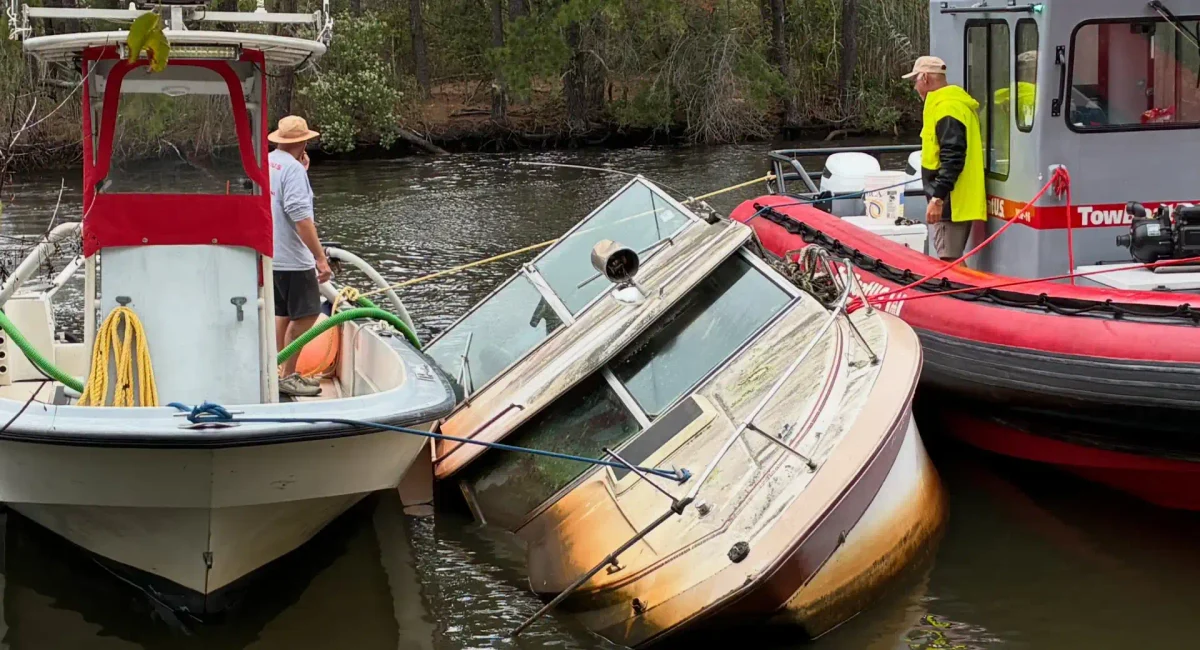
TowBoatUS Manasquan recovered a 25-foot cruiser that had remained partially submerged in local waters since Hurricane Sandy devastated the New Jersey coast in October 2012.
MANASQUAN, NJ — Nearly 14 years after Hurricane Sandy tore across the Jersey Shore, one of the storm’s lingering remnants has finally been pulled from the water.
TowBoatUS Manasquan said crews recently recovered a 25-foot cruiser that sank during Sandy in 2012 and had remained partially submerged ever since. While the company was out on the waters during this weekend’s nor’easter recovering boats that had been lost from their moorings, days before the storm, they recovered a boat that was sunk during Superstorm Sandy.
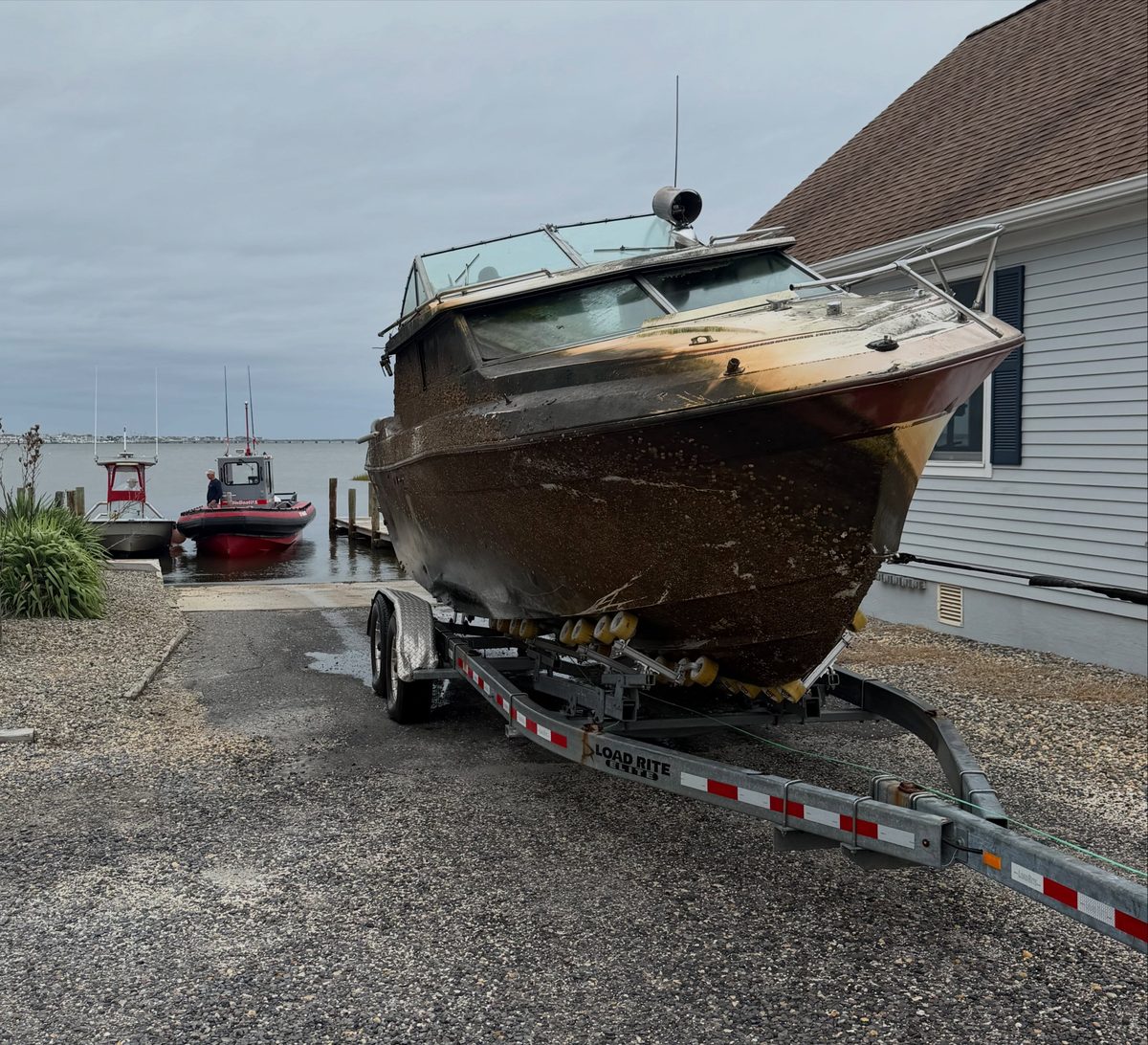
A 25-foot cruiser that sank during Hurricane Sandy in 2012 is recovered from Jersey Shore waters nearly 14 years after it went down. Photo by TowboatsUS Manasquan. “Another derelict vessel removed from our local waters,” the marine towing company said in announcing the recovery.
Cruiser remained in water since 2012
According to TowBoatUS Manasquan, the boat went down during Hurricane Sandy and remained there for almost 14 years before crews successfully removed it. The company did not disclose who owned the vessel, why it had remained in the water for so long or exactly where it was recovered.
Photographs from the operation showed crews working to remove the deteriorated vessel after years of exposure to saltwater and the elements.
“After nearly 14 years partially submerged, the vessel was successfully removed,” TowBoatUS said.
Sandy devastated Monmouth and Ocean county waterways
The recovery is another reminder of just how much damage Sandy left behind when it struck New Jersey on Oct. 29, 2012. Many scars still remain across the Jersey Shore, 14 years after it made landfall.
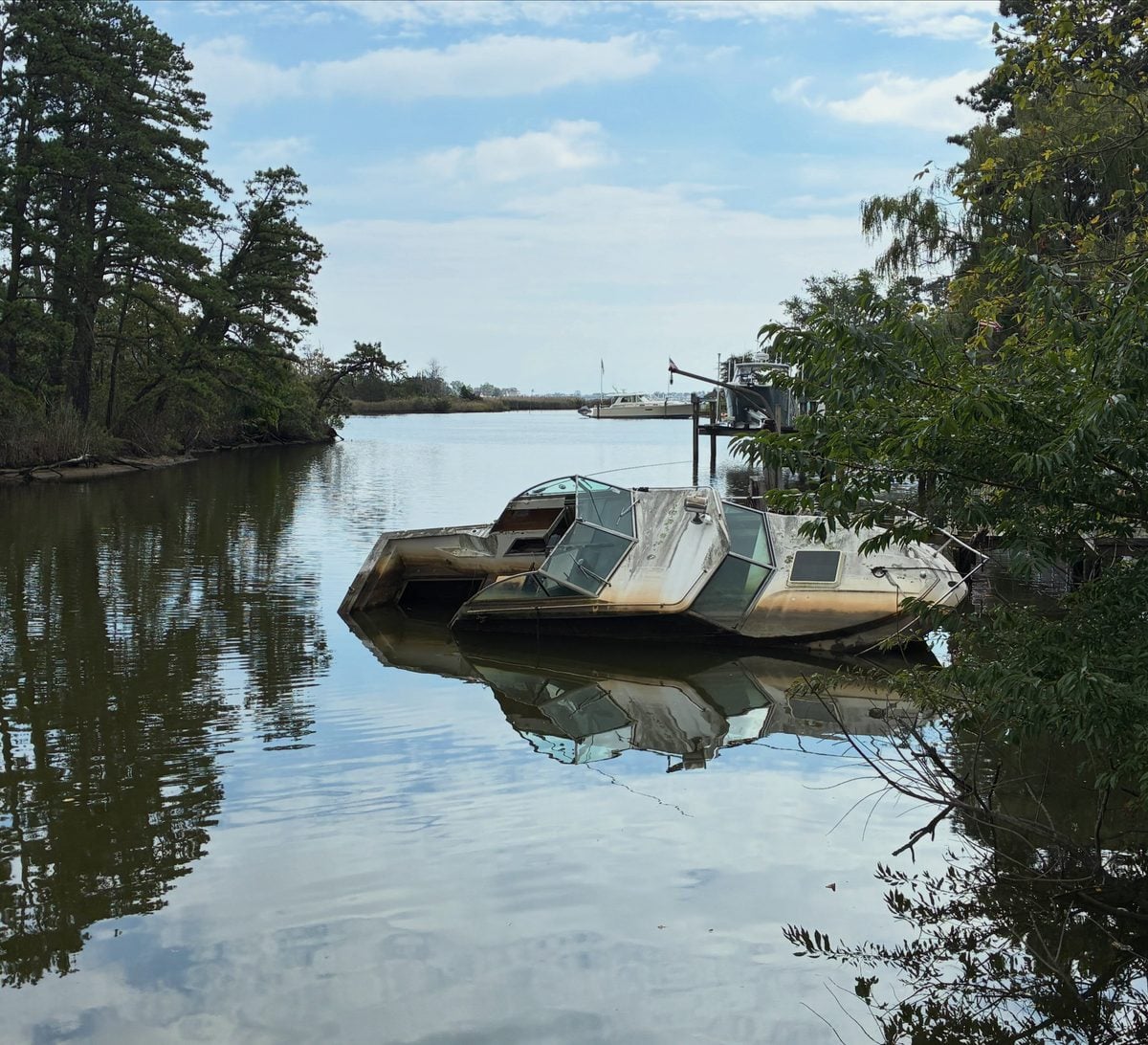
A 25-foot cruiser that sank during Hurricane Sandy in 2012 is recovered from Jersey Shore waters nearly 14 years after it went down. Photo by TowboatsUS Manasquan. Monmouth and Ocean counties experienced some of the most severe coastal destruction, with storm surge pushing into the Manasquan River, Barnegat Bay and other waterways.
Boats were ripped from docks and marinas, thrown onto land or sunk as waterfront infrastructure was destroyed across the Jersey Shore. Up and down the Jersey Shore, derilict boats from the storm can still be found today.
Derelict boats can remain long after storms
Sunken and abandoned boats can become long-term problems in waterways, particularly when ownership is unclear or recovery is expensive and technically difficult. Beyond navigation concerns, deteriorating vessels can contain fuel, oil, batteries and other materials that become environmental hazards over time.
For TowBoatUS Manasquan, the latest recovery meant removing one more piece of Sandy’s physical legacy from local waters.
The boat had survived nearly 14 years underwater. Its removal came just weeks before the 14th anniversary of the storm that put it there.