Jackson, NJ — Water infrastructure is quietly reshaping the development landscape along the Jackson–Manchester border, as the Jackson Township Municipal Utilities Authority (MUA) expands shared service capacity that could support future construction in previously limited areas.
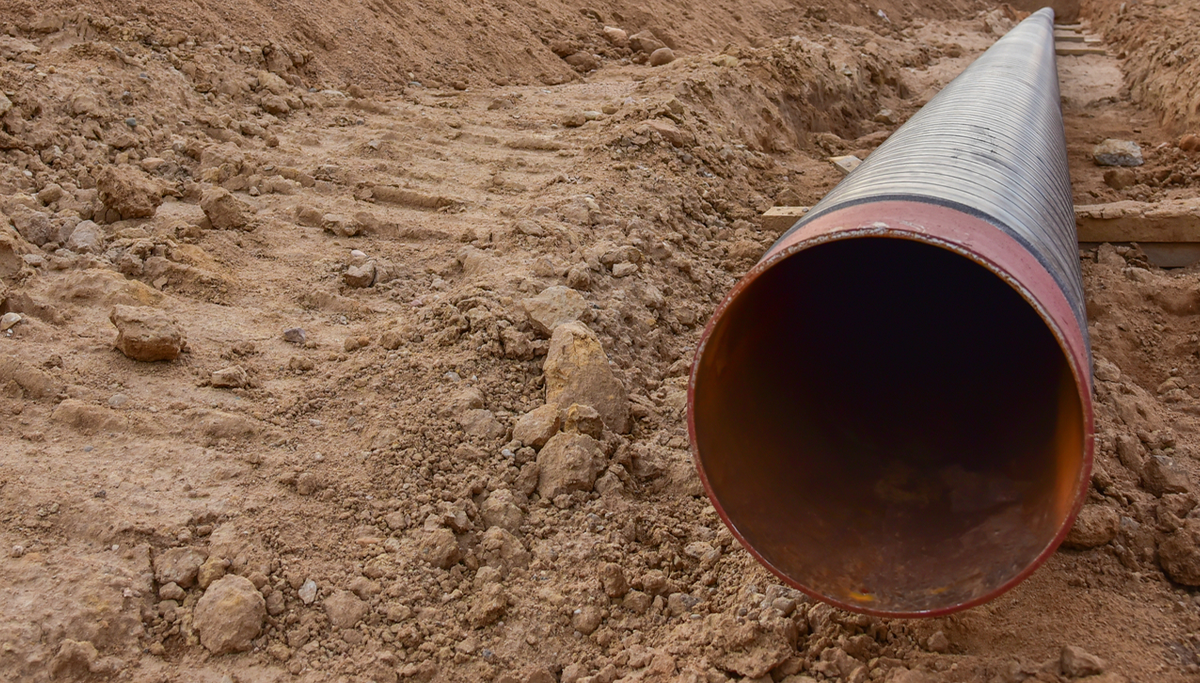
This week crews worked along South Hope Chapel Road to extend the Jackson MUA’s services west toward Manchester’s border.
Through existing agreements with Manchester Township, the Jackson MUA will soon have the ability to deliver water and sewer service to eventually connect to the Manchester system.
That access is a critical prerequisite for large-scale residential or commercial projects, particularly in parts of Manchester where development has historically been constrained by infrastructure.
The result: land that once lacked utility access is now closer to being buildable.
Infrastructure first, development follows
In land use planning, utility access often determines what gets built—and where.
By extending or coordinating water and sewer service toward the Manchester border, Jackson’s MUA effectively expands the footprint of developable land. Projects that would have been unfeasible without sewer or water connections can now move forward, subject to zoning and environmental approvals.
Why the border matters
The Jackson–Manchester boundary has become a focal point because it sits near areas seeing increased development interest, including zones affected by Pinelands regulations and recent zoning disputes. Shared service agreements allow one town’s infrastructure to support another’s growth. In practice, that means a development proposed in Manchester could rely, at least in part, on systems managed by Jackson.
That interdependence raises both opportunities and concerns.
—
Key Points
• Jackson MUA can extend water/sewer service toward Manchester border
• Utility access makes previously محدود land more viable for development
• Cross-town infrastructure ties growth in one municipality to the other
—
What this means
The expansion of utility access near the border changes the conversation from “can anything be built here?” to “what will be built here?” For developers, it lowers a major barrier to entry.
For the Manchester governing body, which has supported this extension in the past, it introduces coordination challenges—ensuring zoning, environmental protections, and infrastructure capacity align across municipal lines.
For residents, it raises familiar concerns: increased density, traffic, and potential strain on shared resources like groundwater.
It also adds another layer to ongoing disputes in Manchester over zoning in sensitive areas like the Pinelands. Even if local rules restrict certain types of development, the presence of water and sewer access can intensify pressure to revisit those restrictions.
Current status
The shared service agreements between Jackson MUA and Manchester remain active, and no single development project has been formally tied to the latest discussion. But the infrastructure is already in place—or being positioned—and that alone is often the first and most decisive step toward future construction.