
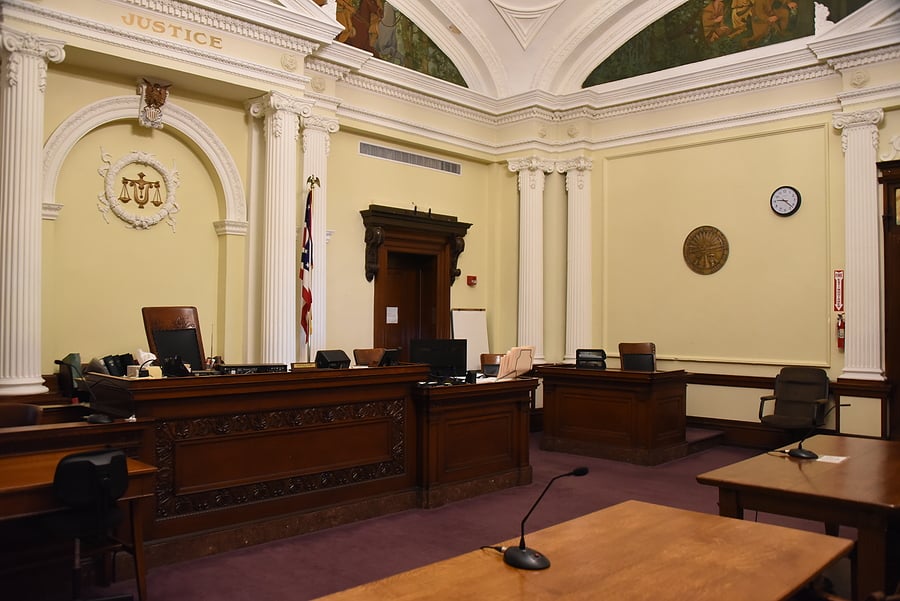
A Jackson Township resident says the zoning board unlawfully approved a contractor yard and truck maintenance facility on a wetlands-covered property along West Commodore Boulevard.
Jackson Township, NJ – A Jackson Township resident has filed a lawsuit in Ocean County Superior Court seeking to overturn the zoning board’s approval of a commercial development that would include a contractor’s yard and heavy-equipment maintenance building along West Commodore Boulevard.
The complaint, filed by nearby resident Paul Riviere, challenges a November decision by the Jackson Township Board of Adjustment granting a use variance and preliminary site plan approval to AVE Partners LLC for a 28-acre property at 1007 West Commodore Boulevard.
Key Points
• Lawsuit challenges Jackson Board of Adjustment approval of contractor yard project
• Property is largely wetlands and located in a conservation overlay zone
• Plaintiff alleges procedural violations, misrepresentations, and improper board voting
Dispute over proposed contractor yard
According to court filings, AVE Partners sought approval to construct a 9,000-square-foot office building, a 4,000-square-foot maintenance garage for heavy trucks and excavation equipment, and an outdoor contractor storage yard.
The property sits in Jackson’s Highway Commercial zoning district and is located near residential homes that rely on private well water.
Riviere, whose property borders the site, argues the project represents an industrial-scale operation incompatible with the zone.
Planning documents referenced in the lawsuit state that repair and maintenance of heavy equipment is not a permitted use in the Highway Commercial zone and would require a use variance.
Wetlands and environmental concerns
The lawsuit also focuses heavily on environmental issues tied to the property, which the complaint says is roughly 95 percent wetlands and environmentally sensitive areas.
Riviere alleges the application moved forward without required approvals from the New Jersey Department of Environmental Protection.
Emails from NJDEP officials cited in the filing state that previous permits for the property expired years ago and that no active permits currently exist for the site.
The complaint also claims the township ordinance requires a Letter of Interpretation identifying wetlands boundaries before such an application can be considered complete.
Allegations of procedural violations
In addition to environmental concerns, the lawsuit claims the zoning board committed several procedural errors during the nearly 18-month review of the application.
The complaint alleges three members who voted to approve the project had not participated in earlier hearings and instead reviewed recordings of prior meetings before casting their votes.
Under New Jersey land use law, use variances require at least five affirmative votes from a zoning board.
The filing argues that without those three votes, the application would not have met the required supermajority.
Claims of due process violations
Riviere also alleges his rights as an objector were limited during hearings, claiming his cross-examination of the applicant’s witnesses was curtailed and certain evidence was excluded.
The complaint further alleges an undisclosed sidebar conversation occurred between the applicant’s attorney and the board attorney during the final hearing.
Riviere claims the conversation was never disclosed on the record.
What the lawsuit seeks
The lawsuit asks the court to overturn the board’s approval and declare the decision void.
Riviere is also requesting a new hearing before the zoning board with independent legal counsel.
The complaint additionally includes a claim alleging retaliation related to public criticism of the board’s handling of the application.
What happens next
Prerogative writ lawsuits are the legal mechanism used in New Jersey to challenge decisions by municipal land-use boards.
A judge will review the administrative record from the zoning board hearings and determine whether the board’s decision was arbitrary, capricious, or unreasonable.
If the court agrees with the claims, the approval could be overturned or sent back to the board for a new hearing.