BASKING RIDGE, NJ — Families planning beach vacations at the Jersey Shore this summer are facing a sharp increase in costs, with new research showing the average price of a Shore getaway climbed more than 11% compared to last year.
The findings, released Monday by Affinity Federal Credit Union, paint a more expensive picture for visitors heading to New Jersey’s beach towns in 2026. The report found rising prices across nearly every major category tied to summer vacations, from gas and parking to pizza, mini golf, and week-long rental homes.
The increase reverses a rare decline from the previous summer season, when beachgoers saw costs fall roughly 5% year over year.
This year, however, travel expenses, lodging, and entertainment all moved sharply upward as inflationary pressures and operating costs continue affecting both families and Shore-area businesses.
The biggest shock came from rental housing.
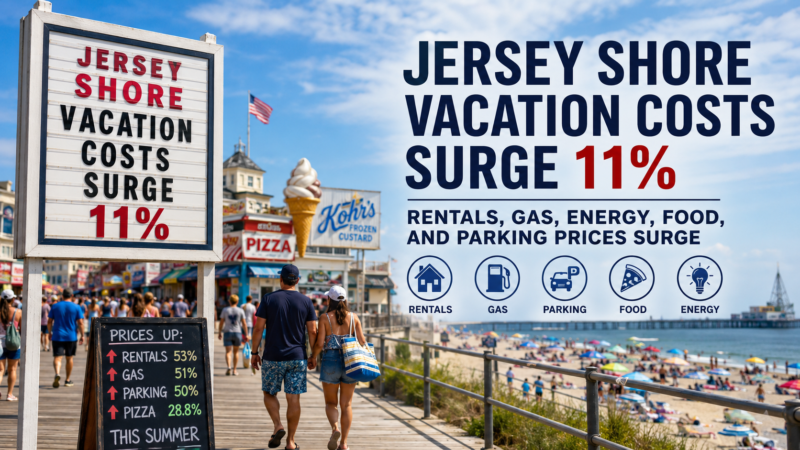
According to the report, week-long vacation rentals in popular Shore destinations including Asbury Park, Point Pleasant, and Seaside Heights surged 53% compared to summer 2025.
For many families, rental housing remains the single largest expense associated with Jersey Shore vacations, especially for multiday trips during peak weekends in July and August.
Shore Traditions Collide With Rising Costs
Despite the dramatic price increases, tourism experts and financial analysts do not expect the higher costs to stop visitors from heading to the Shore.
For generations of New Jersey families, annual beach trips have remained a deeply rooted summer tradition, especially in destinations stretching from Sandy Hook to Cape May.
Affinity Federal Credit Union officials said many consumers appear determined to preserve those experiences even as budgets tighten.
“The Jersey Shore remains a meaningful and often non-negotiable part of summer for many of our members,” said Grant Gallagher, director of financial wellbeing and brand communications for Affinity.
“Increasing financial pressures won’t change the connection so many feel to the Shore.”
Gallagher said businesses themselves are also struggling with higher operating costs, creating a ripple effect for consumers.
“We’ve observed significant price hikes from businesses and see it as an indication that they are feeling the financial strain that consumers feel as well,” he said.
The report noted that Shore property owners are facing rising insurance costs, increasing property values, and higher taxes — all of which contribute to the steep jump in rental rates.
Travel Expenses See Largest Spike
While rental prices delivered the biggest overall increase, transportation expenses rose faster than any other category measured in the report.
Travel-related costs climbed 31.4% year over year, largely driven by dramatic increases in gasoline and parking. Gas prices jumped 51.68% compared to last summer, according to the research, while parking rates rose another 50%. For day-trippers driving from North Jersey, New York, or Pennsylvania, those increases could add substantial costs before visitors even step onto the sand.
Tolls, however, offered one of the few areas of relief. Researchers found toll expenses declined 7.49% compared to the previous season. The report suggests many families may begin adjusting vacation habits in response to the rising costs, including taking shorter trips, reducing overnight stays, or opting for weekday travel instead of peak weekends.
Everyday Shore Staples Also Cost More
Beyond lodging and transportation, many of the smaller expenses associated with a typical beach day also increased.
Pizza prices — a staple of nearly every Jersey Shore boardwalk — rose 28.8% from last year, one of the sharpest increases in the food category.
Gelati prices climbed nearly 7%, while coffee prices increased about 2%.
Leisure activities also became more expensive. Mini golf prices increased 5.36%, and aquarium admission costs rose 5.56%.
The report found some categories remained stable despite broader inflation concerns. Sunblock prices held steady year over year, as did beach chair rentals and sunset cruise pricing.
Beach-related expenses overall rose a comparatively modest 1.79%. Adult beach badge prices increased 7.14%, though some Shore towns maintained flat rates heading into the 2026 season.
Tourism Officials Still Expect Busy Summer
Even with the higher costs, state tourism officials continue forecasting a strong summer for the Jersey Shore economy. The report cited broader projections suggesting New Jersey could experience one of its busiest tourism years in recent memory. Industry analysts have even described 2026 as the “Year of Tourism,” fueled in part by major regional sporting events, strong seasonal demand, and continued popularity of domestic travel destinations.
Visitor spending statewide is expected to surpass $4.3 billion this year, according to tourism projections referenced in the report.
That demand may also help explain why rental prices have surged so dramatically in major Shore communities. Beach towns like Seaside Heights, Point Pleasant, Asbury Park, Wildwood, and Ocean City continue seeing strong booking activity despite economic uncertainty.
In many cases, rental inventory remains limited during prime summer weekends, allowing property owners to raise rates even as household budgets tighten.
Families Adjusting Budgets to Preserve Vacations
Financial experts say many households are unlikely to eliminate vacations entirely, but instead may adjust how they spend while at the Shore. Families may reduce restaurant visits, cut back on amusement rides, pack more food from home, or shorten the duration of overnight trips.
Others may shift toward day trips rather than week-long stays.
Affinity officials said budgeting strategies will become increasingly important for families trying to balance summer traditions with broader financial pressures tied to housing, groceries, insurance, and utility bills.
“Affinity is focused on helping our members build strong financial futures while still enjoying the moments that matter most,” said Kevin Brauer, president and CEO of Affinity Federal Credit Union. “A trip to the Jersey Shore remains an important part of summer for many families.”
Brauer acknowledged that rising costs are forcing consumers to make difficult financial decisions.
“With vacation expenses rising sharply, we’re committed to providing guidance and resources that can help families navigate these challenges and make the most of their time away,” he said.
Shore Businesses Feeling Economic Pressure Too
The report suggests the cost increases are not solely driven by consumer demand.
Business owners throughout Shore communities are also dealing with rising expenses tied to staffing shortages, insurance premiums, utilities, food supply costs, maintenance, and property taxes.
Restaurant owners, arcade operators, hotel managers, and seasonal employers across coastal towns have all reported continued challenges entering the 2026 tourism season.
Higher labor costs and insurance rates in particular have placed pressure on businesses still recovering from several years of economic volatility.
As a result, much of the increased cost burden appears to be reaching consumers directly.
Researchers emphasized that the findings were based on a May 2026 survey of New Jersey Shore businesses and comparisons against prices collected in spring 2025.
Affinity Federal Credit Union said the businesses included in the survey were not affiliated with or endorsed by the institution.
Still, the report underscores a growing reality for many families heading into summer: a Jersey Shore vacation in 2026 may require more planning, more budgeting, and more financial flexibility than in years past.