
Annapolis, MD – It’s not an April Fool’s joke. Maryland has just passed the largest tax increase in state history.
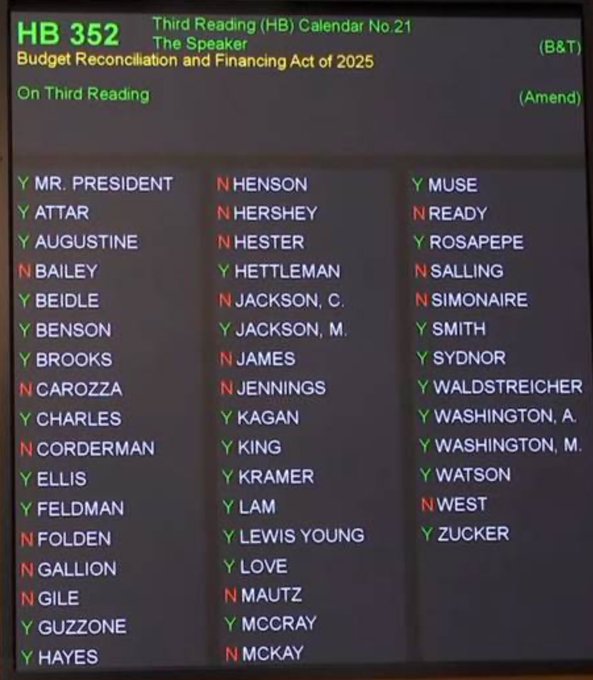
In a move that has sparked fierce debate across the state, Maryland lawmakers today approved the Budget Reconciliation and Financing Act (BRFA) of 2025, enacting what critics are calling the largest tax increase in the state’s history. The legislation, which passed the Maryland Senate with a contentious vote, introduces a sweeping $1.6 billion in new taxes aimed at addressing a looming $3 billion budget deficit projected for fiscal year 2026.
The BRFA, finalized on the Senate floor earlier today, includes a variety of new revenue measures, with the most controversial being a 3% sales tax on data and IT services—dubbed the “Tech Tax” by opponents. This tax, originally proposed as a business-to-business levy, has been expanded to apply to consumers as well, prompting warnings from business leaders and Republican lawmakers that it could stifle Maryland’s growing tech sector and drive companies out of the state.
Senate Minority Leader Stephen S. Hershey Jr. and the Maryland Senate Republicans voiced strong opposition during the debate.
“We cannot do the largest tax increase in the history of the state and, at the same time, talk about fixing the economy,” said Senator Paul Corderman (R-District 2), representing parts of Washington and Frederick counties. In a post on X shortly after the vote, the Maryland Senate GOP account stated, “Those voting green just passed the largest tax increase in Maryland’s history – the BRFA includes the new ‘Tech Tax’ that will chase away the businesses we need to grow our economy. Election Day is November 3, 2026.”
The tax package, unveiled in late March by Governor Wes Moore and legislative leaders, also includes measures such as new income tax brackets of 6.25% and 6.5% for high earners, a 2% capital gains surtax for individuals with federal adjusted gross income above $350,000, and increases in excise taxes on motor vehicles, cannabis, and sports betting. Additionally, the legislation raises the cap on local income tax rates to 3.3%, giving counties more flexibility to generate revenue.
Supporters, including Senate President Bill Ferguson (D-Baltimore City), argue that the new revenues, combined with $2.5 billion in budget cuts, are essential to stabilizing Maryland’s finances amid federal spending uncertainties and a shifting economic landscape. “This is a modernization of the state tax code at a time when Maryland’s economy has become more service-based,” Ferguson said in a statement last week. He emphasized that the plan includes safeguards, such as “federal government spending triggers,” to protect residents reliant on federal benefits.
However, the plan has drawn sharp criticism from business groups and Republican lawmakers, who warn of dire economic consequences. Tasha Cornish, executive director of the Cybersecurity Association Inc., called the Tech Tax “an unwise move” with “harsh consequences for the state’s security” and competitiveness. Former Governor Larry Hogan, a vocal critic of the measure, took to X on March 20, stating, “Today is a sad and unfortunate day for Maryland that was entirely avoidable. The tax hikes proposed would cripple Maryland’s economy and already struggling Marylanders.”
The vote, which saw all Maryland Senate Republicans opposing the measure, underscores a deepening partisan divide as the state heads toward the 2026 midterm elections. Legislative analysts project that without these measures, Maryland’s deficit could balloon to $3 billion by fiscal year 2027—approximately 12% of the state’s general fund revenues.
As the BRFA takes effect, attention now turns to its real-world impact. Critics predict a potential “taxpayer exodus,” drawing parallels to the aftermath of tax increases under former Governor Martin O’Malley. Meanwhile, supporters insist the funds are critical to sustaining education reforms, transportation infrastructure, and other key priorities.
With the ink barely dry on this historic legislation, Marylanders are left to grapple with its implications—and both sides are already looking ahead to the ballot box in November 2026.