Proposed legislation would require municipalities with public pools to post warnings and distribute information about the symptoms of dry drowning.
Trenton, NJ – A bill introduced in the New Jersey Senate would require municipalities that operate public swimming pools to post warnings and distribute information about the dangers and symptoms of “dry drowning.”
The legislation, sponsored by Sen. Angela V. McKnight of Hudson County, directs state officials to create educational materials that would be displayed and distributed at municipal pools across the state.
Key Points
• New Jersey bill would require warning posters about dry drowning at municipal pools
• Information pamphlets would be distributed to residents using public pools
• State agencies would design and provide the materials to municipalities
State agencies would create educational materials
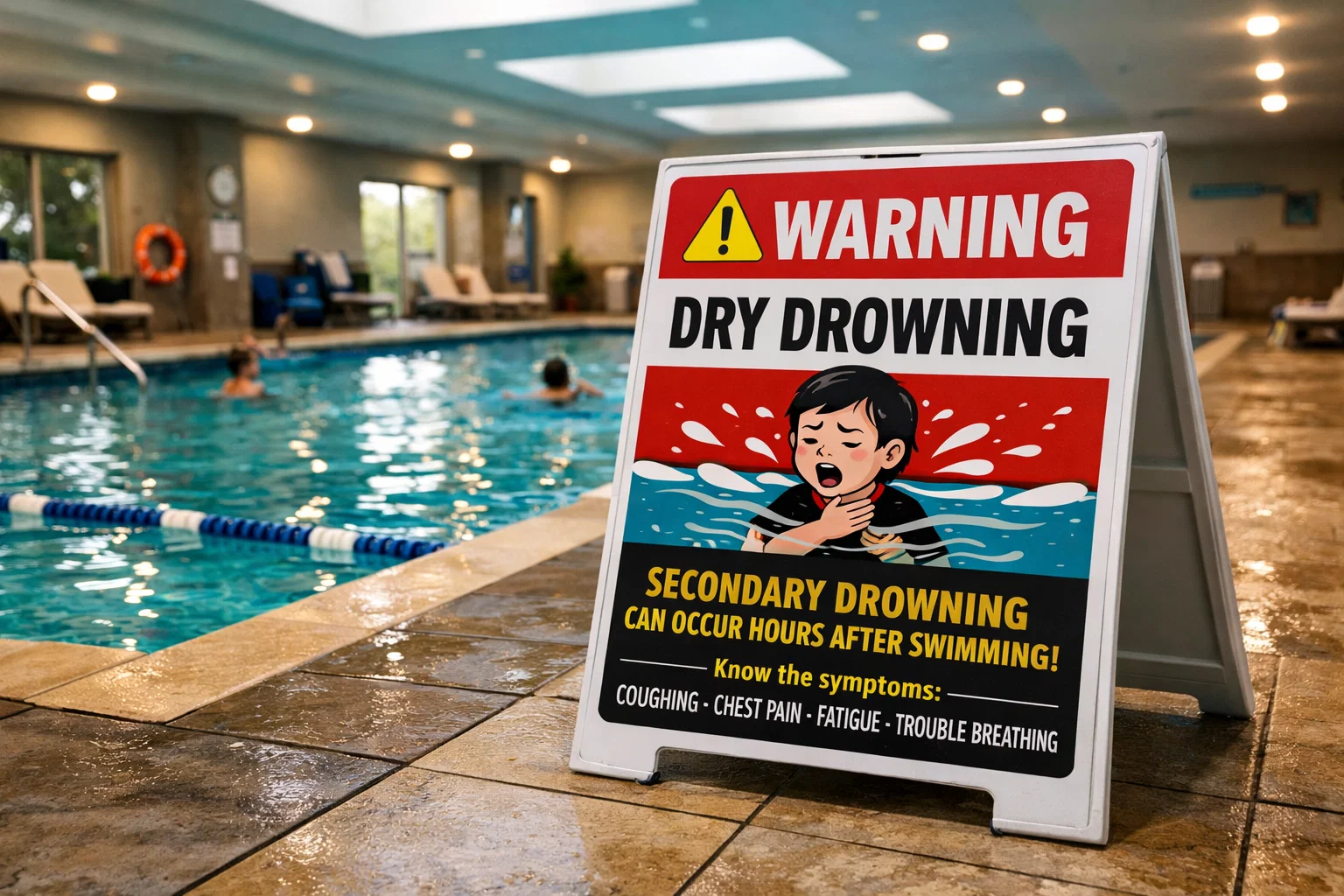
Under the proposal, the Commissioner of Community Affairs, working with the Commissioner of Health, would design and produce a poster warning about the dangers of dry drowning and listing its symptoms.
The state would also create a one-page informational pamphlet containing the same information.
Those materials would then be distributed to municipalities that operate public swimming pools.
Pools required to post warnings and share pamphlets
Municipal governments with public pools would be required to post the dry drowning warning poster in a prominent location at each pool facility.
They would also have to provide the informational pamphlet to residents who use the municipal pool.
The pamphlet could be distributed when residents register for pool memberships or during the first two weeks the pool is open each season.
What is dry drowning?
Dry drowning, sometimes referred to as secondary drowning, occurs when a person inhales water into the lungs but does not immediately experience symptoms.
In some cases, breathing problems may develop later due to airway spasms that restrict airflow. Medical complications such as asphyxiation or fluid buildup in the lungs can follow if the condition is not recognized and treated.
“Dry drowning” is a rare phenomenon representing 1-2% of the ~4,000 annual U.S. drowning deaths, or roughly 40-80 cases per year, often resulting from airway spasms rather than lung aspiration. Experts often consider it a misnomer, as it is not a recognized medical term, and many suspected cases are actually other conditions.
- Total Drowning Deaths: New Jersey averages approximately 64 to 65 drowning deaths per year.
- Child Drowning Deaths: Roughly 10 children under the age of 15 die from drowning in New Jersey annually.
- Context on “Dry” Drowning: While commonly discussed, “dry” or delayed drowning events are very rare, accounting for only about 1% to 2% of all drowning incidents
If approved by lawmakers, the bill would take effect immediately, though municipalities would not be required to begin posting the materials until four months after the law is enacted.