
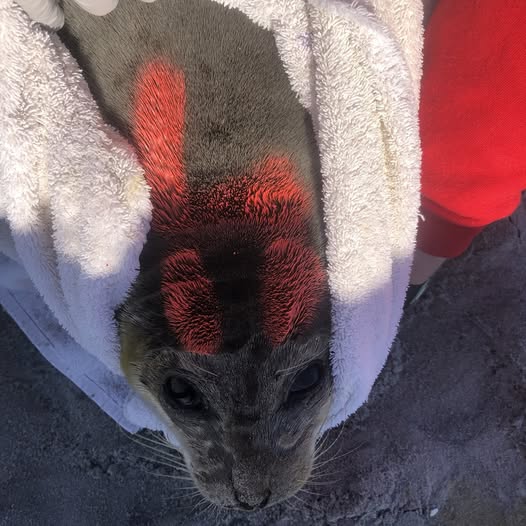
BRIGANTINE, NJ – Somebody is spraypainting seals at the Jersey Shore and it’s concerning to some beachgoers.
The Marine Mammal Stranding Center is clearing up confusion about an unusual sight that often draws attention along New Jersey’s coast during seal season — seals marked with bright orange or pink numbers on their heads or backs.
According to the organization, the markings are applied by their Stranding Team using non-toxic livestock markers whenever a seal is relocated or examined for health concerns. Each number identifies that the seal has been evaluated by staff and determined healthy enough to return to the water. The pigment fades naturally within a few weeks.
The markings help the center track seal activity and prevent unnecessary repeat assessments. “If the same seal shows up on another beach, the number lets us know we’ve already checked that animal,” staff explained.
Addressing public concern, the center noted that the bright markings do not make seals more visible to predators. Research shows that sharks, which have only one type of color receptor sensitive to green light, cannot distinguish red or orange hues the way humans can. Because of this, the pink or orange markings likely blend in with the seals’ natural gray and brown coats, posing no added risk.
The Center shared an image of a healthy Harp seal from last season with an orange “#4” marking shortly before being released back into the sea, emphasizing the effectiveness and safety of the identification system.
Key Points: Marine Mammal Stranding Center explains mystery behind numbered seals on New Jersey beaches – Brigantine
- The Marine Mammal Stranding Center uses temporary, non-toxic markers to identify seals already assessed by staff
- The markings fade within weeks and help prevent duplicate health checks
- Experts say the pink and orange colors do not increase shark predation risk