
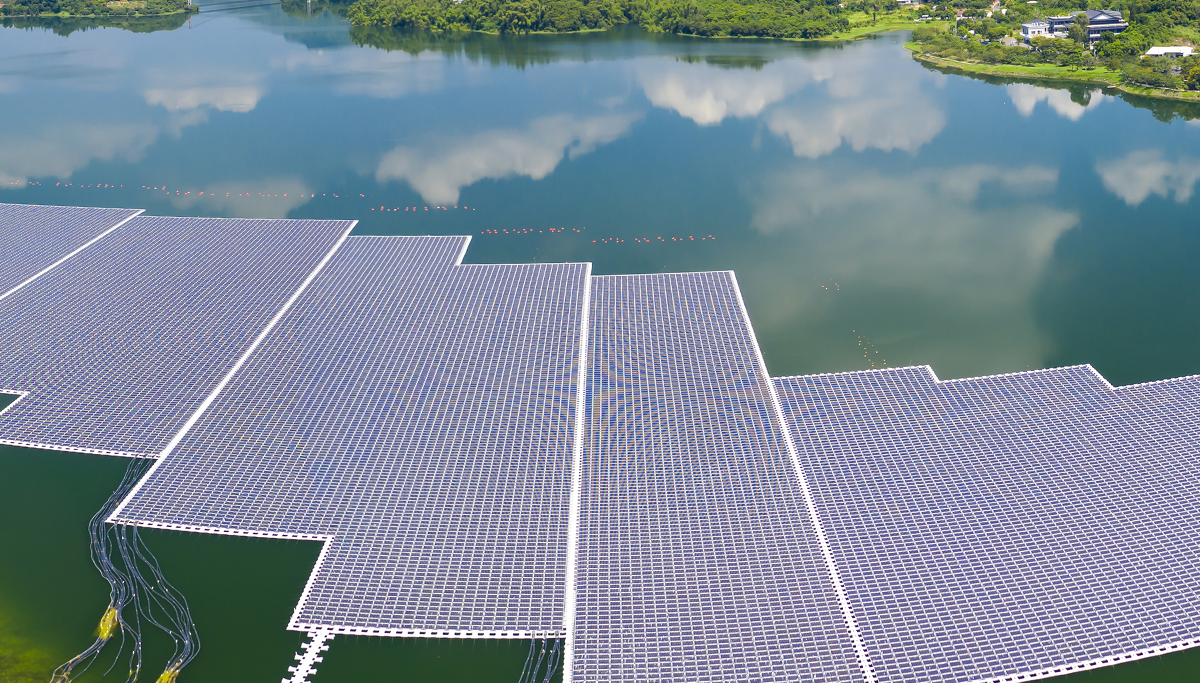
Largest in the country: State regulators have approved a massive floating solar installation on the Wanaque Reservoir that will power water treatment operations and supply electricity to hundreds of homes.
Wanaque, NJ – New Jersey regulators have approved plans for a large floating solar project on the Wanaque Reservoir, clearing the way for what officials say will become the largest floating solar facility in the United States.
The project, proposed by the North Jersey District Water Supply Commission, will install two floating solar arrays covering about 20 acres of the reservoir and capable of producing 10 megawatts of electricity.
Key Points
• New Jersey approved a 10-megawatt floating solar project on the Wanaque Reservoir.
• The facility will span roughly 20 acres and is expected to be the largest floating solar installation in the U.S.
• The project will power the reservoir’s water treatment plant and supply electricity to about 1,000 homes.
Solar panels to power water infrastructure
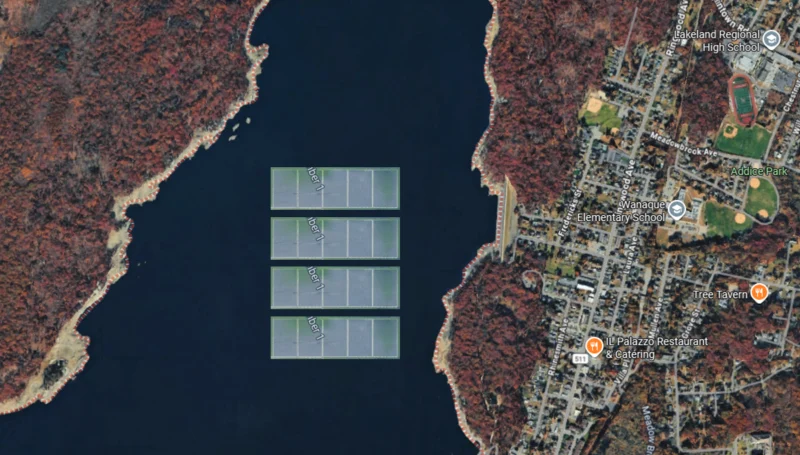
The floating solar system will primarily generate electricity for the commission’s water treatment operations, which serve millions of residents in northern New Jersey.
Any excess electricity produced by the installation will be sent to the local power grid, providing renewable energy to nearby communities.
Officials say the project supports New Jersey’s broader push to expand renewable energy and reduce greenhouse gas emissions.
Environmental concerns previously delayed project
The project previously faced obstacles after it was rejected in 2024 because of environmental and safety concerns tied to the reservoir’s location within the Highlands Preservation Area.
After revisions and additional coordination with regulators, the New Jersey Board of Public Utilities approved the project in March 2026 through the state’s Competitive Solar Incentive Program.
The development required oversight from the New Jersey Department of Environmental Protection due to the strict protections governing the Highlands region.
“Floatovoltaics” gaining popularity in New Jersey
Floating solar installations — often called “floatovoltaics” — are designed to sit on the surface of lakes or reservoirs rather than using land.
Developers say the approach can improve solar panel efficiency because water helps keep panels cool while also reducing evaporation from the reservoir. New Jersey has already deployed several floating solar projects, including an 8.9-megawatt installation in Short Hills and a 4.4-megawatt project in Sayreville.
Once completed, the Wanaque Reservoir installation is expected to surpass those projects and become the largest floating solar facility currently operating in the United States.