New Jersey’s ID Paradox: Heavy Documentation for Vehicles, None for Voting
Trenton, NJ – In New Jersey, registering a vehicle is a meticulous process requiring a gauntlet of identification documents, yet stepping into a voting booth demands no such proof of identity.
This stark contrast has sparked debate about the state’s priorities and the implications for its most vulnerable residents, particularly communities of color and disenfranchised groups.
Yet, the Democrat party in New Jersey, all the way up to Governor Phil Murphy, claim voter ID is not only racist, but it is disenfranchising to low-income communities and minorities. So, why isn’t that the case when you have to register your vehicle at the local MVC office if you’re lucky enough to get an appointment in the next few months?
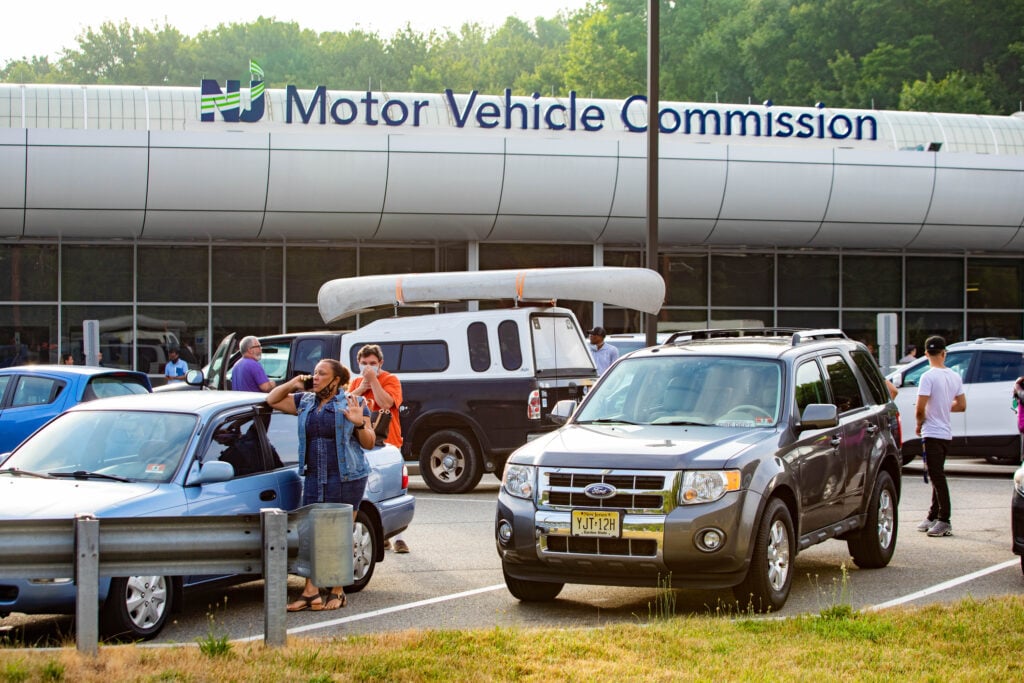
To register a vehicle with the New Jersey Motor Vehicle Commission (MVC), residents must navigate the state’s stringent “6 Points of ID” system. This requires a combination of primary and secondary identification documents totaling at least six points, alongside proof of address and, in some cases, a Social Security number or Individual Taxpayer Identification Number (ITIN). Acceptable primary documents include a U.S. birth certificate (4 points) or a valid U.S. passport (4 points), while secondary documents might be a utility bill (1 point) or a bank statement (1 point).
For a new title or registration, applicants must also provide proof of insurance and, if registering under a business name, an Entity Identification Number (EIN). The process often necessitates an in-person visit to an MVC agency, where missing even one document can send you back to square one.
The MVC’s website outlines this labyrinthine requirement clearly: a driver’s license or non-driver ID (3 points), a recent utility bill, and additional documents like a property tax statement or lease agreement are often needed to hit the magic six-point mark. For many, gathering these documents is a logistical nightmare—particularly for low-income individuals who may lack stable housing, consistent utility bills, or easy access to birth certificates.
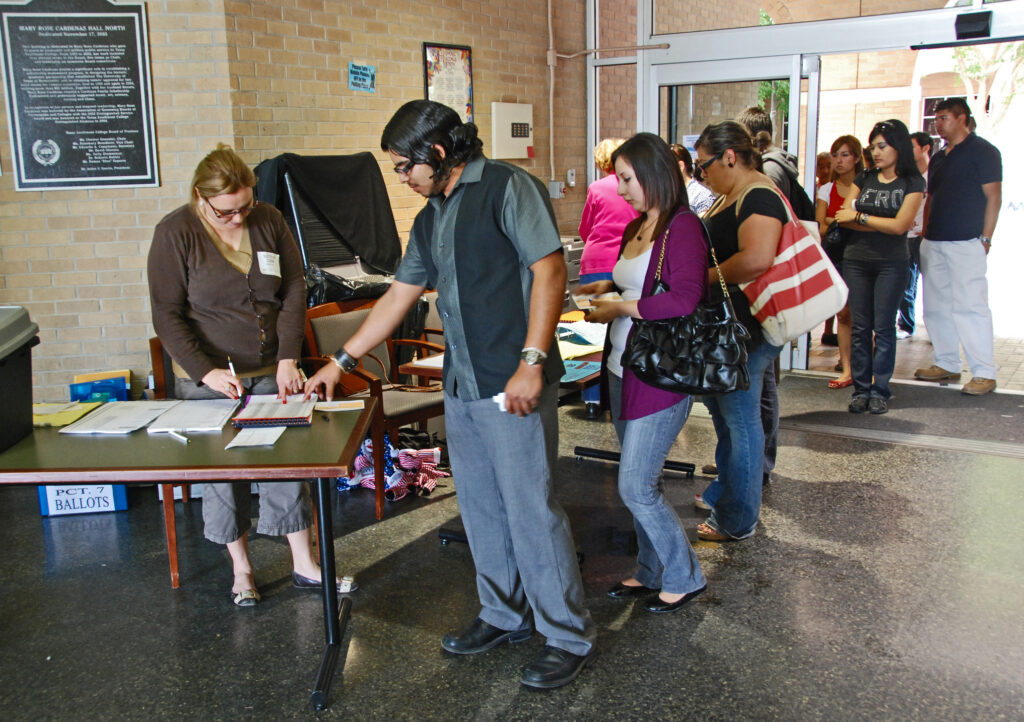
Contrast this with New Jersey’s voting requirements. To cast a ballot, you don’t need to show any form of identification at the polling place if you’re already registered.
The state operates under the National Voter Registration Act, which allows eligible citizens to register to vote through the MVC or other agencies, but once registered, no ID is required on Election Day unless you’re a first-time voter who registered by mail without providing verification. Even then, a simple utility bill or student ID suffices.
New Jersey’s automatic voter registration system, implemented in 2018, further streamlines the process by enrolling eligible residents at MVC agencies unless they opt out—no additional ID checks needed at the polls.
The Division of Elections emphasizes accessibility: “Any person qualified to vote in an election shall be entitled to vote if the person shall have registered to vote on or before the 21st day preceding the election.” Registration can happen online, by mail, or at the MVC, and once you’re in the system, your signature at the polling place is typically enough.
Here’s where the hypocrisy stings.
Critics of voter ID laws—like those struck down or softened in other states—argue they disproportionately harm communities of color and disenfranchised groups. Studies, such as those from the Brennan Center for Justice, suggest that strict ID requirements can suppress turnout among Black, Latino, and low-income voters, who are less likely to possess government-issued IDs due to systemic barriers like poverty, lack of transportation, or bureaucratic hurdles in obtaining birth certificates. New Jersey’s lawmakers have championed this narrative, rejecting voter ID proposals to protect these communities from disenfranchisement.
Yet, the same state demands these very communities jump through hoops to register a car—a necessity for work, family, and survival in a sprawling state with patchy public transit. The MVC’s 6-point system doesn’t care about your voting rights rhetoric; it still requires you to prove your identity with documents many struggle to produce.
A single mother in Newark working two jobs might scramble to find a lease agreement or a recent bill, while a rural resident in Salem County might drive hours to replace a lost birth certificate—all to comply with the MVC’s rules.
Meanwhile, she can stroll into a polling place with nothing but her name on a list.
This double standard is maddening. If the absence of voter ID is a victory for equity, why does the MVC cling to a system that punishes the same marginalized groups lawmakers claim to protect? The argument that voter ID suppresses turnout rings hollow when the state shrugs at the MVC’s gatekeeping, which tangibly impacts daily life far more than a trip to the polls every few years. Vehicle ownership isn’t a privilege for the elite—it’s a lifeline for the working poor, yet New Jersey treats it like a luxury requiring a paper trail.
The disparity isn’t just illogical; it’s unjust. Communities of color and low-income residents already face systemic obstacles—higher rates of housing instability, limited access to documentation, and time constraints from juggling survival. Forcing them to prove themselves at the MVC while waving them through at the voting booth isn’t progressive—it’s a selective application of burden that exposes the state’s priorities. Voting matters, but so does mobility, employment, and independence, all tied to that vehicle registration.
New Jersey could align its principles by easing MVC requirements to match its voting ethos—perhaps a single, flexible ID option or better support for obtaining documents. Until then, the state’s stance reeks of convenience masquerading as compassion. If voter ID is too oppressive for the ballot box, it’s past time to ask why it’s still fine for the driver’s seat. The hypocrisy isn’t just glaring; it’s indefensible.