
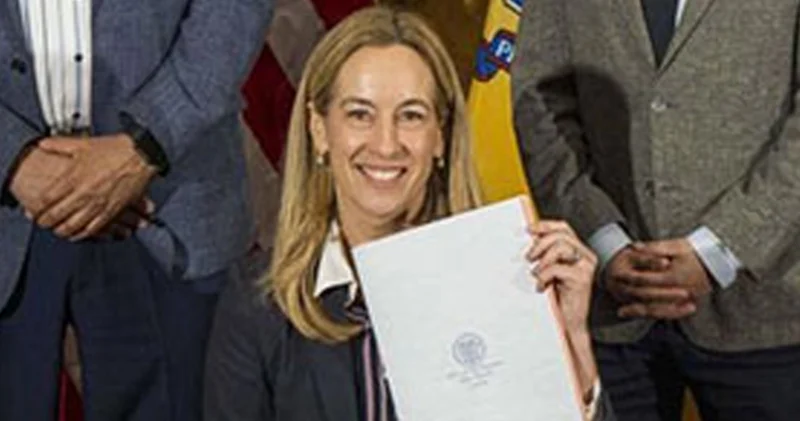
Governor Mikie Sherrill signs legislation allowing municipalities to extend early voting period, increasing access for local elections statewide.
Trenton, New Jersey – New Jersey Governor Mikie Sherrill has signed new legislation expanding early voting options for municipal elections held in May, marking a significant change in how local elections can be conducted across the state. The law, enacted in Trenton with support from state lawmakers, allows municipalities to extend early voting and is positioned as part of a broader effort to increase voter participation and access.
The measure, identified as A4745/S420 and sponsored by Assemblyman Larry Wainstein, Assemblywoman Rosy Bagolie Rodriguez, Assemblyman William McCoy, Senator Brian Stack, and Senator Raj Mukherji, authorizes municipalities with nonpartisan May elections to begin early voting eight days before Election Day. The legislation maintains the existing cutoff of two days before the election, resulting in a total of seven days of early voting—an increase of four additional days.
State leaders emphasize voter access and participation
Governor Sherrill framed the legislation as a response to national debates over voting access, specifically referencing actions by the Trump administration related to election procedures.
“As President Trump attempts to undermine elections and make voting harder through his unconstitutional Executive Order, we will take every step to protect the integrity of our elections and ensure they are more accessible for New Jerseyans,” said Governor Mikie Sherrill. “This bill will allow municipalities to expand early voting and ensure the people of our state have their voices heard at the local level, where these decisions will shape our neighborhoods, our schools, and our daily lives.”
Supporters in the state legislature emphasized the practical impact of extending early voting windows. Senator Brian Stack said the additional days could improve turnout among residents with demanding schedules.
“I’d like to thank Governor Sherrill for signing this important legislation, as I strongly believe in enhancing voter accessibility,” said Senator Brian Stack. “This bill offers additional days to vote and I’m hopeful that even more residents will participate in our sacred election process.”
—
Key Points
• New law allows early voting to begin eight days before May municipal elections
• Municipalities can now offer seven total days of early voting
• Measure aims to increase voter access and align local elections with broader voting practices
—
Aligning local elections with broader voting trends
Assemblyman Larry Wainstein described early voting as essential for modern voters whose schedules may not align with traditional Election Day hours.
“Early voting isn’t a privilege, it’s a necessity,” said Assemblyman Larry Wainstein. “Not everyone works a traditional 9 to 5, Monday through Friday work week. By increasing the number of days for early voting, we are allowing more people the opportunity to participate in our electoral process.”
The expanded timeline brings municipal early voting more in line with early voting periods already used in state and federal elections, where longer windows have become standard. Election officials and policymakers have increasingly pointed to early voting as a way to reduce Election Day congestion and improve overall participation rates.
The legislation specifically applies to municipalities that hold nonpartisan elections in May, a subset of local governments in New Jersey that operate on a different election calendar than the statewide November cycle.
Broader national context shapes policy debate
The bill’s passage comes amid ongoing national discussions about voting access and election administration. Governor Sherrill referenced a federal executive order related to mail-in ballots, which she criticized while positioning New Jersey’s move as an effort to expand access at the state level.
While the law does not change mail-in voting procedures, it reflects a broader trend among states to adjust early voting frameworks in response to evolving voter behavior and policy debates. Expanding early voting opportunities has been a recurring strategy used by states seeking to increase turnout and provide more flexibility for voters.
As of this week, the law is in effect, giving eligible municipalities the option to implement the expanded early voting period in upcoming May elections. Local election officials are expected to determine how and when to apply the changes within their jurisdictions.