
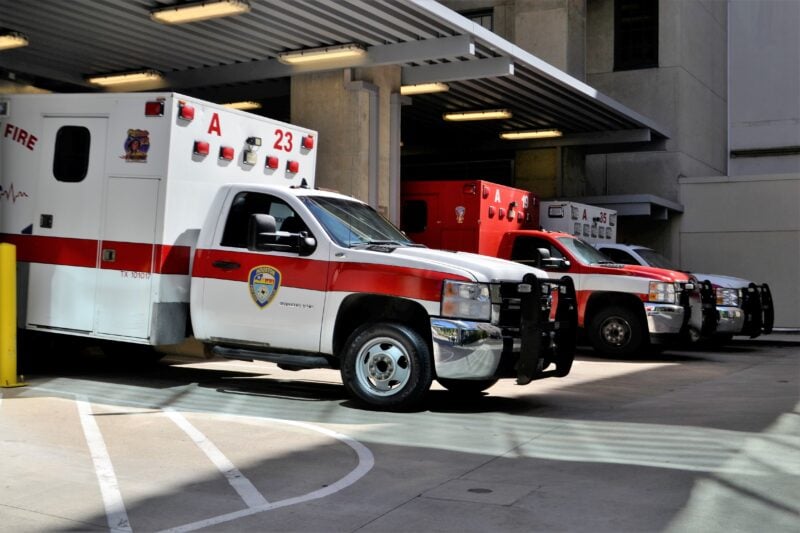
Assemblyman Brian Rumpf and Sen. Carmen Amato have introduced legislation allowing volunteer emergency medical technicians to recover the cost of mandatory criminal background checks through an existing state training fund.
TRENTON, NJ — Volunteer emergency medical technicians across New Jersey could soon get some financial relief under legislation introduced by two Ocean County lawmakers who say people providing lifesaving emergency services without a paycheck should not have to pay for their own required background checks.
Assemblyman Brian Rumpf, R-Ocean, introduced Assembly Bill A-5591 on Monday, October 5, to authorize reimbursements for initial and follow-up criminal history checks through the state’s Emergency Medical Technician Training Fund.
Sen. Carmen Amato Jr., R-Ocean, introduced companion legislation, S-4740, in the Senate.
“Volunteer EMTs should not have to pay out of pocket for required background checks,” Rumpf said. “These selfless men and women already make a tremendous commitment by taking time away from their families and professions to provide life-saving emergency medical services that our communities depend on every day.”
Lawmakers want to eliminate another expense for volunteers
The legislation would expand the allowable uses of the EMT Training Fund, which currently reimburses qualifying emergency medical services organizations for initial training, refresher courses and certification testing.
The fund is supported in part through a $1 surcharge assessed on certain motor vehicle fines, penalties and forfeitures.
Under the proposed legislation, volunteer EMTs required to undergo criminal history checks as part of their certification or licensing requirements would be eligible for reimbursement from that same fund.
“Reimbursing the cost of background checks would further the purpose of the EMT Training Fund and help remove an unnecessary financial barrier for those willing to serve,” Rumpf said.
“New Jersey should be doing everything possible to support, retain and attract volunteer EMTs. These volunteers provide an invaluable service to their communities, and their commitment also helps reduce the costs that would otherwise fall on taxpayers to provide emergency medical services through paid personnel.”
Volunteer ambulance squads provide critical local services
Throughout Ocean County and communities across the Jersey Shore, volunteer first aid and ambulance squads provide emergency medical services, often relying on residents who balance their ambulance duties with full-time jobs and family responsibilities.
Rumpf argues that making those volunteers personally responsible for mandatory background screening costs places an unnecessary expense on people already donating their time.
“For someone who is volunteering their time to protect and serve their neighbors, having to personally absorb the cost of a required background check should not be an additional burden,” Rumpf said. “This legislation is a commonsense step toward better supporting the volunteers who help keep our communities safe.”
The legislation would not eliminate criminal background screening requirements. Instead, it would provide a mechanism for eligible volunteers to recover the expense after completing the required checks.
The New Jersey Legislature’s official text of A-5591 specifies that reimbursements could cover both initial certification or licensing screenings and subsequent criminal history checks.
Bills advance to legislative committees
Rumpf, who has served on the Assembly Health Committee for several legislative sessions, has advocated for legislation affecting emergency medical personnel and health care services.
A-5591 has been referred to the Assembly Public Safety and Preparedness Committee.
Amato’s companion measure, S-4740, was referred to the Senate Health, Human Services and Senior Citizens Committee.
Both proposals remain in the early stages of the legislative process and would require approval by the Legislature and governor before becoming law.
If enacted, the legislation would take effect immediately, expanding an existing reimbursement program to cover another cost associated with serving as a volunteer EMT.