
Mount Holly, NJ — A colder-than-normal winter combined with multiple high-impact storms pushed New Jersey into one of its snowiest seasons in over a decade, with some North Jersey towns topping 30 inches in a single event and Newark surpassing 50 inches for the season. New data released by the National Weather Service Mount Holly shows the 2025–2026 winter delivered snowfall totals well above long-term averages across much of the region.
The season ranked as the coldest in 23 years, with temperatures averaging about 4 degrees below normal, while snowfall reached levels not seen in 11 years, according to NWS Mount Holly and regional climate data.
February blizzard reshaped seasonal totals
The most significant shift came in late February, when a powerful “bomb cyclone” storm on February 22–23 blanketed large parts of the state with double-digit snowfall. Northern New Jersey saw the most dramatic totals, including 30.7 inches in Lyndhurst and 30.2 inches in Carlstadt during the multi-day event.
Statewide, February alone delivered heavy accumulation. The Northeast Regional Climate Center reported 17.8 inches in central New Jersey and more than 15 inches in both northern and southern regions during the month.
In Newark, the storm accounted for more than half the city’s seasonal snowfall. The city recorded 27.2 inches from the February 23 system alone, contributing to a seasonal total of 53.4 inches.
Snowfall far exceeds long-term averages
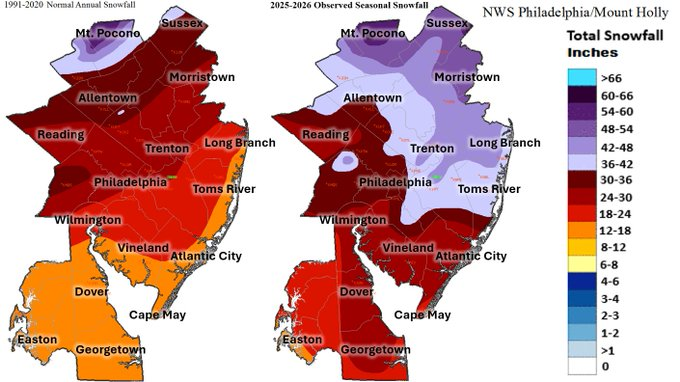
Maps released by the National Weather Service highlight a sharp contrast between typical snowfall patterns and what occurred this winter. Areas that usually see moderate seasonal totals experienced significantly higher accumulation, particularly across northern and central New Jersey.
NWS Mount Holly noted the data reflects the best available observations, acknowledging the complexity of compiling snowfall totals across the region.
“Well… we’re pretty sure we’re done with snow ;)” the agency posted on social media, alongside comparative maps showing average snowfall from 1991–2020 versus observed totals this past winter.

—
Key Points
• New Jersey logged its coldest winter in 23 years and snowiest in 11 years
• February’s bomb cyclone dropped over 30 inches in parts of North Jersey
• Newark recorded 53.4 inches of snow, including 27.2 inches from one storm
—
Multiple storms amplified seasonal impact
The February blizzard was not the only major contributor. Earlier in the season, a January 25 storm brought more than 9 inches of snow to parts of central and coastal New Jersey, disrupting travel along the Jersey Shore and inland corridors.
Overall, the winter featured at least two major double-digit snowfall events, significantly increasing seasonal totals and compounding impacts on transportation and infrastructure.
Meteorologists linked the pattern to a weak La Niña system, which often produces volatile weather swings. December 2025, for example, ranked as the coldest in 30 years, setting the tone for a winter marked by sharp temperature drops and frequent storm systems.
Regional differences highlight intensity
While snowfall increased statewide, the most extreme totals were concentrated in northern counties, where storm tracks and colder temperatures aligned to maximize accumulation. Southern regions also saw above-average snowfall, though totals were generally lower compared to the north.
The variation underscores how storm positioning and temperature profiles influenced outcomes across relatively short geographic distances.
What comes next
With spring underway and forecasters signaling the end of the snow season, attention now shifts to analyzing long-term trends and preparing for future extremes. Officials have not indicated any lingering disruptions tied to the winter season, though its intensity will likely factor into future planning discussions.
The National Weather Service considers the 2025–2026 winter season complete, with final snowfall totals and temperature data now under review for historical ranking and climate analysis.