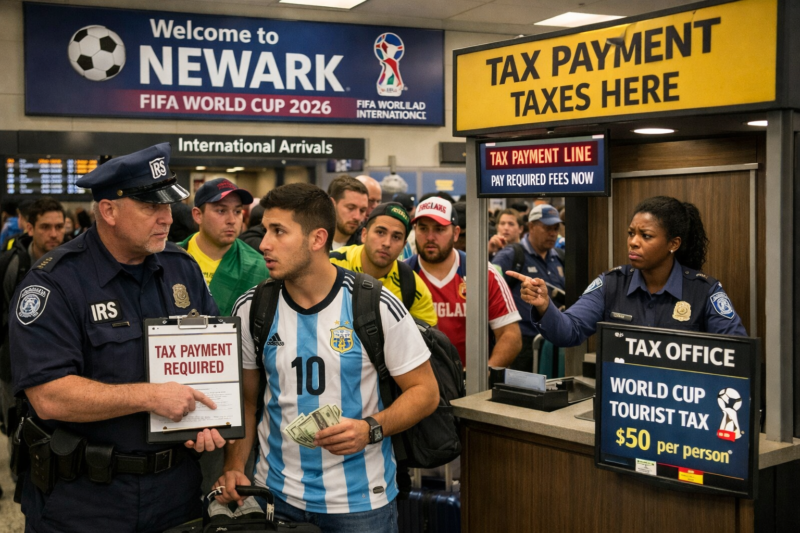
New Jersey World Cup tax plan risks undermining global event it aims to fund
A short-term revenue plan tied to the 2026 FIFA World Cup is raising concerns that New Jersey could tax away the very visitors it hopes to attract.
The entire world will get an authentic New Jersey experience when they descend upon the Garden State for the World Cup later this year. They will see firsthand how the state that leads the nation in cost of living will tax anything and everything, even the world’s largest soccer tournament.
New Jersey lawmakers are advancing a slate of temporary tax increases tied directly to the 2026 FIFA World Cup at MetLife Stadium, a move framed as fiscally responsible but one that risks sending a far different message to the global audience expected to arrive next summer.
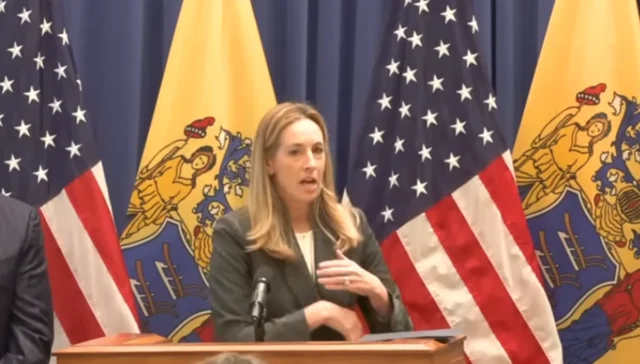
At the center of the proposal, backed by Democratic leadership including Rep. Mikie Sherrill, is a collection of targeted surcharges: a roughly 9% effective sales tax on tickets, food, and alcohol tied to the event, a 2.5% hotel occupancy fee across much of the state, a 50-cent surcharge on rides to and from the Meadowlands, and a 10% levy on World Cup-related sports betting. The measures would run from mid-June through late July, capturing peak tournament activity.
The justification is straightforward. New Jersey has already committed or spent at least $307 million to prepare for the event, covering everything from security to infrastructure. Lawmakers argue that visitors—projected to number around 1 million—should help shoulder that cost.
But the strategy carries a contradiction that is difficult to ignore.
A global stage, a local surcharge
The World Cup is not just another event. It is one of the most visible international spectacles, expected to generate between $2 billion and $3 billion in regional economic activity and support roughly 14,000 jobs. Hotels, restaurants, transit systems, and small businesses across North Jersey stand to benefit from an unprecedented influx of visitors.
That is precisely why critics argue the tax plan is so risky.
Layering surcharges onto nearly every aspect of the visitor experience—tickets, lodging, transportation, even food—creates a perception problem as much as a financial one. Global travelers, many already facing high costs to attend, may see New Jersey not as a welcoming host but as an expensive one. In a region where visitors can easily stay in New York or elsewhere and commute in, pricing signals matter.
Key Points
- New Jersey proposes temporary taxes on tickets, hotels, rides, and betting during World Cup
- State aims to offset at least $307 million in event-related costs
- Critics warn added costs could discourage tourism and hurt long-term economic gains
Short-term revenue vs. long-term reputation
Supporters of the plan note that residents could receive tax credits to offset some of the burden, and that the taxes are temporary by design. They also point to the projected $431.9 million in tax revenue the broader event could generate as evidence the World Cup remains a net positive.
Yet even temporary policies can have lasting effects. Just look at the temporary Garden State Parkway tolls. 75 years after the state promised the tolls would be removed after the road was paid for, they’re still here and more expensive than ever.
Major international events are as much about reputation as revenue. Cities and states compete for future tournaments, conventions, and global gatherings based on how well they handle the spotlight. A perception that visitors were treated as a revenue source rather than guests could complicate those efforts.
Former Governor Phil Murphy has consistently framed the World Cup as a transformative opportunity for New Jersey, highlighting tourism growth, infrastructure upgrades, and global exposure. That vision depends not just on hosting matches, but on creating an environment that encourages spending, movement, and repeat visits.
The balancing act ahead
No one disputes the cost of hosting an event of this scale. Security alone requires extensive coordination, and infrastructure upgrades—from transit capacity to stadium modifications—carry significant price tags. Asking taxpayers to absorb the full burden is politically difficult.
But there is a difference between cost recovery and cost shifting.
If the goal is to maximize economic impact, the strategy typically leans toward reducing friction for visitors, not adding to it. Every added fee, however small in isolation, compounds into a broader impression of expense.
New Jersey has positioned itself as a central player in the 2026 World Cup, hosting the final and multiple matches. The question now is whether its financial approach aligns with that ambition—or undermines it.
Because while the taxes may be temporary, the impression they leave on a global audience could last far longer.