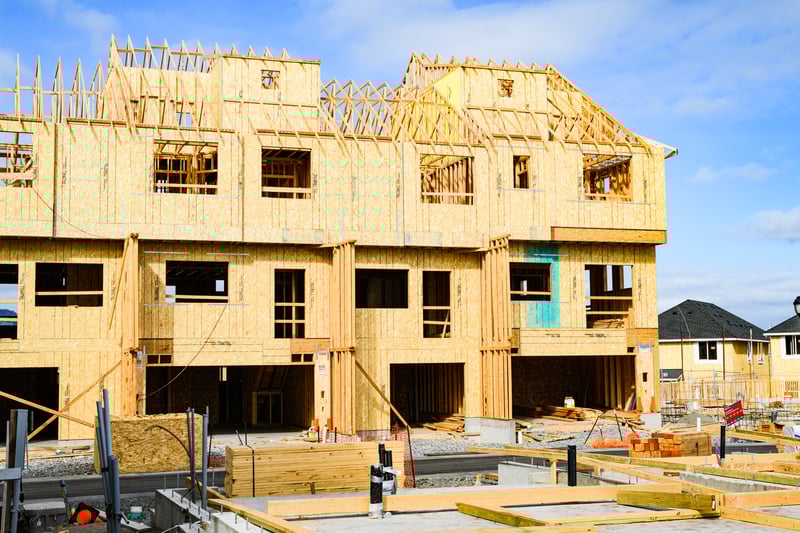
TRENTON, NJ — New Jersey is now seeking to preserve open space as it continues to pressure municipalities across the state to build more large, high-density affordable housing complexes.
Governor Phil Murphy announced New Jersey’s entry into the High Ambition Coalition for Nature and People, committing to preserve 30% of the state’s land by 2030. With over 1.6 million acres—31% of the state—already protected, New Jersey becomes the first continental U.S. state to meet the global “30×30” goal. The announcement, celebrated by environmentalists, comes amid growing tension with suburban and rural communities facing state mandates to build high-density affordable housing, often at the expense of cherished open spaces.
A Milestone in Conservation
New Jersey’s commitment aligns with the global Kunming-Montreal Biodiversity Framework, adopted in 2022, which calls for protecting 30% of terrestrial and marine areas by 2030 to combat biodiversity loss. The state’s Green Acres Program has been instrumental, with the Murphy Administration investing $695 million over seven years, including a record-breaking $131 million announced during Earth Week 2025 for parks, recreation, and preservation projects across all 21 counties.
“New Jersey’s investments in natural land enhance community life and combat climate change,” Governor Murphy said. “Joining the High Ambition Coalition reinforces our dedication to a sustainable future.”
The state’s 1.62 million acres of protected land include wetlands, forests, and parks, many of which serve as carbon sinks and buffers against flooding. New Jersey’s leadership has earned praise from international partners, with Rita El Zaghloul, Director of the High Ambition Coalition Secretariat, calling it a “powerful step” toward global conservation goals.
Affordable Housing Mandates Spark Debate
While environmentalists applaud the 30×30 milestone, many suburban and rural communities are grappling with state-driven affordable housing mandates that threaten undeveloped land. In 2024, New Jersey’s Department of Community Affairs, alongside court rulings, intensified requirements for municipalities to meet affordable housing obligations under the Mount Laurel doctrine. These mandates often require high-density developments—sometimes 10 to 20 units per acre—in areas zoned for single-family homes or open space.
In towns like Mahwah, Montgomery, and Medford, residents have voiced concerns over proposed projects that could transform farmland, woodlands, or meadows into apartment complexes. A 2024 plan in Montgomery, for instance, proposed 1,200 units on a 200-acre tract previously eyed for preservation, prompting protests from locals worried about traffic, schools, and loss of rural character. Similarly, Medford’s township council faced backlash over a 400-unit development on a former farm, with residents arguing it undermines the Pinelands’ ecological integrity.
Balancing Preservation and Development
The tension reflects a broader challenge: New Jersey, the nation’s most densely populated state, faces acute housing shortages, with median home prices nearing $550,000 and rents averaging $2,200 for a one-bedroom apartment, according to 2025 data from Zillow. The state estimates a need for 200,000 additional affordable units by 2030 to address demand, particularly for low- and moderate-income families.
State officials argue that high-density housing near transit hubs or existing infrastructure minimizes sprawl and aligns with smart growth principles. “
Yet critics contend the state’s approach often overrides local zoning and prioritizes urban-style projects in rural areas. A 2025 report by the New Jersey Sierra Club noted that while Green Acres funding protects some lands, other parcels remain vulnerable to development due to inconsistent planning.