


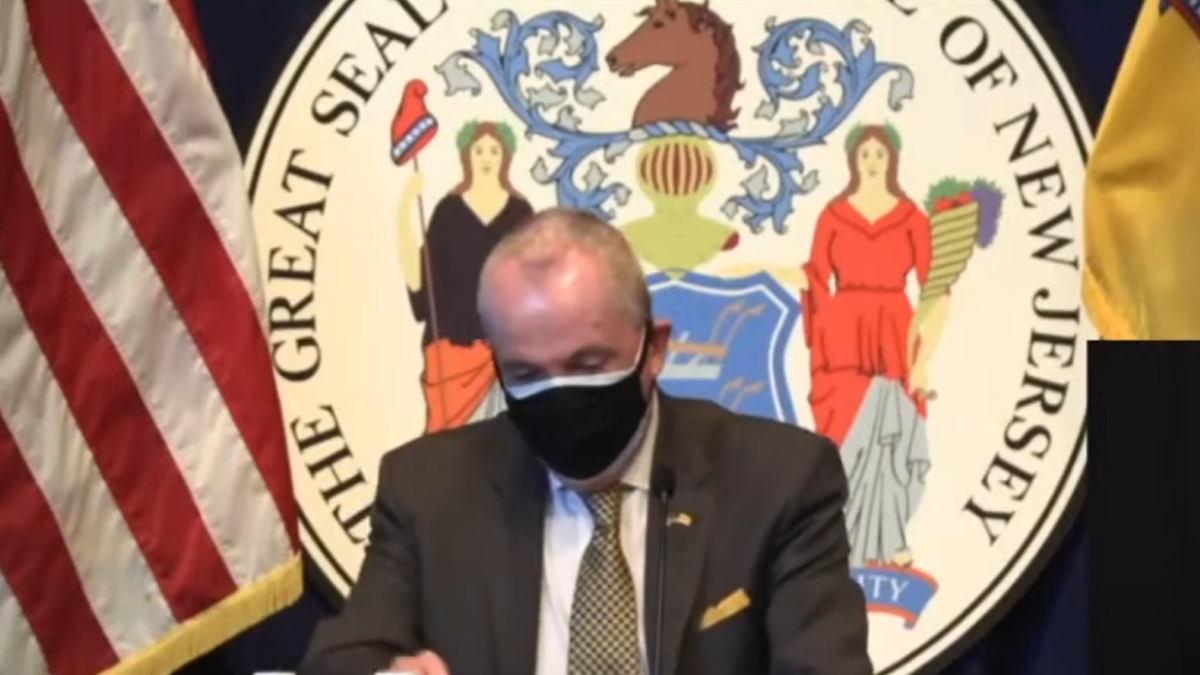
Trenton, NJ – Six years after New Jersey’s COVID-19 emergency orders transformed daily life, many residents still point to some of Gov. Phil Murphy’s pandemic restrictions as examples of government overreach, inconsistent policymaking and regulations that often appeared disconnected from common sense.
With Anthony Fauci’s recent appearance in Washington, D.C., where he invoked his Fifth Amendment right against self-incrimination during congressional questioning, it serves as a reminder of the many bizarre and controversial COVID-19 lockdown rules that reshaped daily life in New Jersey in 2020. Under Gov. Phil Murphy’s emergency orders, residents navigated a patchwork of restrictions that critics often described as confusing, inconsistent, and, at times, downright absurd. Looking back, many of those policies continue to fuel debate over how governments balanced public health with personal freedom and common sense.
Supporters argue Murphy was making decisions based on the public health guidance available at the time during an unprecedented emergency. Critics counter that many of the state’s rules lacked consistency, devastated small businesses and eroded public confidence because similar activities were often treated very differently.
Small businesses closed while Walmart stayed open
Perhaps no policy generated more frustration than the distinction between “essential” and “non-essential” businesses under Executive Order 107.
Independent retailers were forced to close their doors while customers packed into Walmart, Costco, Target and grocery stores that sold many of the very same products. Business owners argued the policy concentrated shoppers into fewer locations rather than spreading them among smaller stores with lower customer traffic.
The local small bodega was less safe than the huge, crowded big box stores?
Indoor dining banned while outdoor tents flourished
Restaurants spent weeks preparing to reopen indoor dining before the state abruptly delayed those plans just days before reopening.
Owners invested thousands of dollars in renovations and safety measures only to be told customers could eat under tents that were sometimes enclosed on multiple sides, but not inside permanent buildings with upgraded ventilation. For many restaurant owners, the distinction made little practical sense.
Who can forget the rule that you had to be masked when walking around, but when you sat down at your table, you were suddenly in a COVID cone of protection and can remove your mask, but only between bites?
Gyms remained shuttered for months
Fitness centers were among the last businesses allowed to reopen and Phil Murphy fought hard against them. Staying fit and healthy during COVID-19 was a superspreading event, so everyone just sat on their couches and got unhealthier, because that was all they were allowed to do.
Gym owners argued they had implemented sanitation protocols and that exercise improves overall health. Some openly defied the governor’s executive orders, becoming national symbols of resistance to prolonged business closures.
Haircuts in another state, but not New Jersey
Hair salons remained closed until late June 2020. Black market barbershops operated, and many were charged criminally, but many other bootleggers in NJ crossed state lines to stop themselves from looking like shut-ins and Unabombers.
Many residents simply crossed state lines into Pennsylvania or Delaware for haircuts, prompting critics to argue the restrictions shifted business out of New Jersey rather than reducing close personal contact.
Outdoor mask requirements
Executive Order 163 required face coverings in outdoor public spaces whenever six feet of distancing could not be maintained.
Although intended for crowded settings, the rule became one of the pandemic’s most debated policies. Critics questioned requiring masks while walking outdoors, particularly as scientific understanding evolved and evidence increasingly indicated outdoor transmission was generally lower than indoor transmission.
And for the huckleberries who violated the law, it was criminal charges for thee, not for me, as Murphy was seen violating that rule on dozens of occasions.
Capacity limits that seemed to change constantly
Gathering limits shifted repeatedly throughout 2020.
Outdoor gatherings increased from 10 people to 25, then 100, later 250 and eventually 500. Different limits applied to retail stores, houses of worship, graduations, sporting events and other activities. While officials said the changes reflected evolving conditions, many residents struggled to keep track of the rules and questioned why similar events were treated differently.
Was any of it based on science?
Golf returned before many other activities
Golf courses reopened relatively early because players could naturally distance themselves.
Still, critics questioned why golfers could spread out across hundreds of acres while other outdoor recreational activities remained restricted.
Who plays golf? That’s right, political donors and politicians.
Bars could serve drinks—but only with food
Outdoor dining resumed, but many establishments were required to operate as restaurants rather than traditional bars.
Owners argued customers could safely sit together over a meal and drinks, but standing with a beverage or operating primarily as a bar was treated differently. Many bar owners said the restrictions severely limited their ability to stay in business.
If you came in just for a martini or a beer, you were a COVID superspreader.
The 10 p.m. restaurant curfew
Executive Order 194 required restaurants to stop indoor dining service at 10 p.m. Because we all know that COVID is deadlier after 10 pm.
Restaurant owners argued COVID-19 did not become more contagious after 10 o’clock and said the rule disproportionately harmed establishments that relied on late-night customers.
Different standards for different gatherings
One of the most politically charged criticisms centered on differing treatment of public gatherings.
Religious services, weddings, funerals, graduations and family events were subject to changing attendance limits at various points during the pandemic. At the same time, large public demonstrations often continued, with officials generally emphasizing First Amendment protections. Critics argued this created the perception that similar-sized gatherings were being treated differently depending on their purpose, while supporters noted that constitutional protections limited the state’s authority to restrict certain expressive activities.
Let’s not forget the closing of parks and beaches. It was a ridiculous time and will make the early 20th-century pandemic photos look sane compared to the 2020 pictures when this era is judged by history.
Murphy defended the restrictions as necessary to protect public health during an unprecedented pandemic, noting that many decisions reflected recommendations from the Centers for Disease Control and Prevention and other public health authorities available at the time.
Even after nearly all restrictions were lifted, however, the debate has continued. For many New Jersey residents and business owners, the pandemic became not only a public health crisis but also a lasting referendum on executive power, emergency government authority and the balance between public safety and individual liberty.