
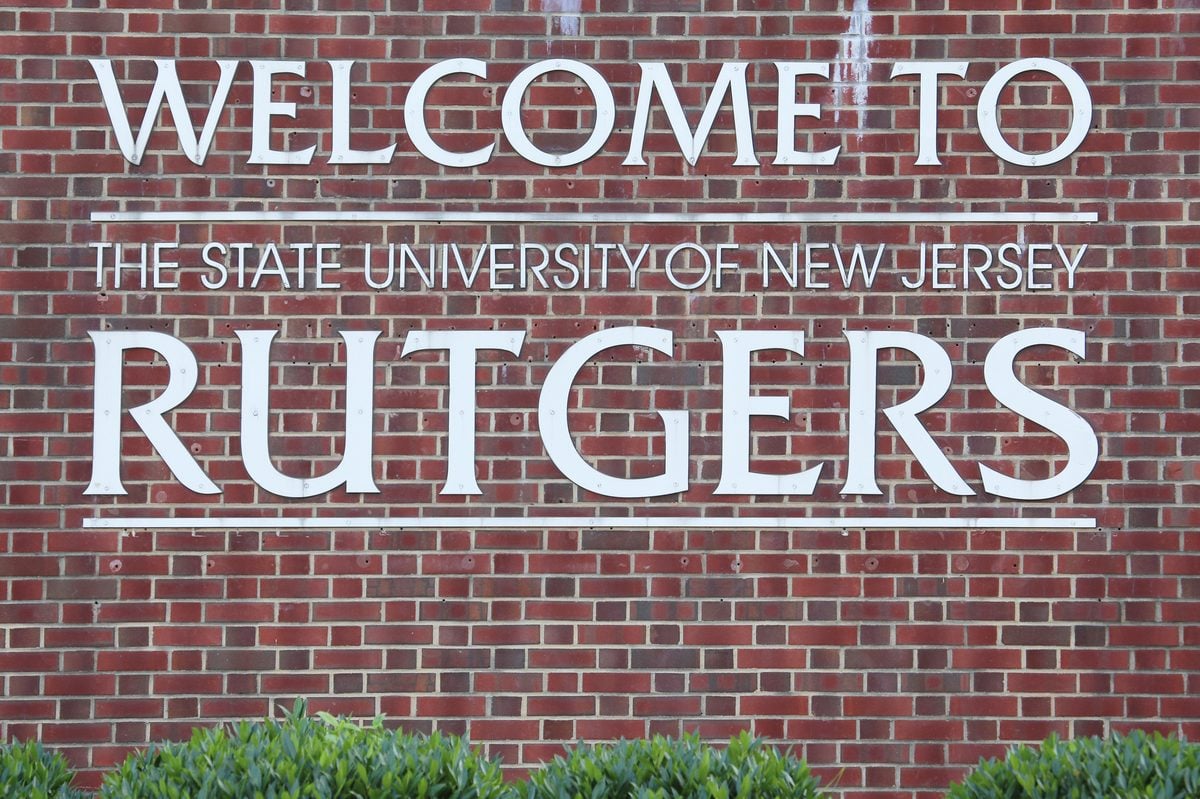
Gov. Mikie Sherrill signed S4515 into law Monday, allowing certain Rutgers managers to be paid by both the university and an affiliated nonprofit health system despite state conflict-of-interest restrictions.
TRENTON, N.J. — A newly signed New Jersey law will allow certain Rutgers University executives to simultaneously work for — and receive compensation from — a nonprofit health system affiliated with the university, carving out an exception to state ethics rules that normally restrict outside employment and compensation.
Senate Bill 4515, sponsored by Sen. Raj Mukherji, D-Hudson, was signed Monday by Gov. Mikie Sherrill as part of a broader package of legislation.
The law does not name RWJBarnabas Health, but its language closely tracks the structure of Rutgers’ longstanding affiliation with the health system, which jointly operates major medical education, research and clinical programs across the state.
What Problem Is the Law Trying to Solve?
The issue is that Rutgers is a public university, which means its employees and governing officials are generally subject to New Jersey’s conflict-of-interest laws.
Those rules are designed to prevent public employees from receiving outside compensation or taking on outside work that could compromise — or appear to compromise — their independence in making decisions for the state.
That framework becomes complicated when Rutgers executives are expected to operate inside an integrated academic health system in which the university and a private nonprofit health system share responsibilities for medical education, research and patient care.
Under the new law, certain Rutgers managerial executives overseeing medical education, research or clinical programs tied to an affiliation agreement may be employed and paid by both Rutgers and the affiliated nonprofit.
The Legislature described the change as an effort to “harmonize” state ethics law with the structure of modern academic health systems.
The Rutgers-RWJBarnabas Connection
Rutgers and RWJBarnabas Health have been formally intertwined for years.
The two organizations entered into a master affiliation agreement in 2018 and later expanded that relationship through integrated medical practice and academic agreements.
Rutgers faculty teach and conduct research inside RWJBarnabas hospitals, while the health system provides much of the clinical infrastructure used by Rutgers medical schools and health programs.
The relationship has become increasingly integrated, with shared programs, facilities, research operations and leadership responsibilities.
That creates an obvious administrative problem: a Rutgers executive may be responsible for managing a program jointly operated with RWJBarnabas while state ethics rules restrict that person from also being compensated by the outside organization.
S4515 removes that barrier for a defined class of managerial employees.
Rutgers Has Already Faced Conflict-of-Interest Questions
The legislation arrives against a backdrop of longstanding scrutiny over conflicts involving Rutgers and RWJBarnabas.
A Rutgers University Senate review of conflict-of-interest practices raised concerns about overlapping roles involving members of the Rutgers Board of Governors and outside organizations doing business with the university.
One of the most prominent examples involved Mark Manigan, president and CEO of RWJBarnabas Health, who also serves on the Rutgers Board of Governors.
The State Ethics Commission previously considered whether Manigan’s position at RWJBarnabas conflicted with his role governing Rutgers because the two institutions conduct extensive business together.
That history helps explain why legislation governing dual roles between Rutgers and affiliated health entities carries significance beyond routine employment law.
Original Bill Went Further
The version initially introduced by Mukherji went beyond employee compensation.
It would also have permitted a Rutgers Board of Governors member who simultaneously served on the board of an affiliated health organization to participate in Rutgers votes necessary to implement the affiliation agreement.
That provision would have created a direct statutory exception to conflict rules governing board members with overlapping institutional roles.
Lawmakers removed that language before final passage.
The final version also narrowed the employment exception to Rutgers employees who qualify as “managerial executives” and have supervisory or management responsibility over medical education, research or clinical programs.
The changes were made by the Senate Budget and Appropriations Committee before both houses approved the measure.
What the New Law Actually Allows
Under the final law, a qualifying Rutgers managerial executive can receive compensation and benefits from both Rutgers and an affiliated nonprofit health organization.
That compensation is exempted from specific provisions of the New Jersey Conflicts of Interest Law and Rutgers ethics rules that would otherwise restrict the arrangement.
The law applies only where the outside organization is part of a long-term affiliation intended to create an integrated academic health system focused on education, research, clinical care and expanded access to health services.
The final measure also states that it cannot override collective bargaining rights or existing subcontracting requirements.
Critics Have Raised the Opposite Concern
The same overlap that supporters describe as necessary cooperation has been cited by Rutgers faculty and governance critics as a reason for stronger, not weaker, conflict safeguards.
The concern is straightforward: if the same executive is paid by both Rutgers and an outside health system, questions can arise about whose interests the executive is serving when the two institutions disagree over money, staffing, facilities, research or strategy.
Rutgers’ own policies acknowledge that its Board of Governors and university officers are subject to state conflict-of-interest requirements.
The Legislature ultimately left those broader board-level restrictions intact by stripping the dual-board voting provision from the final bill.
Sherrill Signed the Narrowed Version
Sherrill signed S4515 on Sept. 28 along with several other measures, according to the governor’s legislative action notice.
The new law took effect immediately.
That means qualifying Rutgers managers involved in covered health-system affiliations can now legally hold compensated positions with both Rutgers and the affiliated nonprofit without those arrangements automatically violating the specific ethics provisions addressed by the legislation.
For Rutgers and RWJBarnabas Health, the law provides a clearer legal path for shared executive leadership as their medical, research and clinical operations become increasingly interconnected.
