
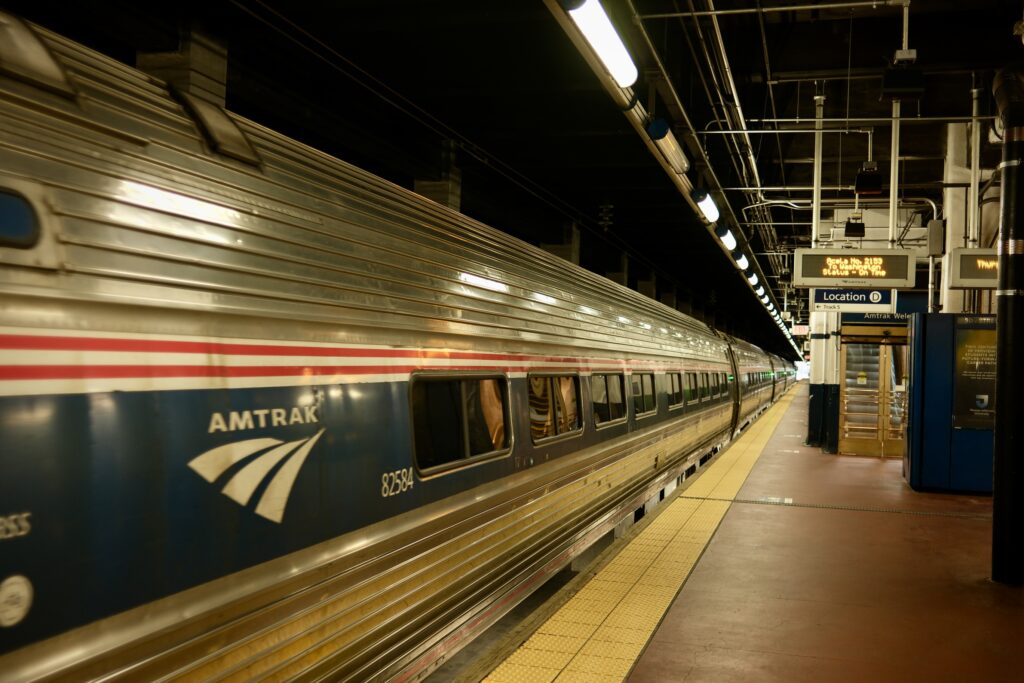
An Amtrak track problem inside one of the Hudson River tunnels triggered delays of up to 30 minutes Monday, adding another disruption to a year of rail headaches for New Jersey commuters.
NEWARK, NJ — NJ Transit riders were once again dealing with an unexpected slowdown Monday after an Amtrak track problem inside one of the Hudson River tunnels disrupted trains traveling into and out of New York Penn Station.
NJ Transit said shortly after noon that trains were subject to delays of up to 30 minutes because of an earlier track condition in one of the two tunnels connecting New Jersey and Manhattan.
Rail tickets and passes were being cross-honored on NJ Transit buses, private carrier buses and PATH at Newark Penn Station, Hoboken and 33rd Street in Manhattan.
Broken Rail Caused Monday’s Problems
The disruption began earlier Monday when a rail broke inside one of the Hudson River tunnels, according to Amtrak.
At the height of the problem, delays reached as much as 60 minutes and Midtown Direct trains were diverted to Hoboken. Amtrak said normal tunnel operations were restored shortly before 10:45 a.m., but residual NJ Transit delays continued afterward.
At least two Northeast Corridor trains were canceled during the disruption, with NJ Transit attributing one cancellation directly to the Amtrak track condition and another to equipment availability resulting from the earlier tunnel problem.
Another Amtrak Problem Becomes an NJ Transit Problem
For riders, the wording has become familiar.
A substantial portion of New Jersey rail service into Manhattan operates over Amtrak-owned Northeast Corridor infrastructure, meaning a broken rail, electrical problem, signal failure or tunnel issue on Amtrak property can quickly ripple through NJ Transit’s commuter network.
Monday’s broken rail is only the latest example.
Earlier this year, an overnight train car fire at Penn Station disrupted NJ Transit and Amtrak service for much of May 30. Riders have also endured service suspensions and lengthy delays tied to Amtrak signal problems and overhead wire failures around Penn Station and the Northeast Corridor.
Some disruptions this summer stretched delays to 90 minutes, with passengers reporting being stuck aboard trains for hours.
Aging Hudson River Tunnels Remain a Choke Point
The two existing North River tunnels beneath the Hudson carry Amtrak and NJ Transit trains between New Jersey and Manhattan.
They are more than a century old and suffered significant saltwater damage during Superstorm Sandy.
Because nearly every NJ Transit train headed directly into Penn Station must pass through that two-track bottleneck, even a problem affecting one track can dramatically reduce capacity.
That vulnerability is one of the central reasons behind the massive Gateway infrastructure program now underway between New Jersey and New York.
Bigger Disruptions Are Coming Next Week — But Those Are Planned
Monday’s delays were unexpected.
The next round will not be.
Beginning Oct. 11, NJ Transit and Amtrak will begin approximately five weeks of temporary service changes while crews complete the final cutover from the old Portal Bridge to the new Portal North Bridge over the Hackensack River.
During the work, trains will operate over a single track between Newark and Secaucus at times, reducing the number of trains that can reach Penn Station on weekdays. NJ Transit is already warning riders to expect consolidated trains, cancellations, changed departure times and altered stopping patterns
Midtown Direct trains on the Morristown, Gladstone and Montclair-Boonton lines will be diverted to Hoboken during weekday service from Oct. 11 through Nov. 14.
NJ Transit has gone as far as recommending that customers who can work from home consider doing so during the construction period and that commuters able to adjust their schedules avoid the busiest portions of the morning and evening rush.
New Bridge Is Supposed to Remove One Longtime Source of Delays
There is at least one significant improvement nearing completion.
The new Portal North Bridge is replacing the 116-year-old Portal Bridge, one of the Northeast Corridor’s most notorious trouble spots.
The old swing bridge has repeatedly caused delays when it failed to properly close and lock after opening for marine traffic.
Once the final track is transferred to the new bridge, Amtrak and NJ Transit expect full operations to move permanently onto the modern replacement.
NJ Transit President and CEO Kris Kolluri said the five weeks of adjusted service will ultimately “end a century of swing-bridge delays” for Northeast Corridor riders.
Until then, commuters still have to get through the old tunnels.
And Monday morning, one broken rail inside one of them was enough to remind thousands of riders just how fragile the trip to New York can still be.