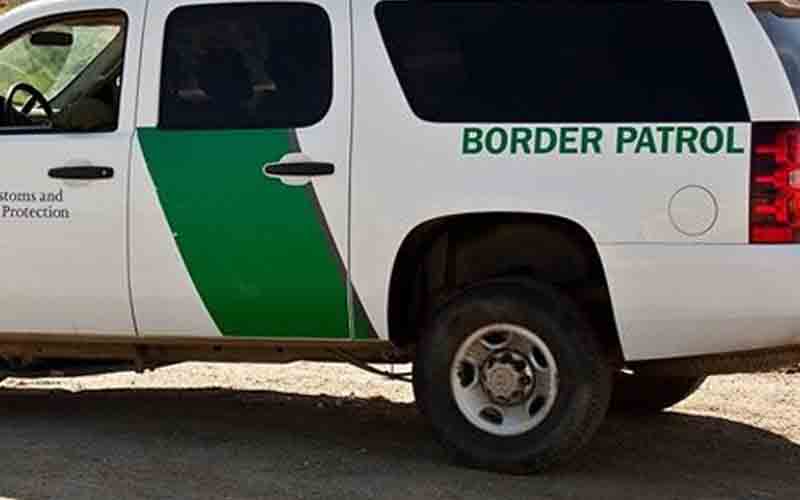
MADERA COUNTY, CA— Through an agreement with U.S. Customs and Border Protection (CBP), the North Fork Rancheria of Mono Indians of California became the 13th U.S. federally recognized tribe to issue an Enhanced Tribal Card (ETC) on Jan. 20.
ETCs serve the mutual interests of CBP and the tribe by expediting and facilitating cross-border trade and travel for tribal members. ETC holders may use their ETC to enter the United States at all land and seaports of entry when arriving from Canada or Mexico.
“Our agreement with the North Fork Rancheria demonstrates our commitment to working closely with our tribal partners on cross-border issues while ensuring secure and efficient travel,” said Pete Flores, Executive Assistant Commissioner, CBP Office of Field Operations. “We are proud of the agreement, which facilitates tribal members having a secure and standardized travel document for entry.”
The North Fork Rancheria worked closely with CBP to develop a secure, highly tamper-resistant card that is an acceptable stand-alone Western Hemisphere Travel Initiative (WHTI) compliant document. WHTI allows all U.S. federally recognized tribes to work with CBP to produce an ETC, which helps ensure border security while protecting the tribe’s rights and limited impacts to their culture.
Modeled after the passport card and enhanced driver’s license business processes, ETCs have machine readable facilitative technologies, contain security features to prevent counterfeiting, and allow data sharing between tribes and CBP for real-time validation.
In 2004, Congress passed the Intelligence Reform and Terrorism Prevention Act, which created the WHTI. In the WHTI Land/Sea Final Rule, published April 3, 2008, DHS allowed federally recognized tribes to work with CBP to produce an ETC, denoting citizenship and identity that is acceptable for entry into the United States through a port of entry.
Under the provisions of WHTI, each interested U.S. tribe will develop a secure photo identification document issuable to the tribe’s legitimate members who could be either U.S., or in certain cases, Canadian citizens. CBP electronically verifies these documents at ports of entry. As of June 9, 2011, the ETC became an acceptable standalone WHTI-compliant document for entry into the United States at all land and seaports of entry, where CBP will electronically verify these documents.
WHTI single-documentation options for all U.S. and Canadian travelers include a U.S. or Canadian passport, U.S. passport card, Trusted Traveler card (Global Entry, NEXUS, SENTRI and FAST), state or provincial enhanced driver’s license, ETC, U.S. military I.D. with orders, U.S. Merchant Mariner document, Form I-872 American Indian Card, Indian and Northern Affairs Canada Card and Secure Certificate of Indian Status.
The Pascua Yaqui Tribe of Arizona was the first tribe to begin issuing an ETC in 2010. Since then, dozens of tribes have signed agreements to work toward creating a secure travel document denoting identity, tribal membership and citizenship.