
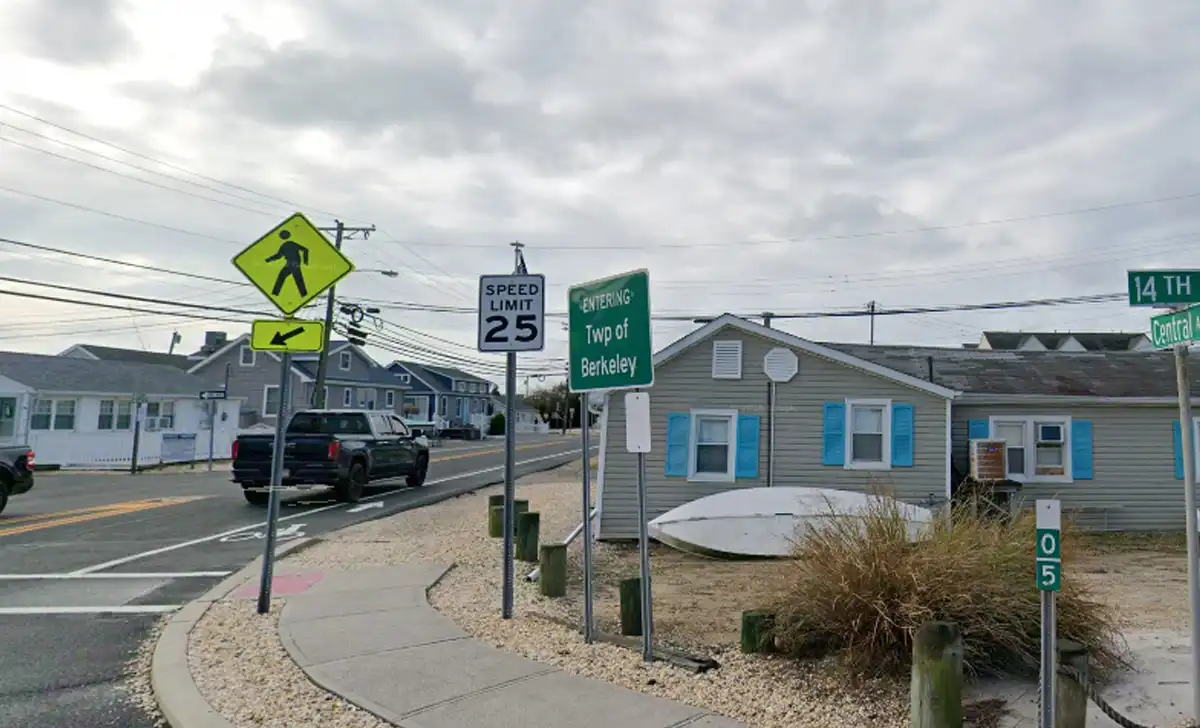
Berkeley Township will continue collecting South Seaside Park property taxes through the end of 2026 after a judge rejected Seaside Park’s attempt to immediately claim the revenue following annexation.
TOMS RIVER, N.J. — A judge has dismissed Seaside Park’s lawsuit seeking immediate control of property-tax revenue from South Seaside Park, handing Berkeley Township a victory in the financial dispute created by this year’s annexation by Seaside Park.
Superior Court Judge Francis Hodgson rejected Seaside Park’s request for an Order to Show Cause and injunctive relief, then dismissed the underlying complaint after Berkeley moved Friday to have the case thrown out.
Berkeley Township is currently 2-0 against Seaside Park, and Seaside Park is 0-2 against Berkeley, in the ongoing series of disputes over the April DeAnnexation of South Seaside Park from Berkeley Township and its annexation to the Borough of Seaside Park.
The Annexation/DeAnnexation took effect on April 6, 2026, and real estate taxes are still being collected by Berkeley Township on properties now in Seaside Park. A lawsuit and Order to Show Cause application were filed by Seaside Park by Robin LaBue, Esq., seeking injunctive relief for the immediate turnover of tax monies collected by Berkeley. Attorney John J. Novak, representing Berkeley on this issue, filed opposing papers on August 7th challenging the Order to Show Cause. LaBue and Novak argued before Judge Hodgson, and ultimately, the court agreed with Novak and denied the Order to Show Cause application.
The result means Berkeley Township will continue collecting 2026 property taxes from South Seaside Park through Dec. 31 despite the neighborhood now being part of Seaside Park.
Berkeley Says 2026 Taxes Were Already Set
The dispute centered on whether property-tax revenue should have followed South Seaside Park when the community separated from Berkeley and joined Seaside Park.
Berkeley attorney John Novak argued there was no legal basis for Seaside Park to obtain the money in the middle of the tax year because New Jersey property taxes are assessed annually.
Although homeowners pay their bills in quarterly installments, Novak argued those payments are portions of a single annual obligation rather than separate quarterly tax assessments.
That timing became critical because the tax board certified the 2026 taxes on Feb. 11, well before the annexation took effect.
Berkeley maintained that once the annual tax obligation was established, South Seaside Park’s subsequent move into another municipality did not transfer the remainder of Berkeley’s 2026 levy to Seaside Park.
The township has consistently told South Seaside Park property owners through its official Tax Collector’s Office that payments remain due to Berkeley through the end of the calendar year, with any change in tax collection taking effect Jan. 1, 2027.
Robin LaBeu, attorney for Seaside Park of the firm Rothstein, Mandell, Strohm, Halm & Cipriani lost the case for the borough.
Seaside Park Wanted Immediate Relief
Seaside Park took the dispute to Superior Court after the annexation became effective, arguing that Berkeley should no longer receive tax revenue generated by properties that were no longer located within the township.
The borough sought an Order to Show Cause and an injunction that would have provided immediate relief while the larger case moved through court.
Hodgson declined to issue that relief.
Berkeley then moved to dismiss the complaint entirely, with attorney Michael Tier filing the dismissal motion on the township’s behalf.
Novak argued that New Jersey’s statutory tax structure already answered the central question and that there was no reason for the court to intervene and redirect tax payments during the middle of an established tax year.
Hodgson agreed with Berkeley’s position and dismissed Seaside Park’s case.
Annexation Created Immediate Financial Fight
South Seaside Park’s departure from Berkeley created an unusual situation because the municipal boundary changed after the annual tax process was already underway.
Seaside Park had anticipated substantial additional tax revenue from the newly annexed territory. Its own annexation impact study projected more than $10 million in annual property-tax proceeds associated with South Seaside Park, although that figure includes taxes ultimately distributed among multiple taxing entities rather than simply municipal revenue.
The disagreement emerged when South Seaside Park residents continued sending their 2026 payments to Berkeley after annexation.
Seaside Park argued it was assuming responsibility for the community while the tax money remained with its former municipality. Berkeley countered that the annual levy had already been established before the boundary change and could not simply be divided midyear because quarterly installments remained unpaid.
Berkeley Keeps the Taxes Through December
Hodgson’s dismissal leaves Berkeley’s existing collection schedule intact.
South Seaside Park homeowners will continue making their remaining 2026 property-tax payments to Berkeley Township, and the collection change is expected to occur with the beginning of the 2027 tax year.
Other financial issues created by the annexation may still have to be sorted out between the municipalities, including the allocation of assets, obligations and expenses connected to South Seaside Park.
But Seaside Park’s effort to force an immediate transfer of the remaining 2026 tax revenue is over.
For Berkeley, the argument was straightforward: South Seaside Park may have changed municipalities during 2026, but its property taxes had already been assessed for the year before the annexation occurred.
Order filed August 10th in OCN-L-1951-26 civilCaseSummary.faces
Round One: Berkeley 1 – Seaside Park 0
Dissatisfied, Robin LaBue, Esq. filed a Motion for Reconsideration on August 31st with Novak filing opposing papers on September 2nd. Oral arguments by LaBue and Novak were heard by the court on September 10th on Seaside Park’s motion for reconsideration, but no decision was delivered that day.
All the while, Berkeley and Novak were not sitting idly but were planning a counterattack. With the Order to Show Cause mortally wounded and likely dead for good, Michael A. Tier, another attorney representing Berkeley, was busy preparing a motion to dismiss the entire complaint over the tax money.
That motion was heard the morning of September 25th. Tier and Novak both argued before that court on behalf of Berkeley Township, seeking dismissal of the entire lawsuit. LaBue argued in opposition on behalf of Seaside Park. Judge Francis R. Hodgson, Jr., A.J.S.C., granted Berkeley’s motion, dismissing Seaside Park’s lawsuit over the tax money.
Round Two: Berkeley 2 – Seaside Park 0
The larger dispute is far from over as Commissioners will ultimately decide credits, debits, claims – generally performing an overall accounting. Seaside Park’s annexation of what was formerly South Seaside Park, Berkeley Township will eventually result in additional tax revenue – that much was obvious to Seaside Park early on in this process but, when all the adding, subtracting, multiplying and dividing is done, the cost to Seaside Park will be revealed. This will all work out, perhaps with Seaside Park looking back and saying that it was a good deal for them to annex South Seaside Park, or that it seemed like a good idea at the time, but …