
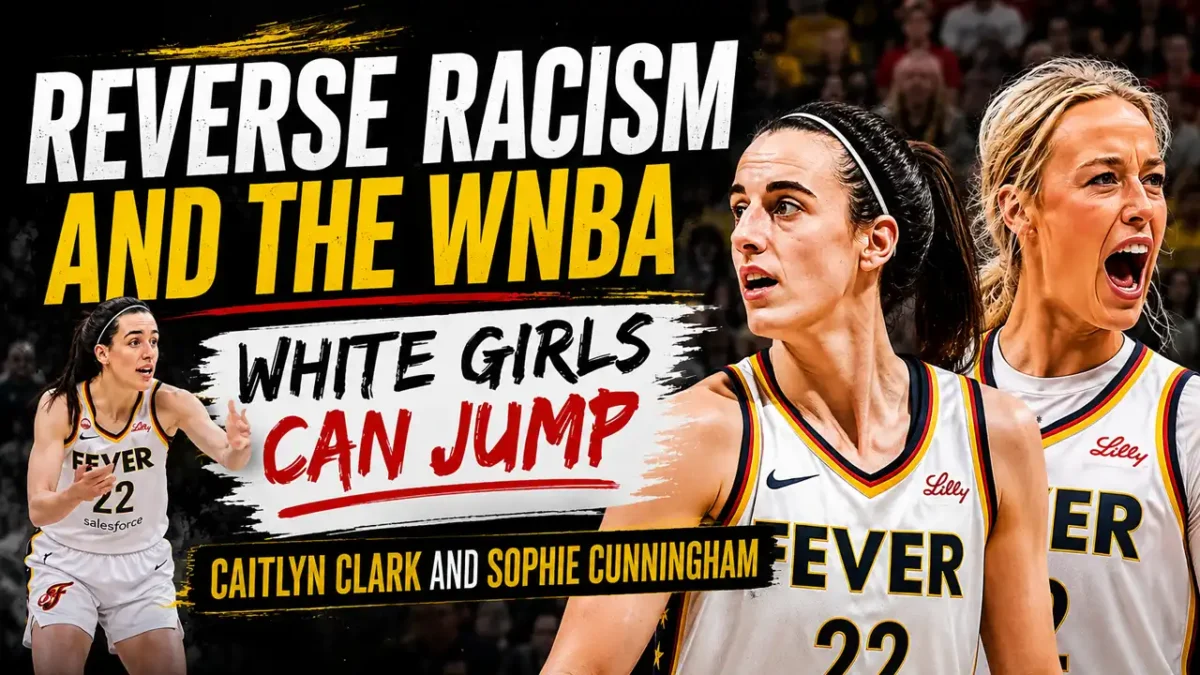
INDIANAPOLIS — Few athletes have transformed a professional sports league as quickly as Caitlin Clark. Since entering the WNBA, the Indiana Fever star has helped drive record television ratings, sellout crowds, merchandise sales and unprecedented media attention.
Along the way, Clark—and teammate Sophie Cunningham—have also become two of the league’s most polarizing figures. Some fans argue the pair have been unfairly targeted by opponents, officials and even members of the basketball establishment. Others say much of the controversy is a natural consequence of intense competition and the spotlight that comes with being among the league’s most recognizable players.
Others say it’s because they are two opinionated straight white women playing in a league dominated by opinionated black lesbians.
The debate has intensified throughout the 2026 season as the Fever emerged as one of the WNBA’s top teams, leading the Eastern Conference with a 21-12 record.
Clark, the No. 1 overall pick who has already earned Rookie of the Year honors and multiple All-Star selections, has repeatedly found herself at the center of on-court disputes. Several games have featured hard fouls, technical fouls and confrontations that generated national headlines.
One of the most notable incidents came when Clark received her eighth technical foul, a penalty that would have triggered an automatic one-game suspension. After the Fever challenged the decision, the WNBA reviewed the play and rescinded the technical, preventing the suspension.
Fans pointed to the reversal as evidence that officials initially made the wrong call. Others noted that the league’s willingness to overturn the decision demonstrated that its review process was functioning as intended.
Clark has also been involved in several physical confrontations this season, including games in which opponents were assessed flagrant fouls or technical fouls following contact with the Fever star. While many fans believe she is targeted because of her popularity, others argue that elite guards have historically been defended aggressively in professional basketball.
Sophie Cunningham has become a central figure in many of those moments.
Known for her physical style of play and willingness to defend teammates, Cunningham’s profile has grown significantly since joining Indiana. She has drawn praise from many Fever fans for standing up for Clark during heated games while also attracting criticism from opponents who view her aggressive approach as crossing the line.
More recently, Cunningham herself became the recipient of a flagrant foul that resulted in an opposing player’s ejection, further fueling debate over whether Indiana players are receiving excessive physical treatment.
Off the court, discussions surrounding Clark often extend beyond basketball.
Some commentators argue Clark’s enormous popularity has changed the economics of the WNBA, bringing millions of new viewers to the league and creating opportunities that benefit every franchise. Others have expressed concern that media coverage has become overly focused on one player, overshadowing longtime stars who helped build the league over decades.
Race has also become part of the public conversation.
Some analysts and former players have suggested Clark’s rapid rise has sparked broader discussions about race and representation in women’s basketball. Others reject the idea that race explains most on-court conflicts, arguing that physical play, intense rivalries and resentment toward any transformational superstar would exist regardless of the player’s background.
Those competing narratives have often played out across television broadcasts, podcasts and social media, with individual incidents sometimes taking on broader cultural significance.
Another factor frequently overlooked is personality.
Both Clark and Cunningham are known for displaying emotion during games, regularly engaging officials and showing visible competitiveness. Supporters see authenticity and passion. Critics sometimes view the same behavior as excessive or confrontational. Similar differences in perception exist across virtually every professional sport.
Key Points
- Caitlin Clark and Sophie Cunningham have become two of the WNBA’s most polarizing players amid repeated on-court controversies.
- Supporters argue Clark has been subjected to excessive physical play and inconsistent officiating, while others say elite players naturally attract tougher defense and greater scrutiny.
- The debate has expanded beyond basketball to include discussions about media coverage, race, league culture and the rapid growth of the WNBA.
Despite the controversies, there is little debate about Clark’s basketball ability. She has quickly established herself as one of the WNBA’s premier guards, known for her long-range shooting, court vision and passing ability. Cunningham, while not a superstar on Clark’s level, has carved out an important role as a dependable defender, outside shooter and veteran presence willing to take on difficult defensive assignments.
As Indiana continues its playoff push, the basketball story risks being overshadowed by the constant debates surrounding officiating, physical play and league culture.
Whether Clark and Cunningham are uniquely targeted or simply experiencing the pressures that come with success remains a matter of opinion. What is clear is that every confrontation involving the Fever now receives a level of national attention few WNBA games attracted just a few years ago, reflecting both the league’s growing popularity and the outsized influence of its newest stars.
FAQ
Are Caitlin Clark and Sophie Cunningham gay?
No. Both have publicly identified as heterosexual and have been in public relationships with men.
Has Caitlin Clark been treated unfairly by officials?
Several officiating decisions involving Clark have generated controversy, including a technical foul that was later rescinded by the WNBA. Whether she is treated more harshly than other players remains a matter of debate.
Why is Sophie Cunningham so controversial?
Cunningham is known for her physical style of play and willingness to defend teammates during confrontations. Supporters view her as a tough competitor, while critics argue she sometimes plays too aggressively.
Is there evidence that WNBA players dislike Clark because she is white?
Race has become part of the public discussion surrounding Clark’s popularity, but there is no conclusive evidence that the league or its players collectively oppose her because of her race. Individual incidents have fueled debate, but motives vary and cannot be generalized across the league.
Why does Caitlin Clark receive so much attention?
Clark entered the WNBA after one of the most successful and widely watched college basketball careers in history. Her arrival has contributed to increased television ratings, attendance and national media coverage for the league.
Sources: WNBA game reports and disciplinary decisions, Sporting News, Wall Street Journal reporting on the 2026 WNBA season, Indiana Fever game statistics, public statements from players and coaches, People magazine reporting on player biographies.