
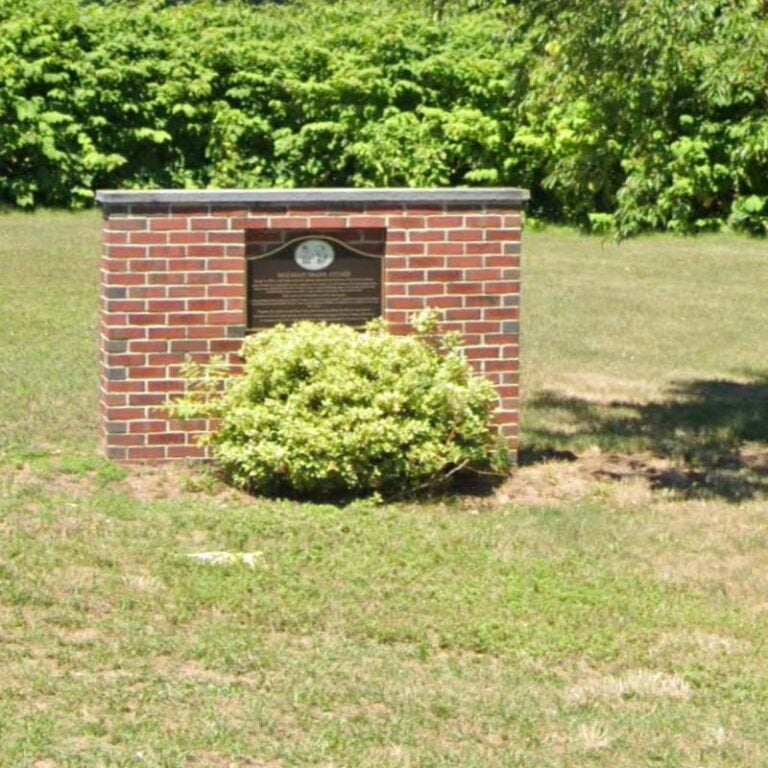
If you’re ever wandering around Matawan, New Jersey, make sure to stop by 5 Dock Street. It’s a pretty unassuming spot—except for the small plaque commemorating one of the most unexpected and chilling events in the area’s history: the deadly shark attacks of July 1916.
Back then, Matawan was a quiet town. Far removed from the typical dangers of the beach, it was completely blindsided by the attacks. On July 12, 1916, 11-year-old Lester Stillwell and 24-year-old Stanley Fisher were both killed by a shark in Matawan Creek, a body of water no one ever expected to be home to such a predator.
The plaque, unveiled on the 100th anniversary of the attacks, stands as a somber reminder of that day.
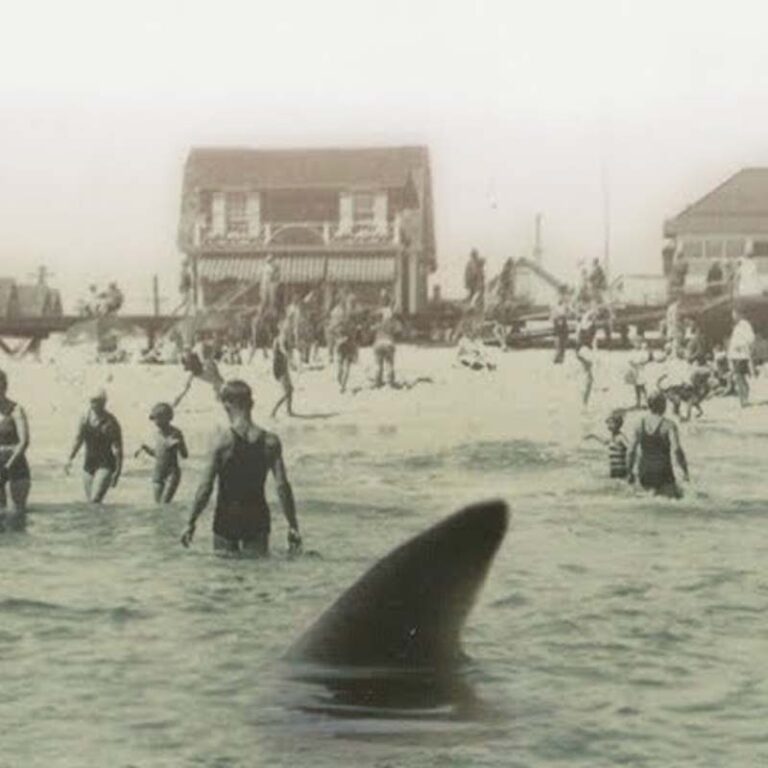
These weren’t just any shark attacks. This was part of a larger event, later dubbed the Jersey Shore Shark Attacks of 1916, a series of incidents that saw four people killed and one seriously injured in just 12 days.
The strange and terrifying nature of these attacks during a sweltering summer heat wave and polio epidemic shook the nation. Thousands of people flocked to the beach to escape the heat, but instead, they found themselves in the middle of a real-life horror story.
What made these attacks even more shocking was the setting. We’re not talking about open ocean here—this was a creek, miles from the ocean! It’s one of the reasons why people still debate which shark species was responsible. The usual suspects? The great white and the bull shark.

Both species can be aggressive, but bull sharks, in particular, are known for swimming into freshwater, adding to the mystery of what kind of predator could have found its way into Matawan’s waters.
The terror was so intense that it sent the public into a frenzy. Resort towns along the Jersey Shore immediately reacted, stringing up steel nets to keep sharks out, while others embarked on shark hunts, trying to wipe out the supposed “man-eating” sharks.
The scientific world was just as stunned. At the time, shark behavior was largely misunderstood. Many scientists thought that sharks wouldn’t attack humans, or at least not under such bizarre circumstances. After 1916, the ichthyologists—shark scientists, if you want to impress your friends—had to go back to the drawing board.
These attacks also planted a permanent seed of fear in the American consciousness. Sharks quickly became the villains of the sea, showing up in cartoons as symbols of danger and chaos. Over the decades, the story of the 1916 shark attacks became the inspiration for documentaries and TV specials. You might’ve even heard about it during Shark Week, or in the 2004 film 12 Days of Terror.

Oh, and did we mention that these attacks also partly inspired Jaws? Yeah, you can thank the Jersey Shore for that. So, the next time you watch a summer blockbuster about a massive shark terrorizing beachgoers, remember that it all began in the quiet waters of Matawan Creek.
If you’re ever in town, take a moment to visit the plaque. It’s a small, understated piece of history, but behind it lies a story big enough to send shivers down your spine.