

TRENTON, N.J. – It is a strange consequence of a tick bite: months or even weeks later, a hamburger, steak or plate of pork can suddenly make someone sick.
It’s every red-blooded American’s worst nightmare.
The culprit is the lone star tick, a species that is hardly new to New Jersey but has become increasingly important here as its range expands. Rutgers researchers say the aggressive human-biting tick is most numerous in the Coastal Plain and Pinelands, with more recent detections reaching Hunterdon and Somerset counties.
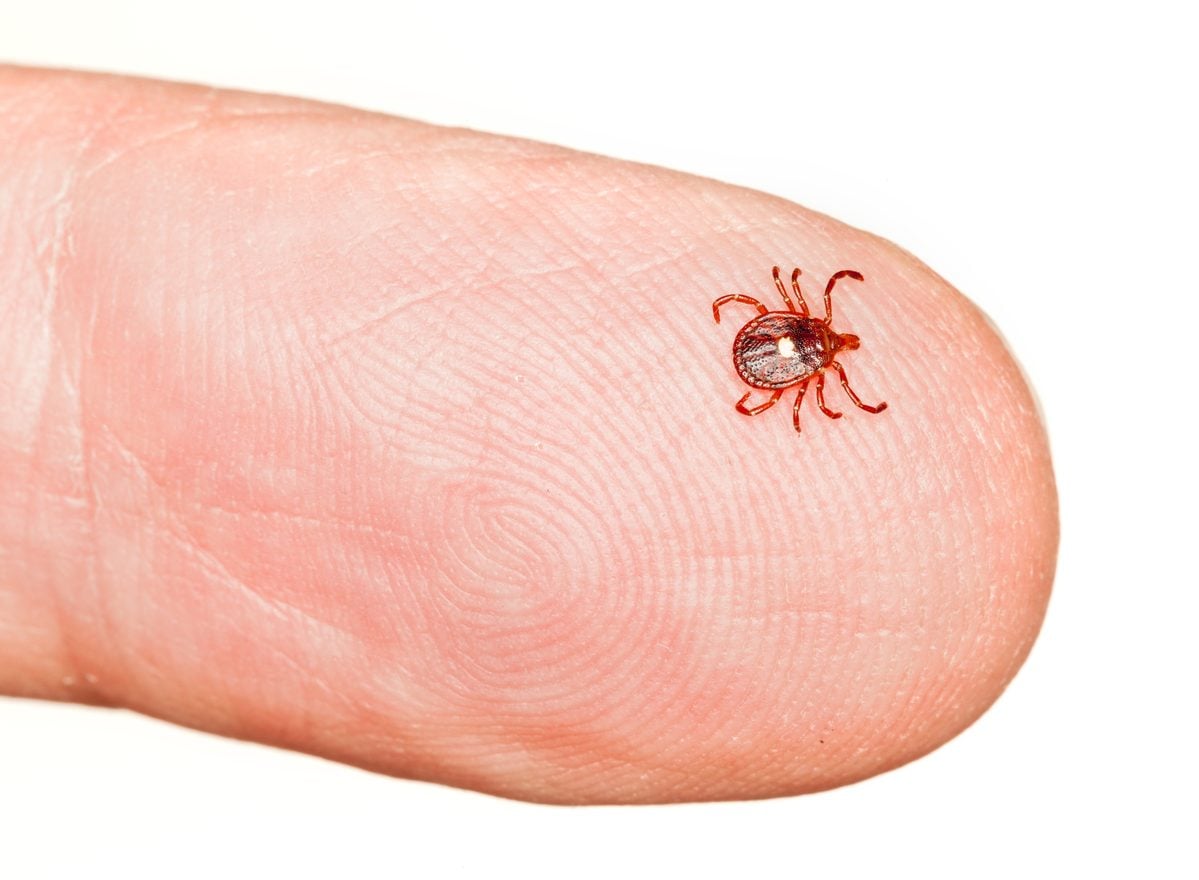
And unlike the blacklegged deer tick, the concern isn’t primarily Lyme disease.
A lone star tick bite can trigger alpha-gal syndrome, or AGS, an unusual and sometimes dangerous allergy to a sugar found in most mammals. New Jersey recorded 1,039 reported AGS cases from 2022 through 2024, according to state tick-surveillance documents.
The Lone Star Tick Has Been Moving Through New Jersey
Spotting an adult female is relatively easy. A small white or cream-colored dot sits in the middle of its back — the “lone star” that gives the species its name.
The history is more complicated.
Lone star ticks were actually described in North America centuries ago. Rutgers notes that Swedish naturalist Pehr Kalm encountered enormous numbers of ticks during a 1749 visit to what is now New York. Farming that cleared forests and heavy hunting of white-tailed deer later helped drive lone star ticks out of large portions of the Northeast.
For much of the 20th century, the species was associated more closely with the Southeast, Gulf Coast, Texas and Oklahoma.
Then it began coming back.
In New Jersey, lone star ticks became particularly well established in southern forests, scrub habitat, the Pinelands and along the Atlantic coast. Rutgers researchers say that where the species is established, it can be extraordinarily abundant — in some places outnumbering blacklegged ticks by at least three to one.
Monmouth County was once considered roughly the northern edge of its established New Jersey range. That line no longer holds.
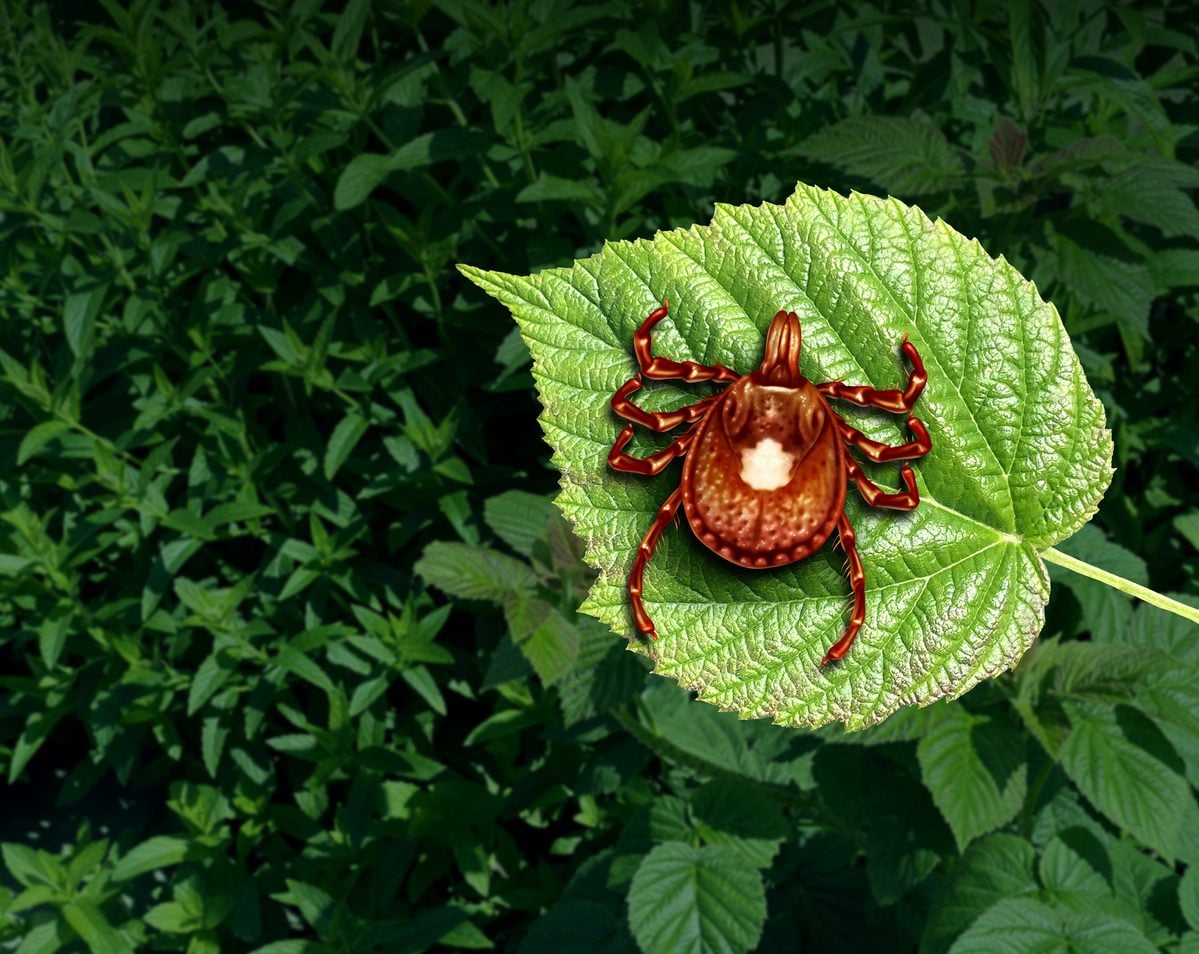
Rutgers’ NJ Ticks 4 Science project now reports the species expanding north, with detections in Hunterdon and Somerset counties. The project collects ticks submitted by residents, giving researchers another way to see where different species are turning up around the state.
The tick can be encountered in New Jersey from March into October, so September doesn’t end the risk. Larvae are particularly abundant during the fall and can occur in masses of hundreds of tiny “seed ticks.”
A Tick Bite That Can Change What’s for Dinner
Alpha-gal syndrome isn’t an infection like Lyme disease.
Alpha-gal — short for galactose-α-1,3-galactose — is a sugar naturally found in most mammals but not humans. It is also present in the saliva of some ticks.
After a bite, some people’s immune systems become sensitized to the molecule. The next problem can come hours after dinner.
Beef, pork, lamb, venison and rabbit can provoke reactions. Some people also react to dairy, gelatin, medications or other products containing ingredients derived from mammals.
Symptoms can include hives and itching, stomach pain, nausea, vomiting, diarrhea, swelling and breathing problems. At its most serious, AGS can cause potentially life-threatening anaphylaxis.
The delayed reaction makes the allergy especially unusual. Someone can eat meat at dinner and not become sick until hours later, making the connection between the meal and a tick bite easy to miss.
Not everyone bitten by a lone star tick develops the condition, and scientists still don’t know why one person becomes sensitized while another does not.
New Jersey Is Now Tracking Alpha-Gal Cases
New Jersey health officials considered the problem significant enough to begin statewide surveillance in 2022.
The New Jersey Department of Health says the surveillance program was established to identify where AGS is increasing or decreasing, improve prevention efforts and make healthcare providers more aware of the condition.
State surveillance recommendations released last year put some numbers behind that concern: 1,039 alpha-gal syndrome cases were reported in New Jersey between 2022 and 2024.
Nationally, the true number is harder to pin down because AGS isn’t a nationally notifiable condition.
The CDC identified more than 110,000 suspected cases between 2010 and 2022 and estimates that as many as 450,000 Americans could be affected. Most reported cases occur in southern, eastern and central states — broadly overlapping the lone star tick’s range.
Is New Jersey’s Warmer Climate Helping the Tick?
Warm weather is part of the picture, but describing the lone star tick simply as a brand-new climate invader would go too far.
It has a long history in the Northeast and has been established in southern New Jersey for years. Rutgers describes its current movement as a range expansion — and, historically, a return into territory the species occupied before extensive forest clearing.
Climate can still influence the conditions ticks encounter.
Rutgers researchers note that milder winters can extend the periods when ticks are active, while changes in temperature, rainfall and vegetation can affect tick abundance and distribution. The university has specifically identified the lone star tick as a species that has become more abundant in some parts of New Jersey in recent years, based on anecdotal observations.
White-tailed deer matter, too. They are an important host for every active stage of the lone star tick and play a major role in sustaining tick populations.
So the story isn’t simply that a southern tick suddenly arrived because New Jersey had a few hot summers. Changes in forests, deer populations, habitat and climate all form part of a much longer expansion.
The Allergy Isn’t Necessarily Lifelong for Everyone
There’s another important wrinkle in the warning that a lone star tick can cause a “lifelong” meat allergy: it can, but that outcome isn’t inevitable.
The CDC says some people who avoid additional tick bites may eventually be able to tolerate products containing alpha-gal again. New tick bites, however, can reactivate allergic reactions.
That makes preventing another bite particularly important for someone already diagnosed with AGS.
There is no vaccine. Doctors generally manage the syndrome by identifying the foods and products that trigger a patient’s reactions and preventing further tick exposure.
Diagnosis can include a patient’s history, symptoms and a blood test for antibodies to alpha-gal. A positive blood test by itself doesn’t necessarily mean someone has the syndrome, the CDC cautions; physicians consider the test alongside symptoms and a history of tick exposure.
For New Jersey residents, the immediate takeaway is simpler.
The lone star tick is here, it is abundant in parts of the state, and its territory is no longer confined to South Jersey. September is still within its active season.
And for a small share of the people it bites, the consequence can last far longer than the bite itself.