
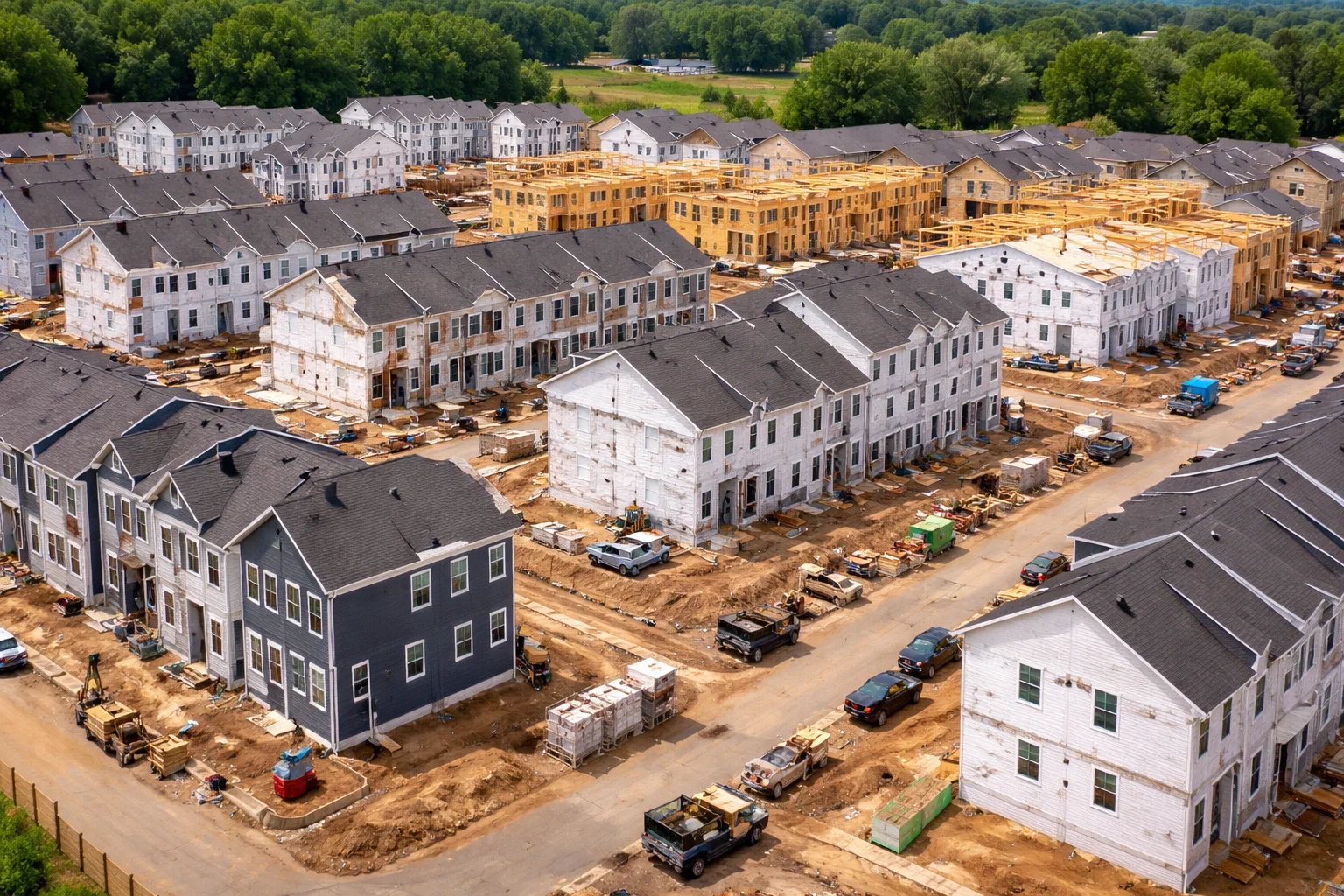
Mayor warns failure to adopt plan could trigger builder’s remedy allowing thousands of apartments.
Toms River, NJ – The Toms River Jewish Community Council (VAAD) is trying to block Mayor Dan Rodrick’s effort to curb high density development through 10-year plan to minimize the township’s state mandated requirement for affordable housing.
Key Points
- Mayor Daniel Rodrick said failure to adopt the township’s affordable housing plan could trigger a builder’s remedy allowing large-scale development.
- The mayor claims the Toms River Jewish Community Council opposes the proposal and is lobbying council members against it.
- Township officials warn the state’s affordable housing requirements could otherwise lead to construction of thousands of apartments.
Rodrick said the township initially faced a requirement from the State of New Jersey and the Fair Share Housing Center to construct approximately 1,700 affordable housing units. Under the state’s 80/20 development rule, he said developers would likely build more than 8,000 apartments in total, combining affordable units with market-rate housing to accomodate that split.
According to Rodrick, his administration negotiated a revised plan that would require construction of 183 new affordable housing units. The remainder of the township’s obligation would be met by extending affordability protections on existing apartments for an additional 30 years.
Rodrick said the proposal was accepted by state officials and the Fair Share Housing Center as a compliant solution under state housing requirements.
Political divide threatens deadline
The mayor said several members of the township council — Councilmen Bianchini, Nivison, Ciccozzi, and Bradley — have indicated they will not support the plan. If the township fails to adopt an approved housing strategy before the state deadline, Rodrick said, Toms River could lose control over development decisions.
In that scenario, developers could pursue what is known in New Jersey as a “builder’s remedy,” a legal process that allows courts to approve higher-density housing projects when municipalities are found to be out of compliance with affordable housing obligations.
Rodrick said that could allow developers to construct thousands of new apartments without approval from local planning or zoning boards.
Mayor claims housing demand driving opposition
The mayor also said the Toms River Jewish Community Council has opposed his plan despite publicly criticizing high-density housing. Rodrick argued the group may benefit from the increased housing supply that could result if a builder’s remedy is triggered.
Rodrick said the Orthodox Jewish population in the region has been growing and that increased housing construction could help accommodate that growth.
He said his administration’s plan is designed to limit large-scale development while still complying with state law. Rodrick urged council members to approve the proposal before the state deadline to avoid what he described as uncontrolled high-density construction across the township.
The Toms River Jewish Community Council’s position and the council’s final vote on the proposal could determine whether the township retains control over future housing development or faces court-driven zoning changes.